Strength in Motion is an athleisure fashion editorial built around a simple idea: athletic clothing does not need to remain confined to the language of performance. Through controlled studio photography, graphic sportswear and deliberate movement, the editorial explores what happens when functionality becomes fashion and physical confidence becomes part of the visual narrative.
Photographed by Phil Halfmann and creatively directed and styled by Sophia Lenore, the series features model Gigi in a progression of black, white and graphic athletic looks. Rather than recreating a conventional workout environment, the imagery removes sport from its expected context. Against a restrained gray studio backdrop, posture, silhouette, expression and movement become the story.
An Athleisure Fashion Editorial Built on Strength and Restraint
Athleisure has increasingly blurred the visual boundaries between clothing designed for activity and clothing designed to be seen. However, Strength in Motion approaches that relationship through an editorial rather than purely commercial lens. The garments retain their athletic identity, yet their presentation becomes more deliberate, sculptural and fashion-oriented.
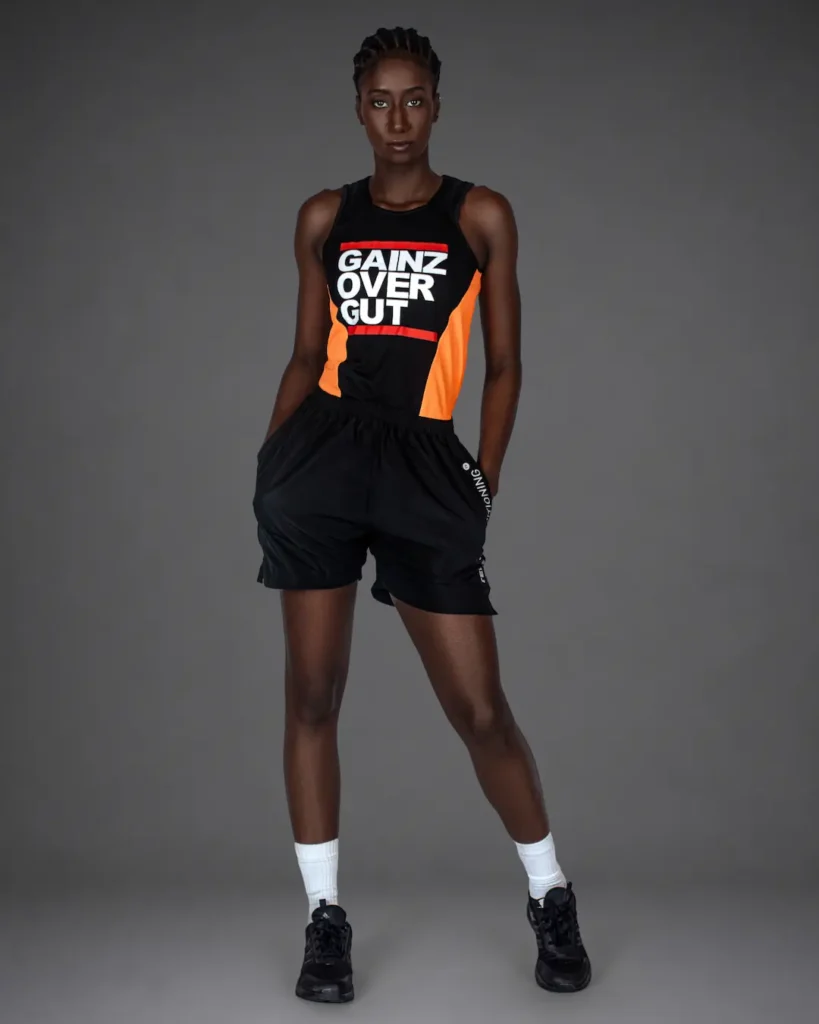
The opening black-and-orange look establishes this tension immediately. Bold typography, high-contrast color blocking and loose athletic shorts reference competitive sportswear. At the same time, Gigi’s controlled posture and direct presence shift the styling away from a literal training context.
The result is an activewear fashion editorial in which strength is communicated without exaggerated action. Confidence comes from posture. Energy comes from composition. Movement is suggested even when the body is completely still.
From Athletic Function to Editorial Form
Strong sportswear fashion photography depends on more than displaying athletic clothing. The photographs must communicate how the body relates to the garments. In this story, that relationship changes continually.
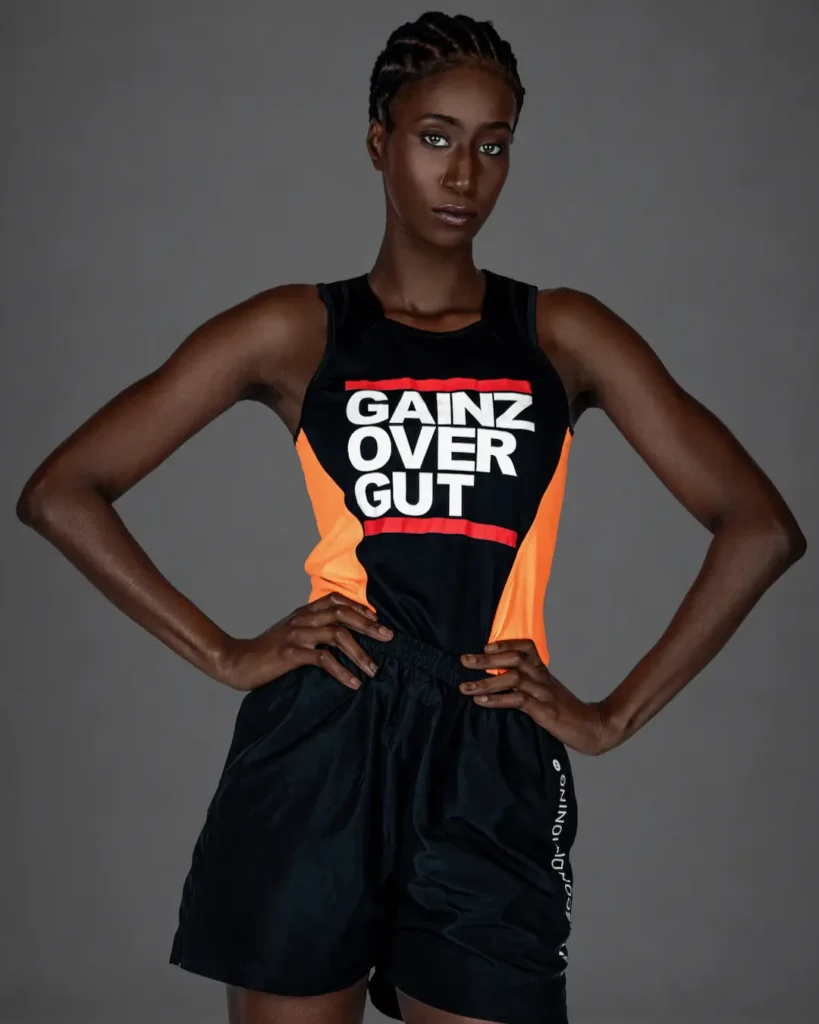
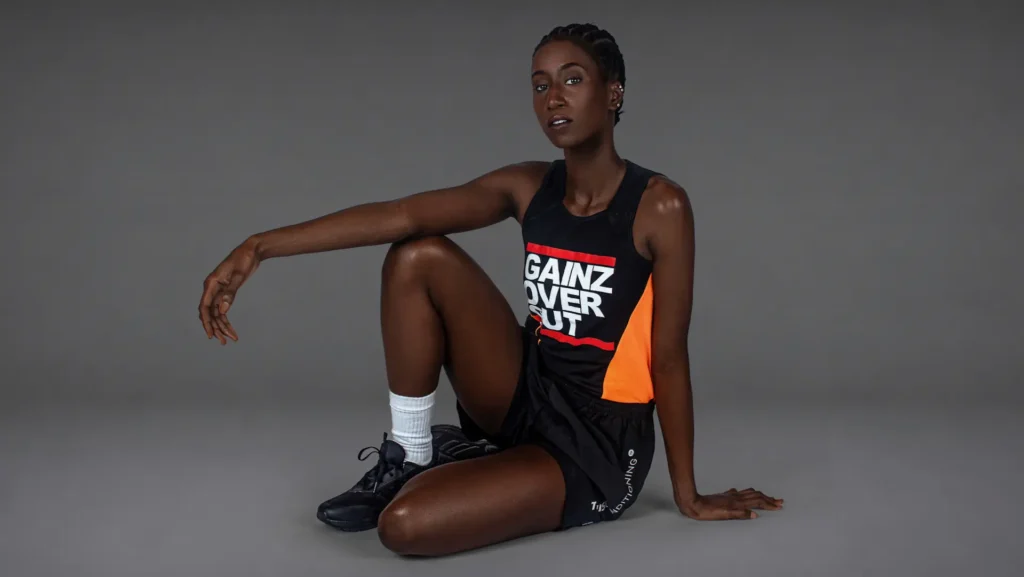
Standing portraits emphasize proportion and presence. Seated compositions introduce angular lines through bent knees and extended arms. Meanwhile, low poses bring the body closer to the studio floor, creating a sense of physicality without turning the series into an exercise demonstration.
This distinction is important. Strength in Motion is not documenting a workout. Instead, the visual language of sport becomes material for fashion storytelling.
The simplicity of the gray environment further supports that approach. With no gym equipment, court markings or environmental distractions, every gesture becomes more visible. Consequently, the viewer notices the relationship between garment, body and shape before anything else.
Monochrome Black and the Power of Silhouette
The editorial then shifts into an almost entirely black wardrobe. Removing the graphic orange accent changes the energy of the story. Where the opening look is direct and visually loud, the monochrome styling feels more disciplined.
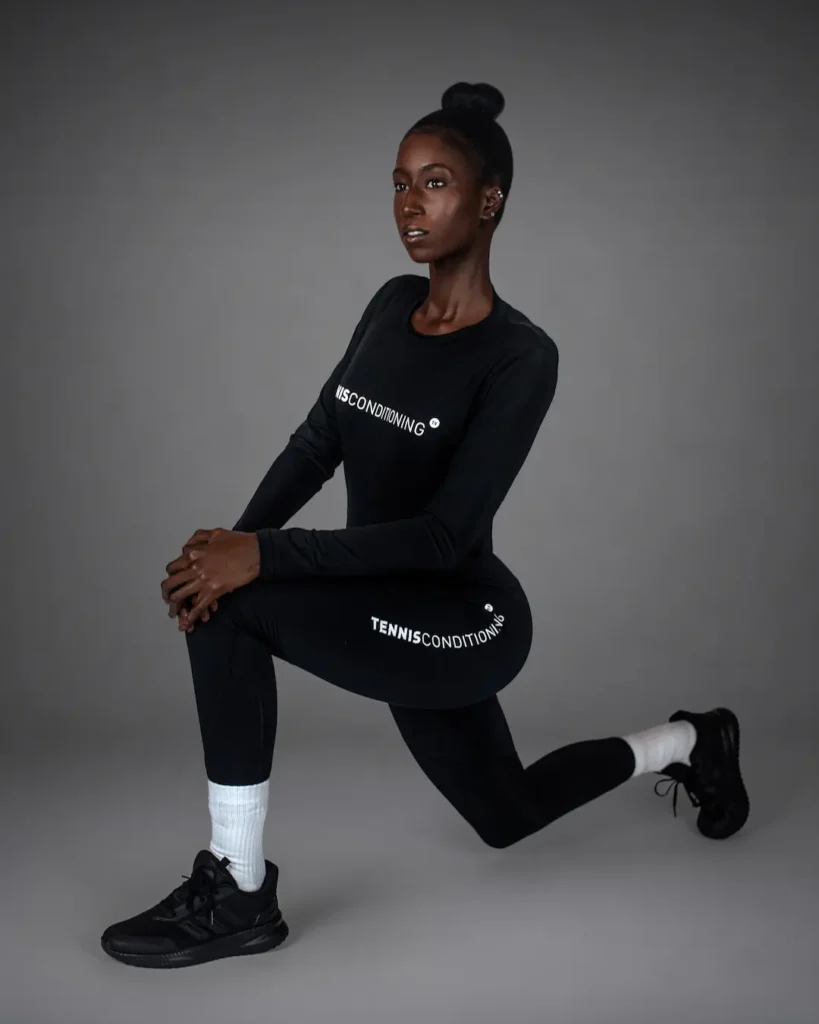
A fitted long-sleeve top and leggings create a continuous line across the body. In the close portrait, folded arms introduce a sense of authority while the restrained palette focuses attention on Gigi’s expression.
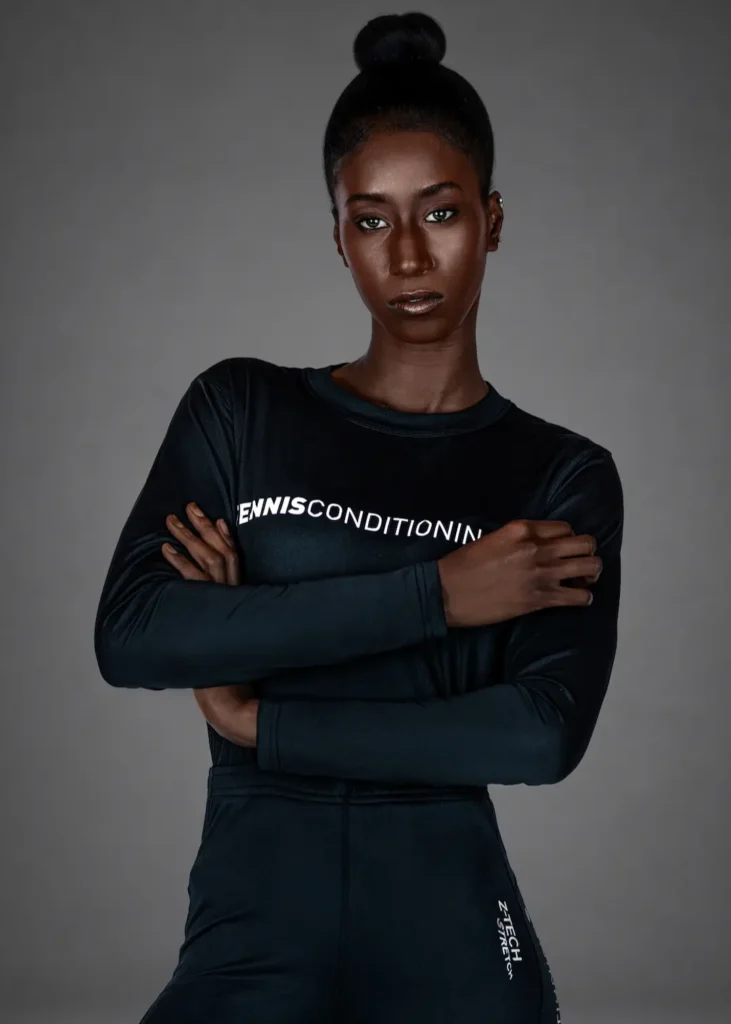
That restraint is central to the athletic fashion photography throughout the series. Rather than relying on dramatic styling devices, the photographs allow small differences in posture to carry visual weight.
A lowered stance, an extended leg or a shift in the shoulders can transform the same wardrobe from functional apparel into editorial fashion.
Confidence Without Excess
One of the strongest qualities of Strength in Motion is its refusal to overstate athleticism. Physical confidence is present throughout the story, yet it does not depend on exaggerated muscular poses or conventional fitness imagery.
Instead, Gigi’s presence carries the photographs. Hands placed at the waist create symmetry. A direct gaze adds intensity. Bare shoulders and a cropped athletic silhouette reveal the body’s natural structure without turning the image into a study of physique alone.
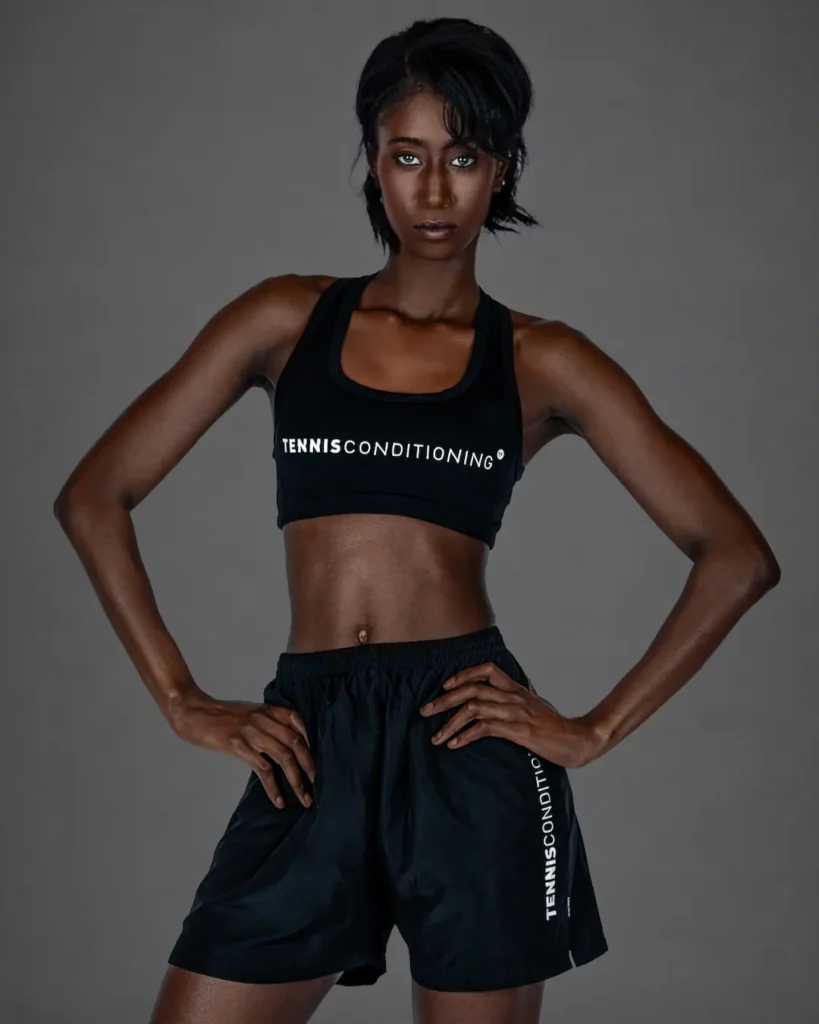
This controlled approach gives the imagery greater versatility. It can be read as fashion, activewear, portraiture and contemporary visual culture simultaneously.
That ability to move between categories reflects the broader appeal of women’s athleisure style. Modern activewear is no longer defined only by where it is worn. Increasingly, its identity comes from how performance fabrics, streamlined silhouettes and sports references integrate into a wider personal style.
When Movement Becomes Shape
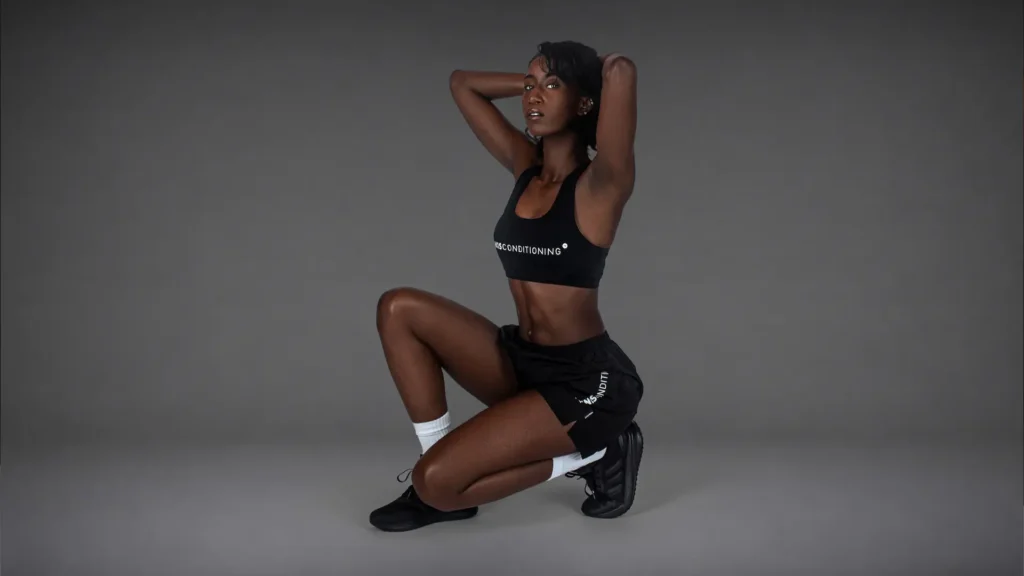
The picture above pushes that idea further. The kneeling pose could originate from the vocabulary of movement, stretching or preparation. Yet the raised arms transform it into something more sculptural.
The photograph illustrates one of the central ideas behind the athleisure fashion editorial: movement does not always need to be photographed in motion. A body can imply energy through line, balance and tension alone.
The horizontal composition also allows negative space to become part of the image. Rather than filling the frame, the subject occupies it deliberately. That restraint gives the photograph a more editorial character and creates a natural transition into the story’s lighter second half.
White Activewear and a New Visual Rhythm
The shift from black to white changes the atmosphere without abandoning the underlying concept. The white looks feel cleaner and more tennis-inspired, bringing a subtle reference to traditional court dressing into the contemporary studio environment.
In the long-sleeve white ensemble, the styling begins to resemble a minimalist athletic dress. The silhouette remains functional, yet the monochromatic treatment makes it feel polished enough to sit naturally within a fashion story.
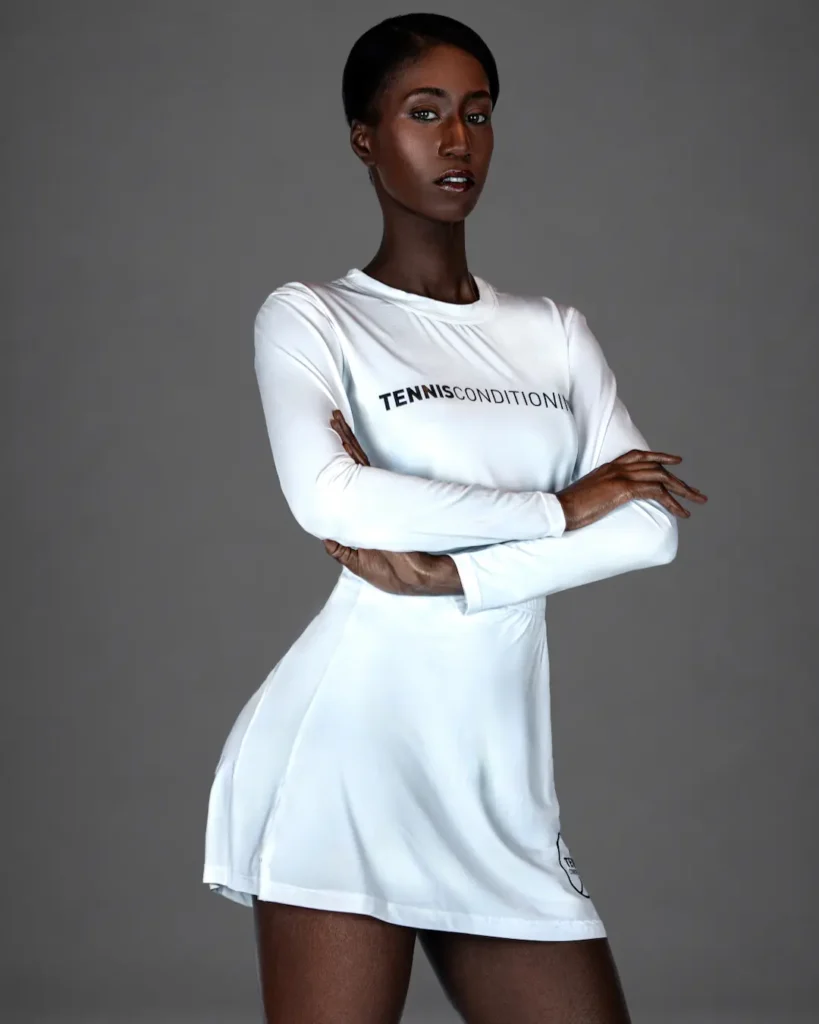
Here, contrast becomes especially important. White apparel is placed against both Gigi’s skin and the mid-gray background, while the absence of additional color allows shape and texture to remain dominant.
The effect demonstrates how an activewear fashion editorial can make seemingly simple garments visually compelling through styling, lighting and pose rather than excessive accessories.
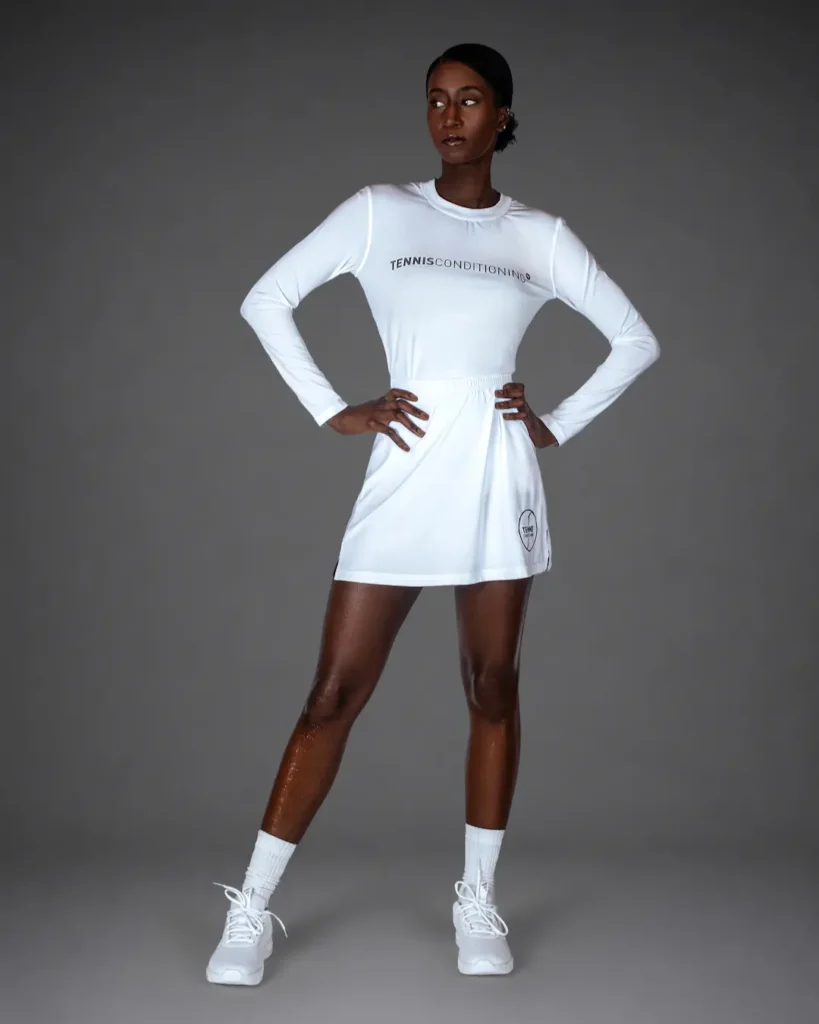
Athletic Fashion Photography in Motion
As the editorial approaches its final sequence, movement becomes more explicit. A forward step interrupts the static studio portrait and introduces the feeling of an athlete moving through space.
Yet the image remains carefully controlled. The wardrobe is minimal: white athletic top, black leggings, white socks and sneakers. Therefore, the gesture itself becomes the point of emphasis.
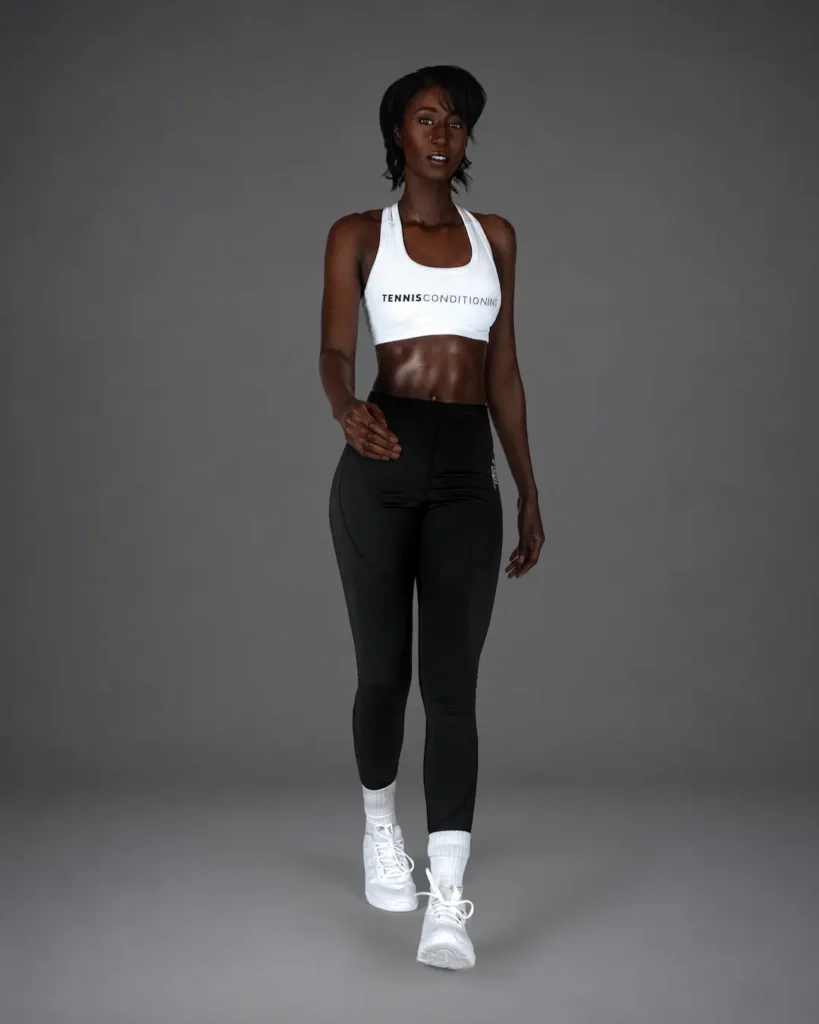
This balance between movement and presentation is what separates sportswear fashion photography from straightforward product imagery. The clothing remains clearly visible, but the photograph also communicates attitude, rhythm and personality.
For another look at how studio imagery can build a complete fashion narrative, explore Modeling Photoshoot Editorial: A Soft, Inclusive Guide to Creating Powerful In-Studio Fashion Imagery.
Performance as a Fashion Gesture
The standing stretch takes a recognizable athletic movement and reframes it through composition. Rather than presenting the stretch as an instructional exercise, the pose functions visually: one leg anchors the body while the other creates a curved counterpoint.
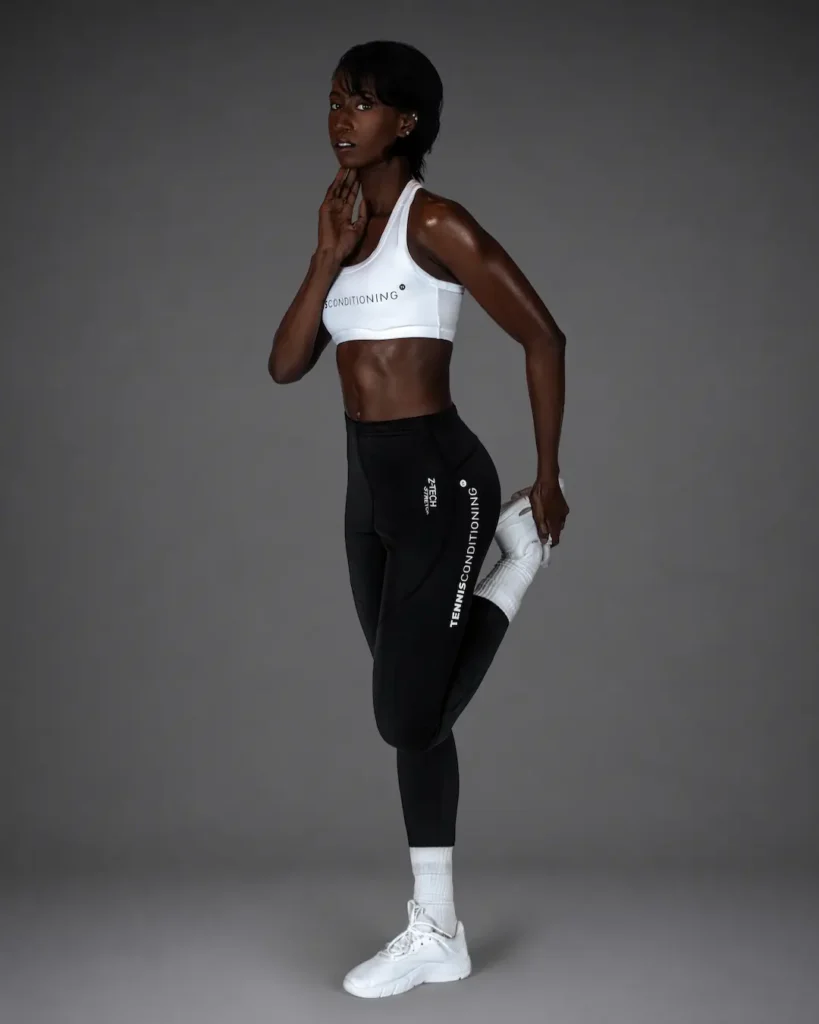
The photograph brings the editorial’s central themes together. Performance informs the pose, but fashion controls its presentation.
That duality also connects Strength in Motion to a wider tradition of fashion editorials that use wardrobe as a starting point rather than an endpoint. The Prestige Mag’s The Blossoming, for example, similarly uses a cohesive visual language to build an editorial narrative around confidence and self-expression.
Strength in Motion: More Than Activewear
Ultimately, Strength in Motion is less concerned with defining what sportswear is than with exploring what it can communicate.
Athletic garments traditionally suggest speed, training, endurance and performance. Fashion photography can retain those associations while expanding them. Through styling and creative direction, a sports bra becomes a graphic shape. Leggings become a study in line. A training pose becomes an editorial gesture.
The final seated portrait brings that idea to rest. Gigi is no longer standing, stretching or moving toward the camera. Instead, the body settles into the studio floor while maintaining the same composure established throughout the story.
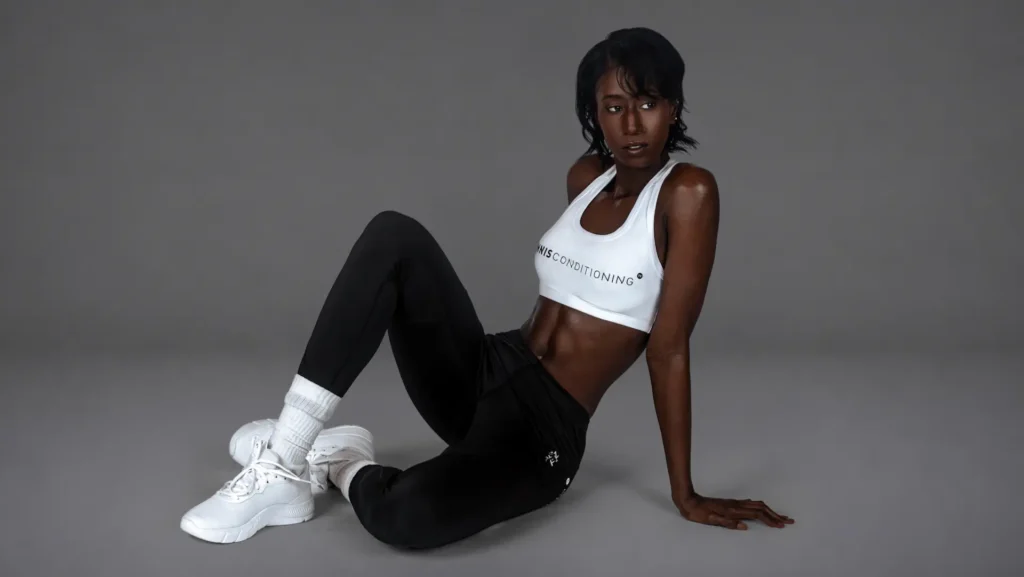
It is an appropriate conclusion because the strongest expression of strength in this athleisure fashion editorial is not constant action. It is control.
Across graphic sportswear, monochrome black styling and clean white athletic silhouettes, Strength in Motion presents a version of women’s athleisure style that feels confident, contemporary and intentionally understated.
Fashion, Identity and the Modern Athletic Silhouette
The evolution of athletic clothing into everyday visual culture has created new possibilities for editorial storytelling. Instead of separating performance from fashion, contemporary imagery can allow the two to inform one another.
For Strength in Motion, that means preserving the directness of athletic clothing while introducing the composition, styling and emotional control associated with fashion photography.
The result is a study of contrasts: black against white, motion against stillness, function against form and physical strength against visual restraint.
Readers interested in further explorations of confidence and Black beauty can continue with The Ethereal Goddess: A Celebration of Black Beauty and Timeless Femininity. For a broader behind-the-scenes perspective on creating polished imagery, see Professional Level Photoshoots: How It Works.
Visual artists developing their own editorial work may also find How to Get Featured in Fashion Magazines useful for understanding how a cohesive fashion story can be prepared for publication.
Strength in Motion — Shoot Credits
Photographer: Phil Halfmann
Creative Director: Sophia Lenore
Wardrobe Stylist: Sophia Lenore
Hair Stylist: Sophia Lenore
Makeup Artist: Sophia Lenore
Model: Gigi
Brand: TennisConditioning
Explore more original fashion stories, photography and creative culture in The Prestige Mag Fashion Editorials.