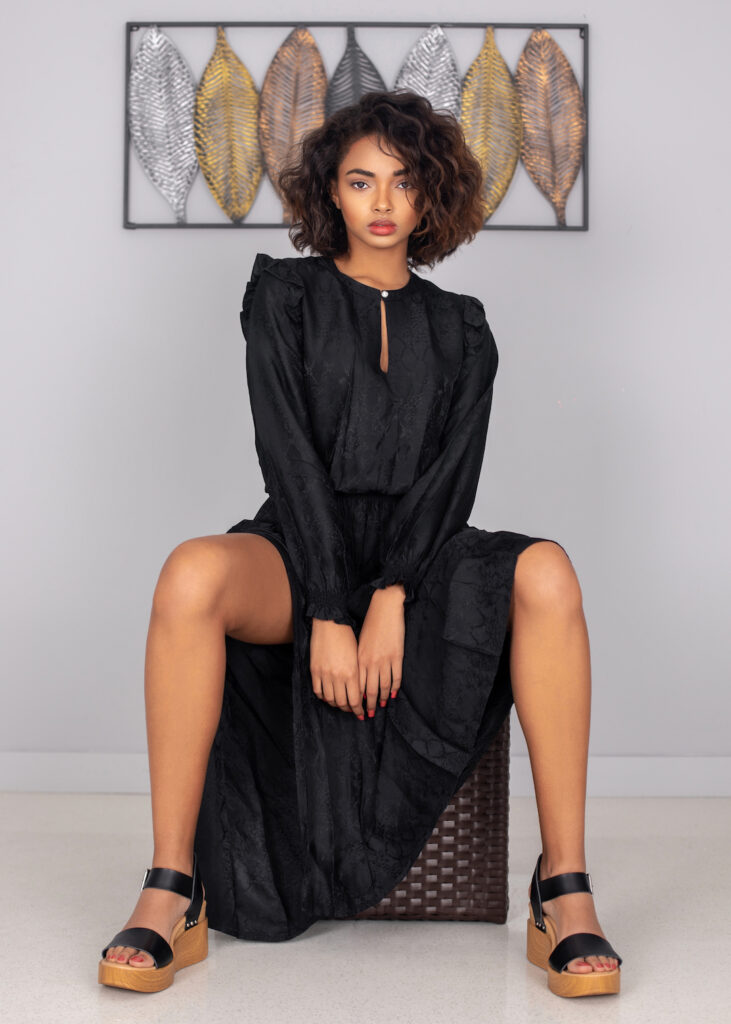
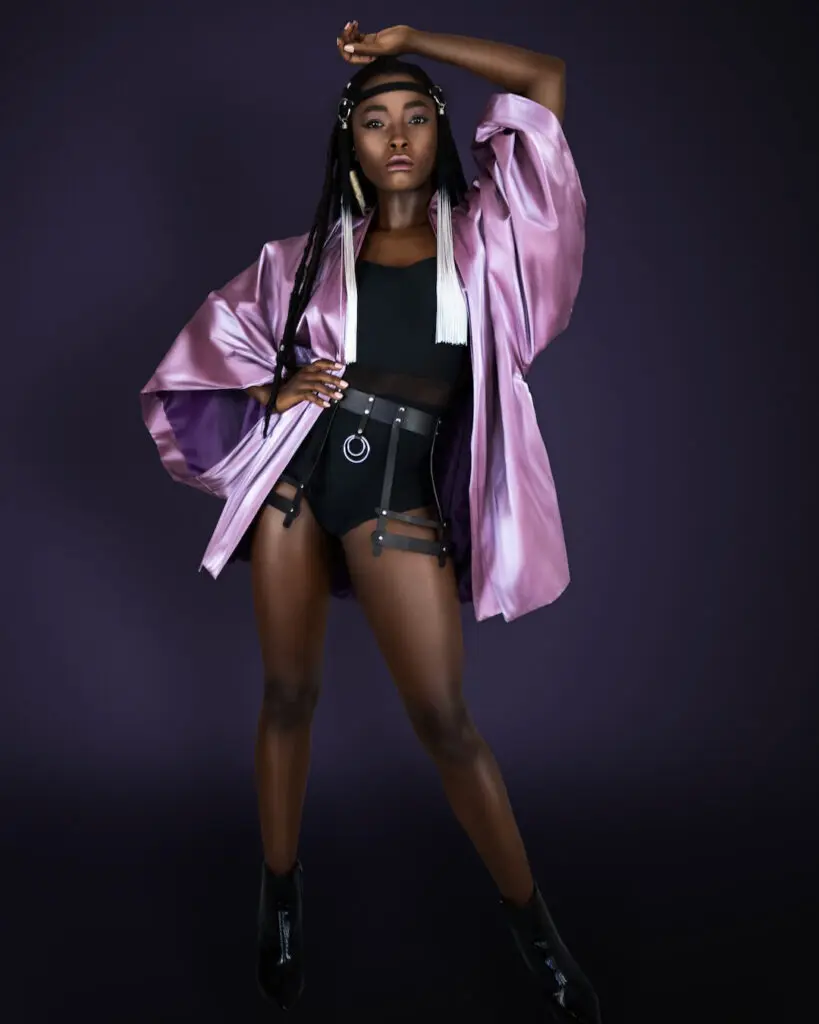
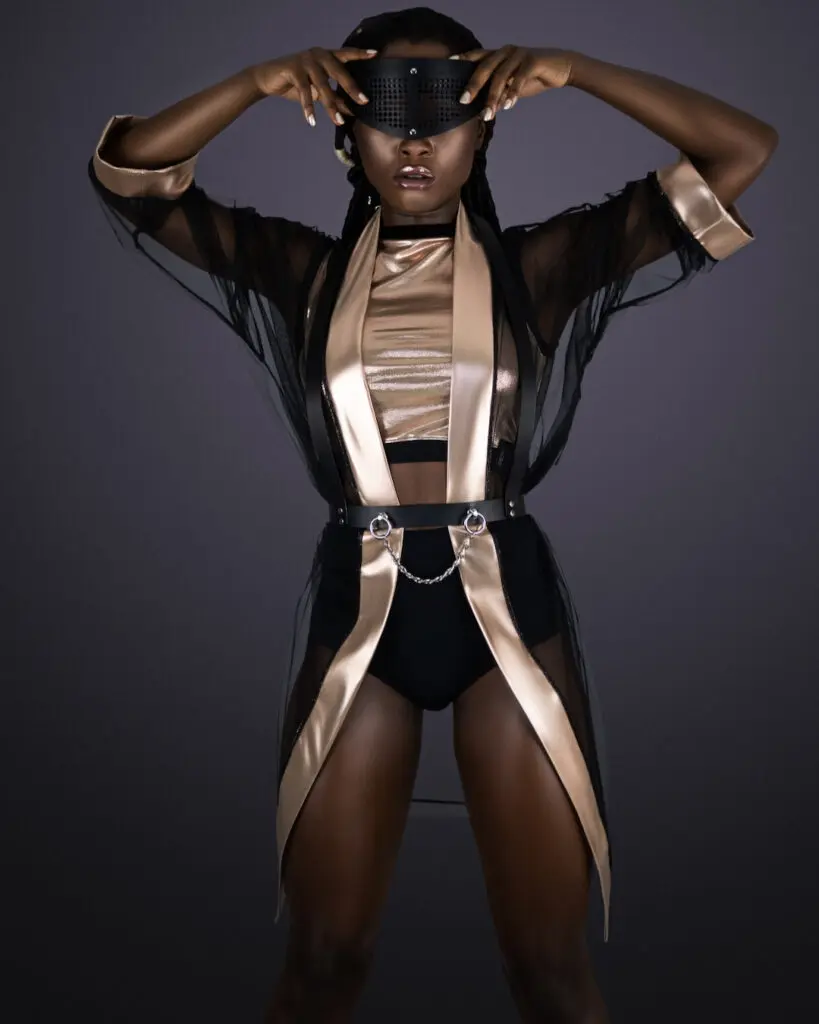
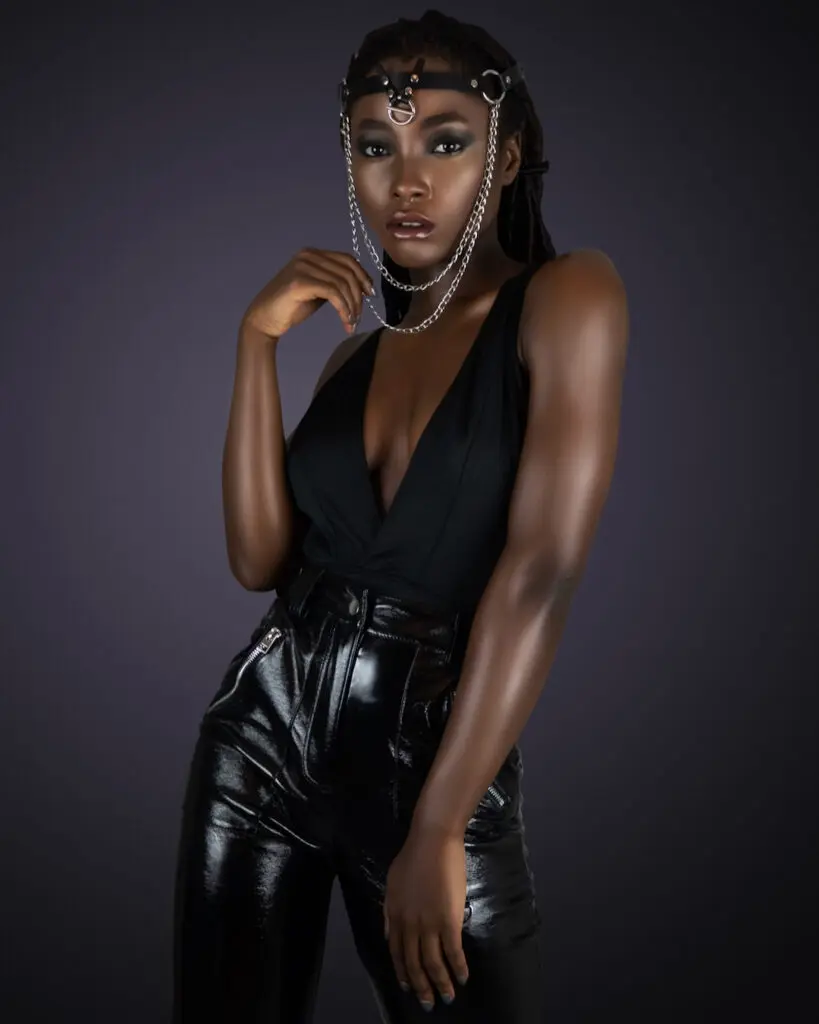
This avant-garde fashion editorial brings together 12 looks shaped by contrast: restraint and ornament, tailoring and fluidity, heritage references and contemporary styling. Photographed by Phil Halfmann, the series treats clothing as a tool for character rather than a list of trends.
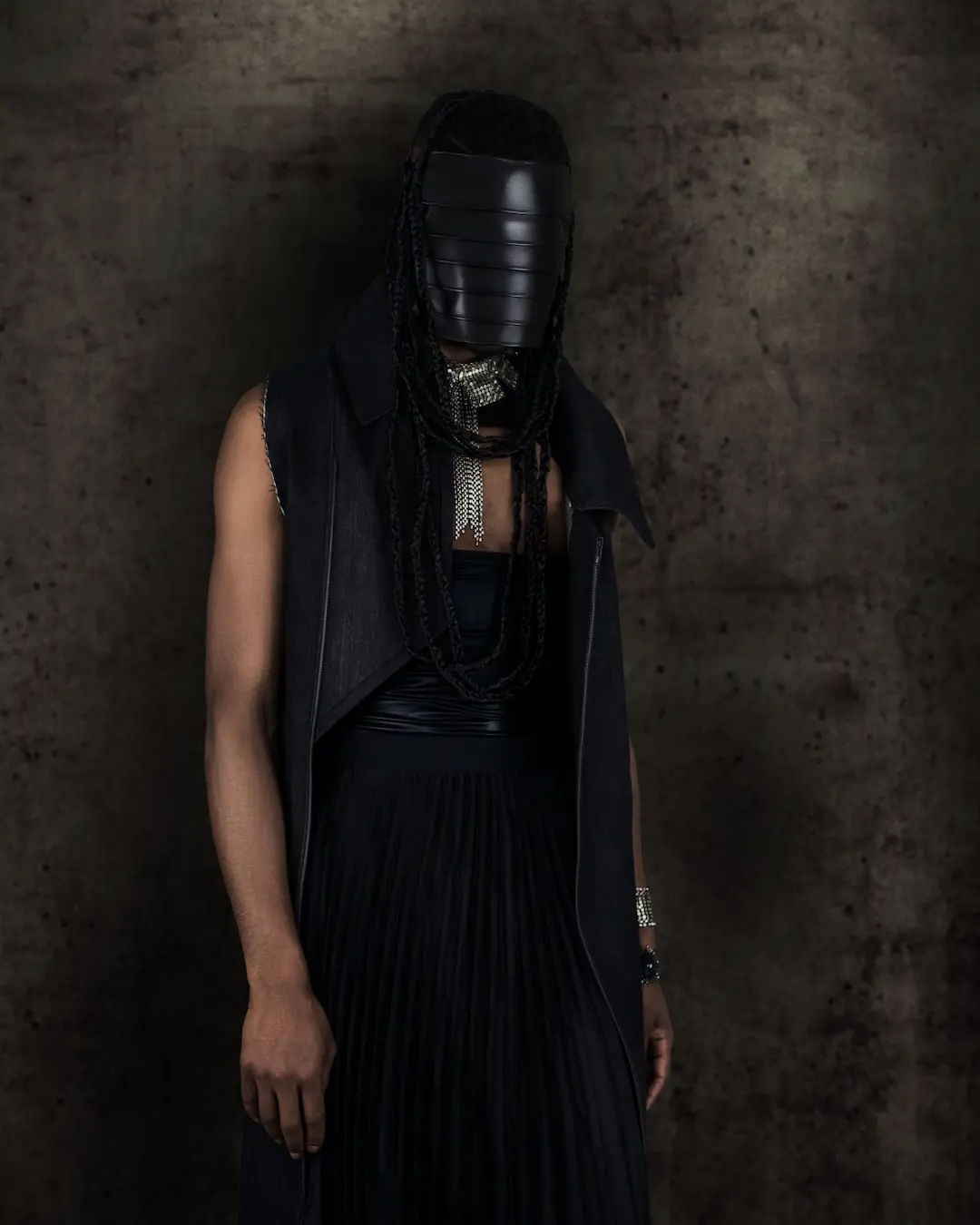
Avant-garde fashion is most convincing when the concept is visible in every decision. Here, masks interrupt the familiar reading of a face, long layers challenge conventional menswear proportions, metallic jewelry becomes part of the silhouette, and outdoor looks shift the story from theatrical portraiture to lived-in rebellion. Moreover, the result is not one uniform aesthetic. Instead, three visual chapters explore identity through different materials, locations and degrees of performance.
What Makes This an Avant-Garde Fashion Editorial?
Avant-garde does not simply mean unusual clothing. It describes an approach that tests the rules used to read fashion in the first place. Proportion can become exaggerated, familiar garments can move between gender codes, accessories can obscure identity, and references from different eras can meet inside one frame.
This editorial builds its visual language through repetition and disruption. Black anchors much of the series, while silver, gold, purple and orange create deliberate breaks. Likewise, formal poses alternate with movement and reclining compositions. Those shifts keep the 12-look sequence varied without making it feel disconnected.
For another example of a designer-led story built through distinctive silhouettes, see The Exhibitionist fashion editorial. Readers planning their own story can also use our 2026 fashion editorial submission guide to turn a strong visual idea into a coherent publication package.
Avant-Garde Fashion Editorial: Reworking Masculine Codes
First, the opening three looks establish the editorial’s central tension: control versus transformation. A direct portrait begins with minimal styling, allowing makeup, jewelry and gesture to lead. The next frames introduce a leather face covering, elongated layers and a dress-like silhouette. Instead of treating masculine and feminine elements as opposites, the styling lets them occupy the same visual space.
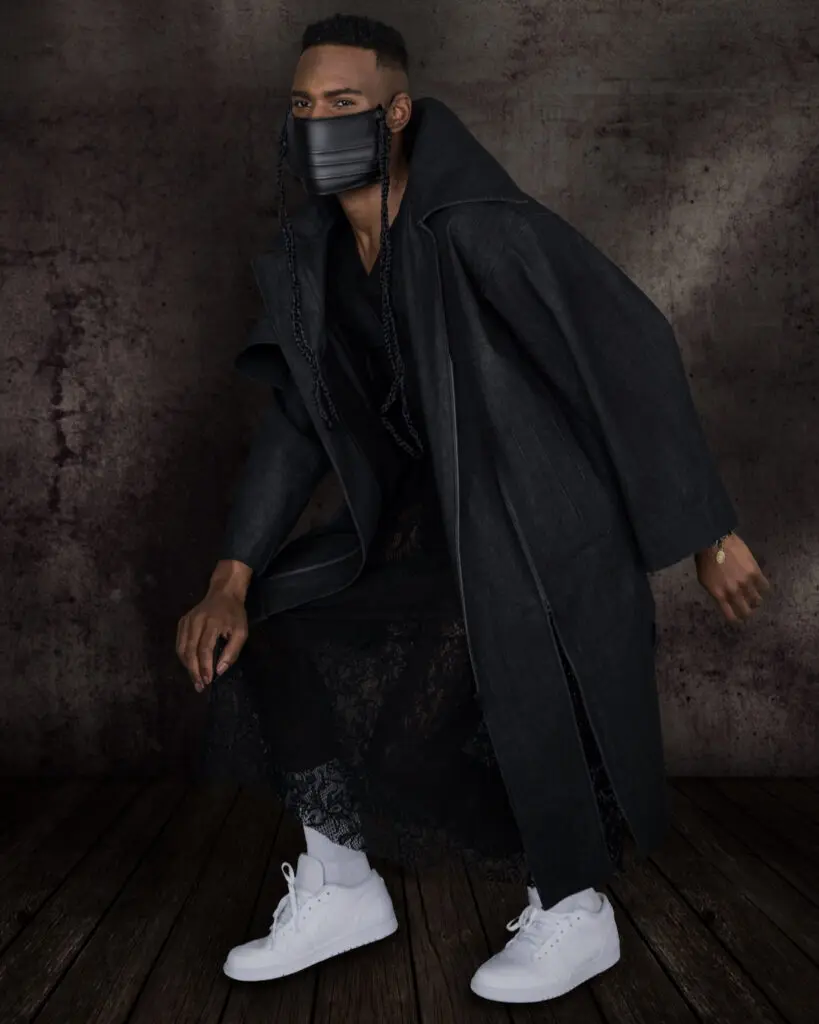
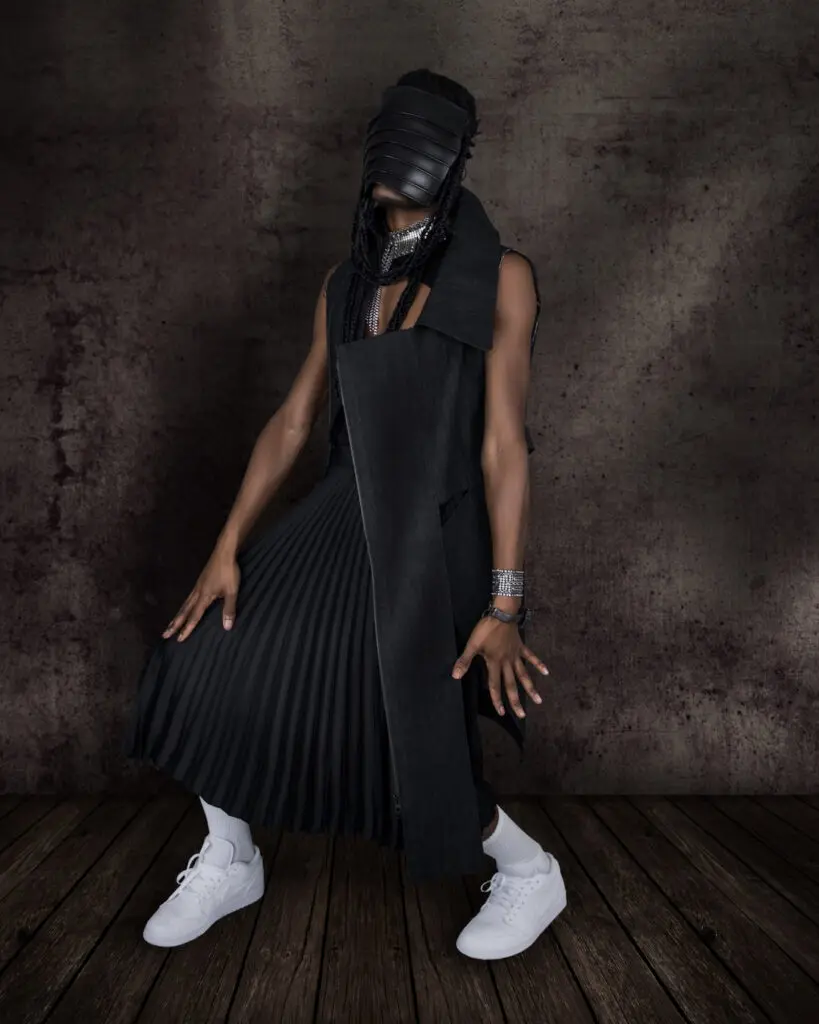
Chapter Two: Symbolism, Gold and Adornment
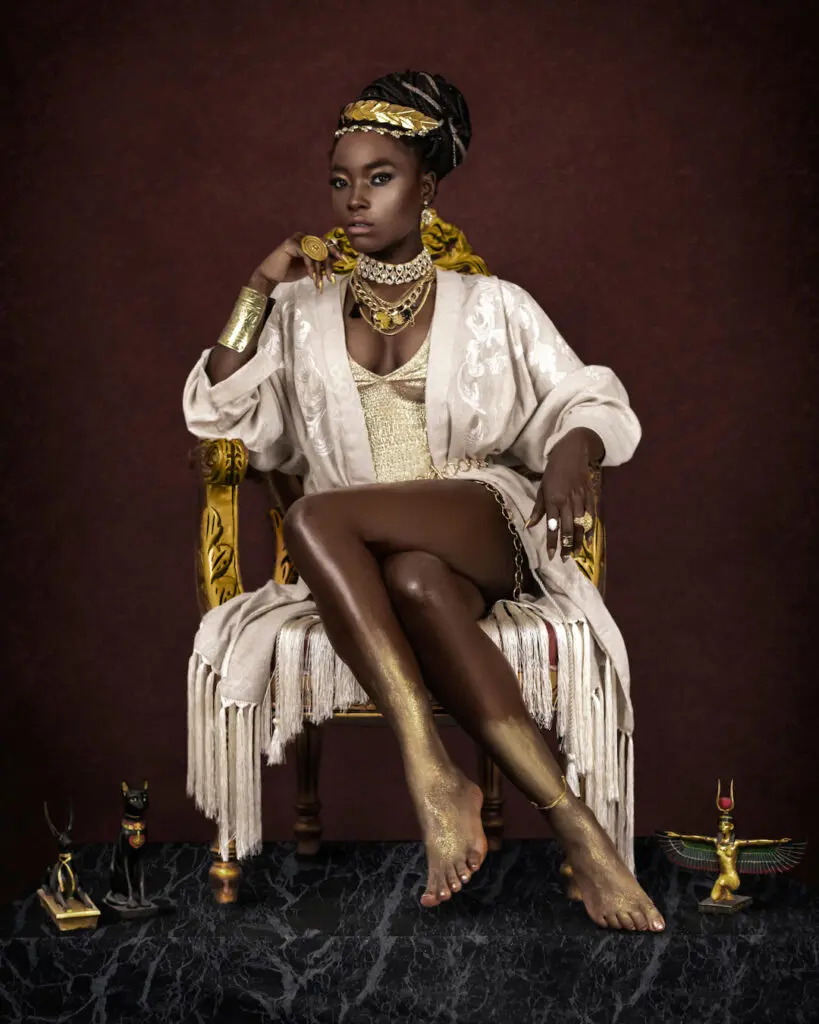
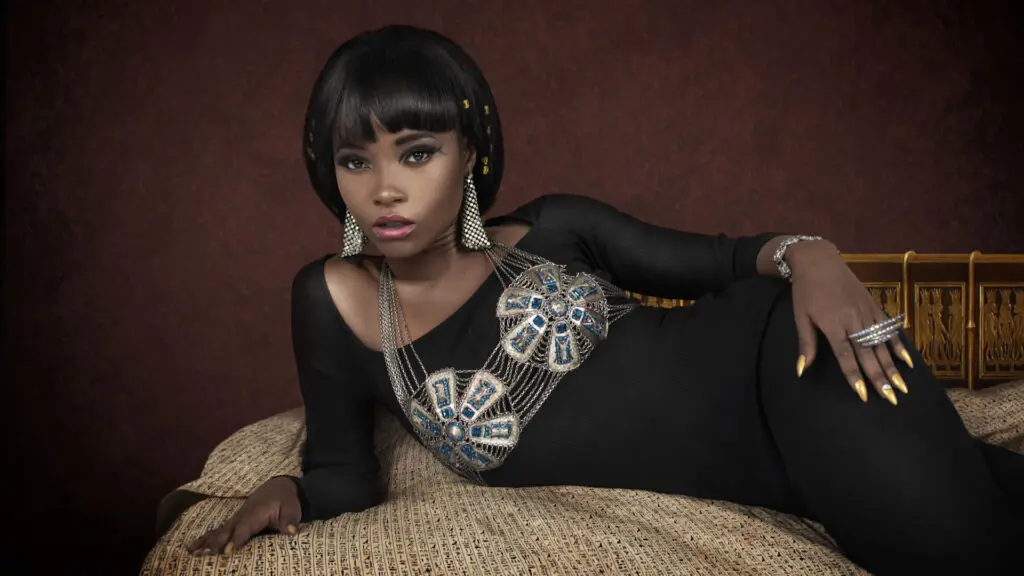
Next, this avant-garde fashion editorial changes both palette and visual density. Gold surfaces, vivid jewelry and an Egyptian-inspired crown introduce ceremonial references. These objects should not be read as neutral decoration: they bring histories and cultural associations into the photographs. The strongest interpretation is therefore specific rather than universal. The images explore how adornment can project authority, but they do not claim to represent a single culture or historical tradition.
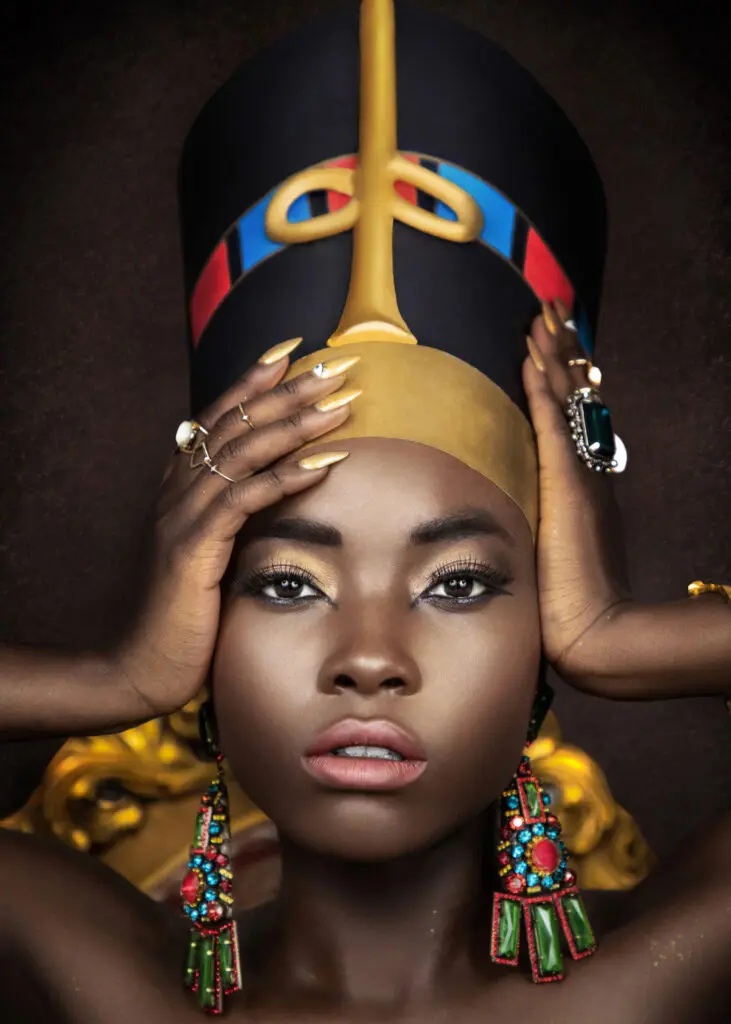
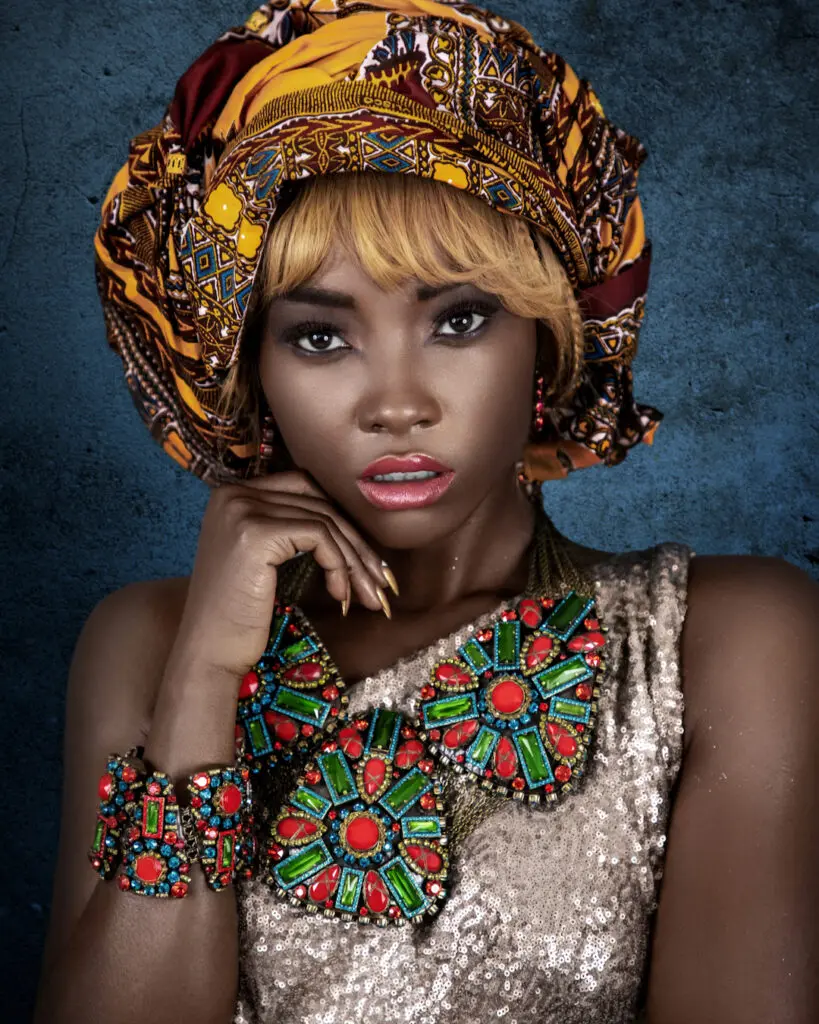
Chapter Three: Black, Leather and Street Attitude
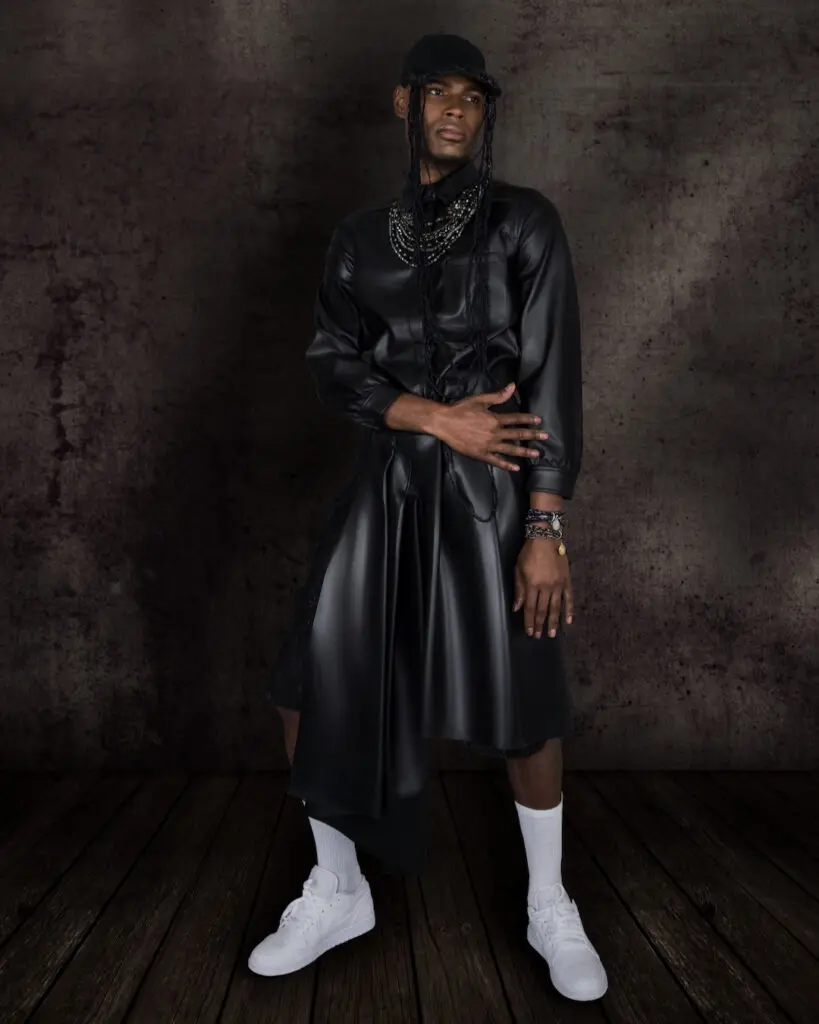
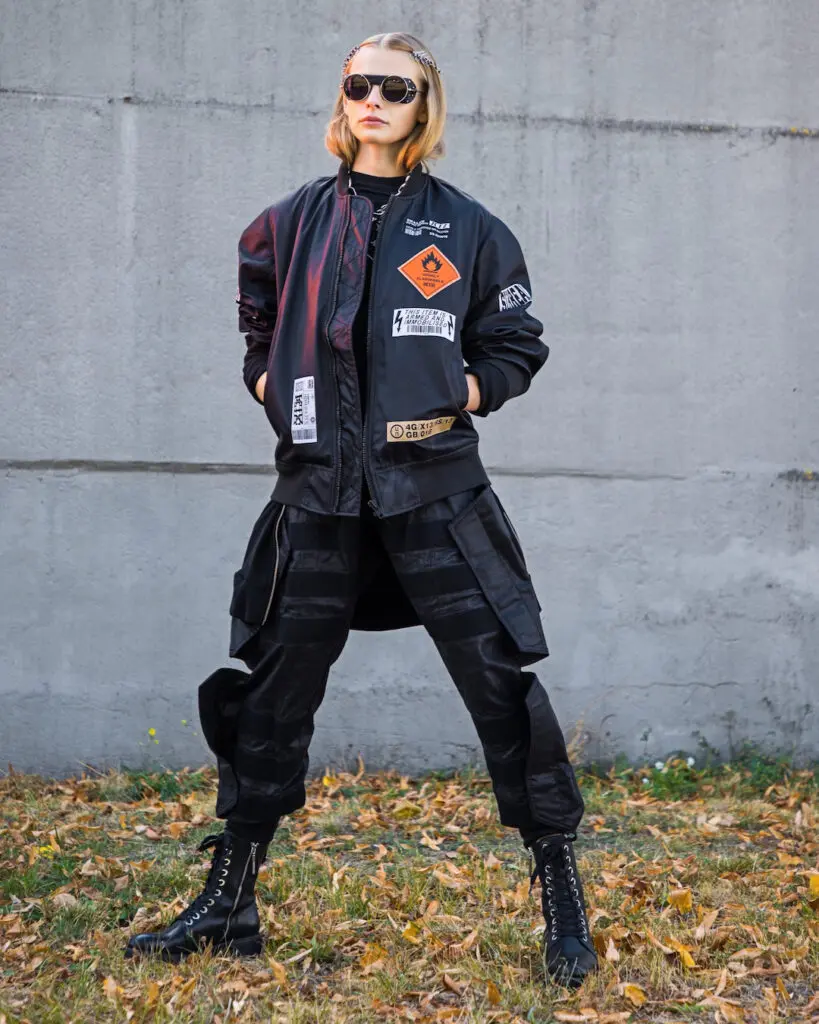
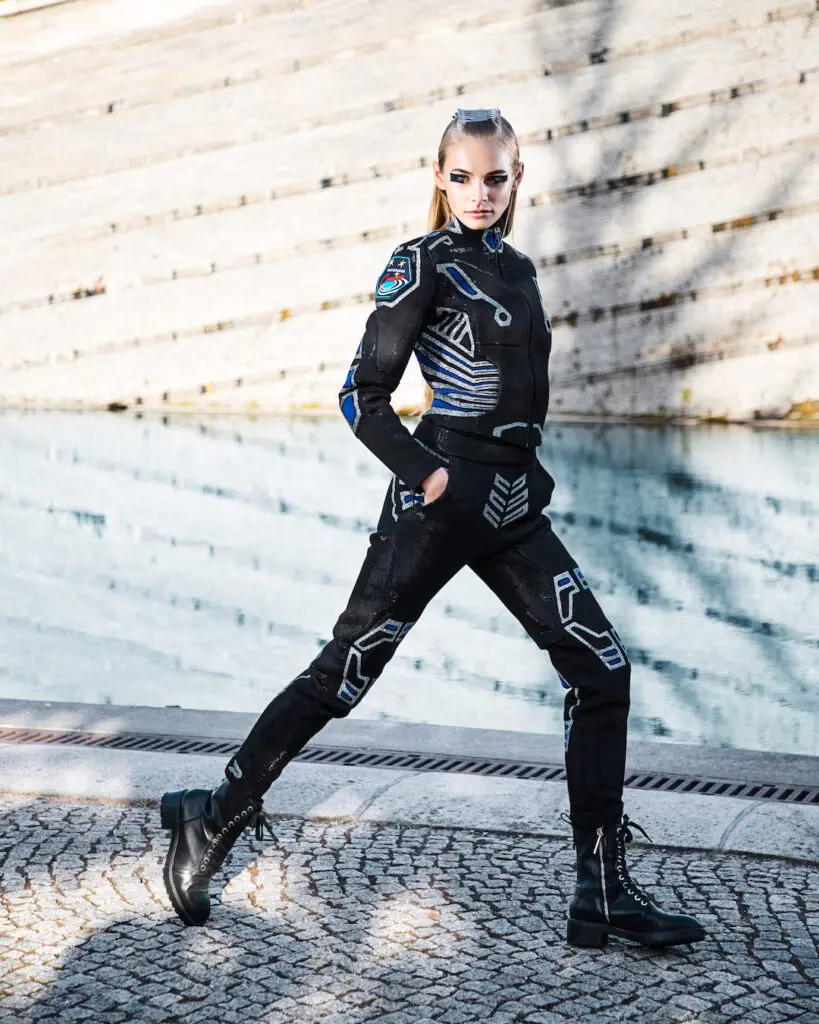
Finally, this avant-garde fashion editorial moves between an outdoor setting and the studio. Black becomes the connecting element, yet the silhouettes change from tailored layers to a bodysuit, kimono, sheer fabrics and leather trousers. This is where the editorial becomes most visibly eclectic. Rather than forcing the looks into one definition of avant-garde style, the sequence uses a shared attitude—direct, self-possessed and deliberately resistant to convention.
Inclusive Casting as Part of the Concept
Inclusive casting matters here because the editorial questions who is allowed to inhabit experimental fashion. However, representation should not be overstated. A diverse cast is meaningful, but images alone cannot prove that a production was inclusive behind the camera, accessible to every body type or culturally accountable in its use of references. Those judgments require complete credits and production context.
What the photographs can show is range: different models carry softness, severity, sensuality and authority without being confined to one role. That variety makes the series more persuasive than a general claim that fashion “belongs to everyone.” It demonstrates the idea through casting, posture and styling.
Continue with our Strength in Motion athleisure editorial for another study of movement and modern styling, or explore the Spring 2026 fashion trend report for a wider view of silhouette, transparency and the industry’s continuing inclusion gap.
Why This Avant-Garde Fashion Editorial Works
This avant-garde fashion editorial succeeds through friction rather than uniformity. Across 12 looks, familiar codes are repeatedly interrupted: denim meets a dress-like layer, masks conceal while jewelry attracts attention, ceremonial references give way to park styling, and black shifts from minimal to sensual to severe.
The unspoken strength of the story is that it does not need to predict the future of fashion. Its value is more immediate. It asks the viewer to look carefully at how clothing, objects, casting and pose construct identity inside a photograph—and where those interpretations remain open.
Editorial Credits
Photographer: Phil Halfmann
Fashion Editorial Submission Guide: How to Get Published in 2026
A practical 2026 guide to choosing fashion magazines, building a coherent editorial, preparing files and credits, reviewing rights and submitting professionally.


Spring 2026 Fashion Trend Report: What Defined the Season
A critical Spring 2026 fashion trend report on fluid tailoring, sheer layers, color, practical accessories, and the runway’s inclusion gap.
Fashion Editorial Submission Guide: How to Get Published in 2026
A practical 2026 guide to choosing fashion magazines, building a coherent editorial, preparing files and credits, reviewing rights and submitting professionally.
Spring 2026 Fashion Trend Report: What Defined the Season
A critical Spring 2026 fashion trend report on fluid tailoring, sheer layers, color, practical accessories, and the runway’s inclusion gap.