The Blossoming fashion editorial traces a quiet transformation through six fashion stories. Photographed by Phil Halfmann with model Mariana, the series moves from soft white and beige to floral symbolism, red leather and vivid blue—without losing the warmth of its studio world.
Fashion editorials often use dramatic change to create momentum. The Blossoming takes a subtler approach. Its progression comes from posture, texture, color and expression. A pecan-toned backdrop keeps the visual language grounded while each wardrobe chapter asks Mariana to perform a different kind of confidence.
The result is not simply a collection of outfits. It is a story about becoming comfortable enough to be seen: first reserved, then playful, composed and finally vivid.
The Idea Behind The Blossoming Fashion Editorial
The creative direction began with a simple question: what does growth look like when it is not forced? Flowers and butterflies make the theme visible, but the idea is carried just as strongly by Mariana’s changing body language. Her performance develops from contained gestures to more direct eye contact and sculptural poses.
The warm brown set acts as a constant. White wardrobe feels luminous against it, beige becomes tonal, pink softens the palette, red introduces tension and blue closes the story with contrast. Because the background and lighting remain controlled, the six looks read as chapters of one editorial rather than unrelated portfolio images.
This emphasis on continuity is also what separates a coherent editorial from a sequence built only around wardrobe changes. For a deeper production breakdown, see our guide to studio fashion editorial storytelling.
Six Looks, One Visual Progression
1. White Layers and a Quiet Opening
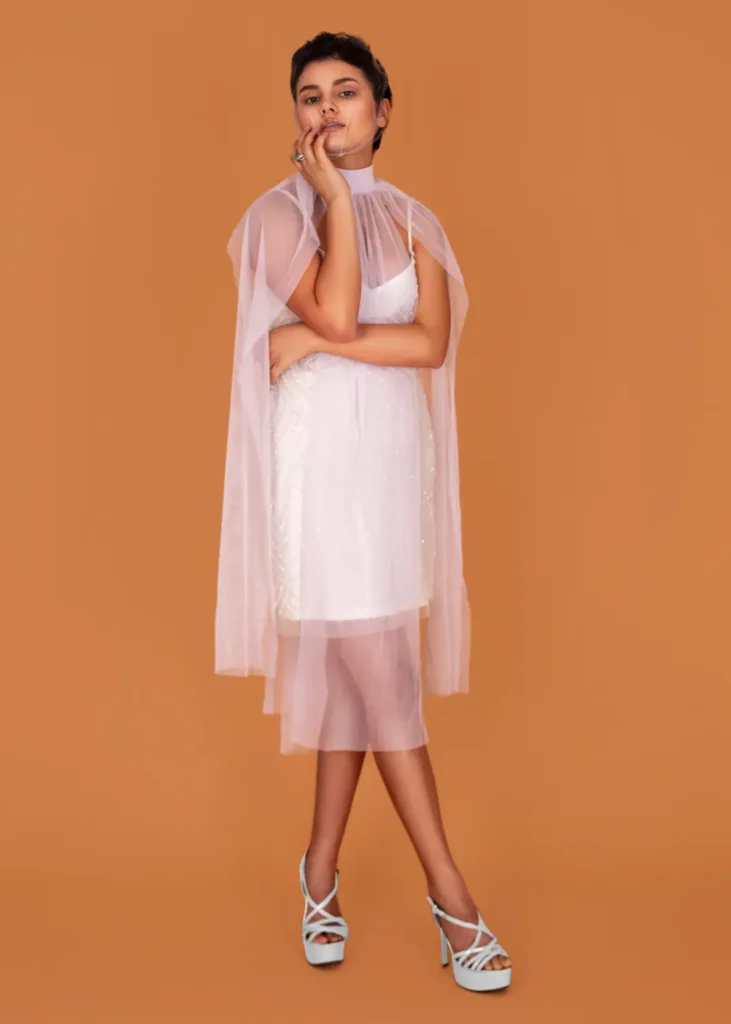
The opening look uses a sheer white overlay, silver heels and restrained gestures. Rather than beginning with spectacle, the photographs leave room for stillness. The translucent layers soften Mariana’s silhouette, while her hands and shoulders create small points of tension.
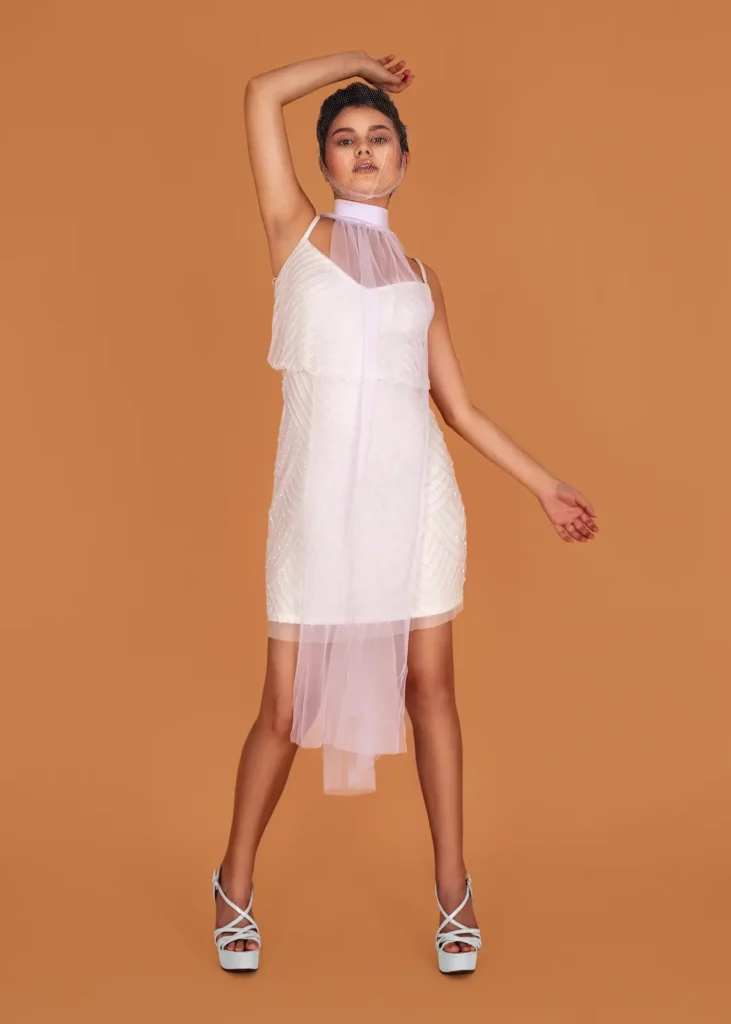
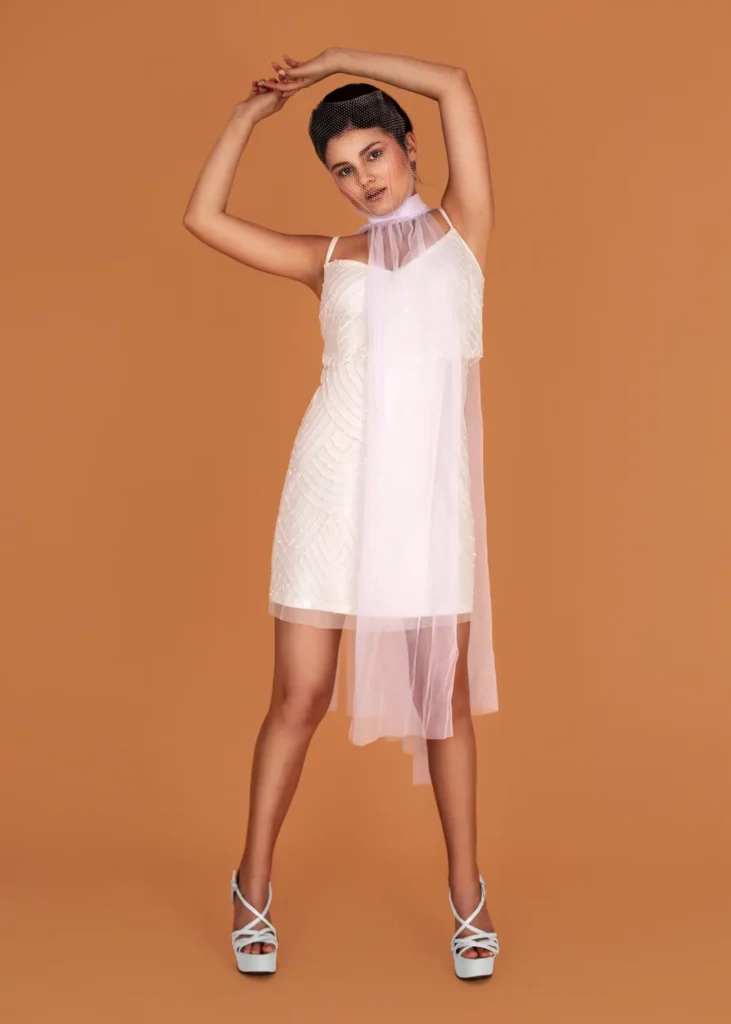
Movement enters gradually in the supporting frames. Raised arms and a shifting stance open the shape of the dress without breaking the calm established by the first portrait.
2. Beige Silk and Grounded Ease
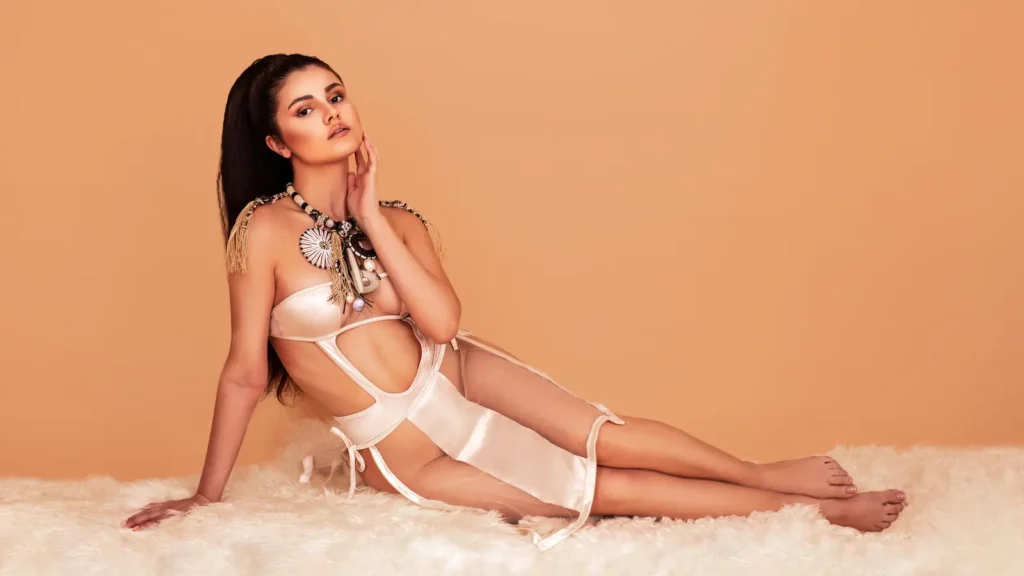
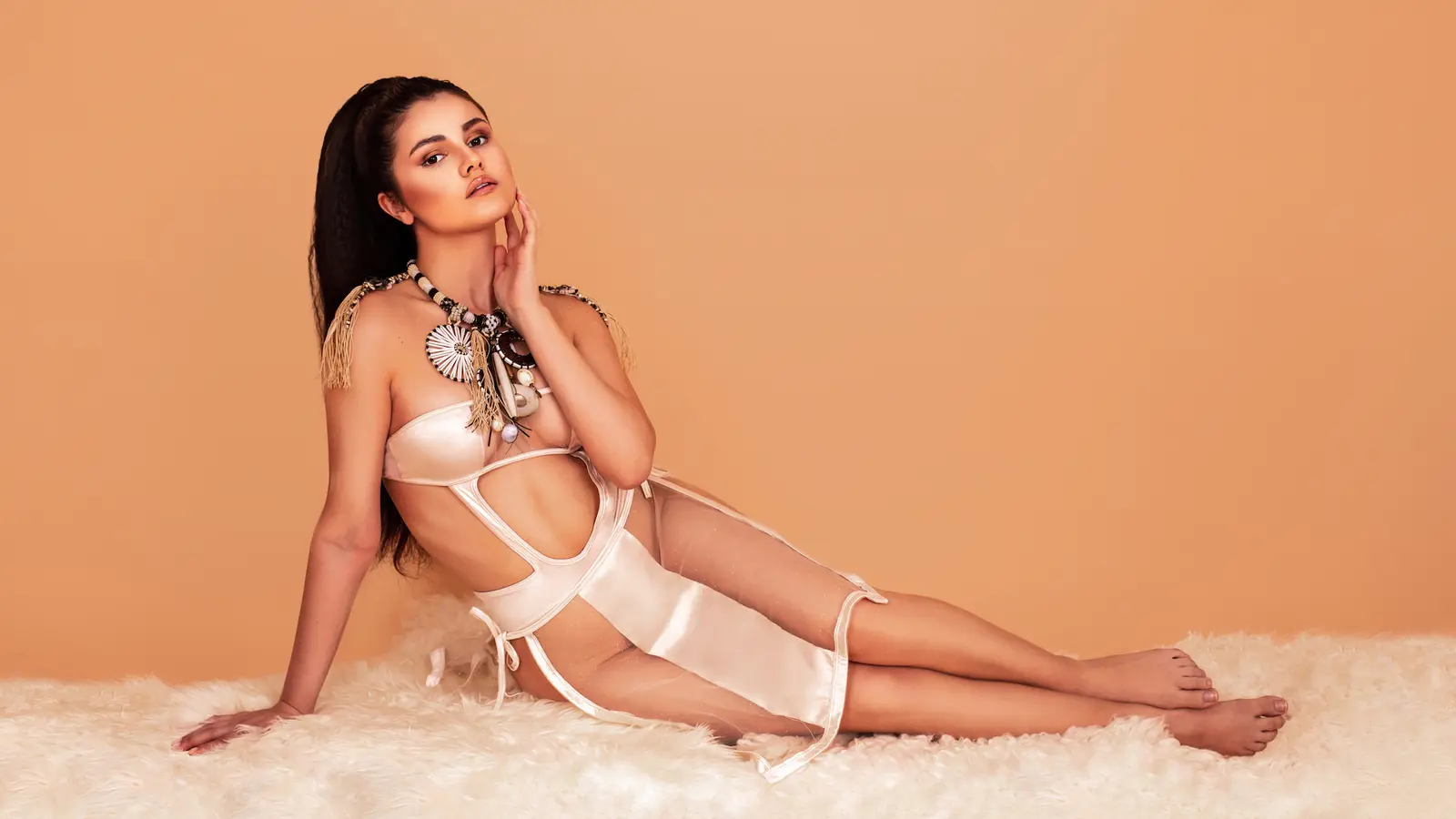
The second chapter lowers the camera’s energy. Mariana is barefoot, and the poses move from the stool to the floor. Beige silk and chiffon sit close to the color of the set, shifting attention away from contrast and toward texture, line and expression.
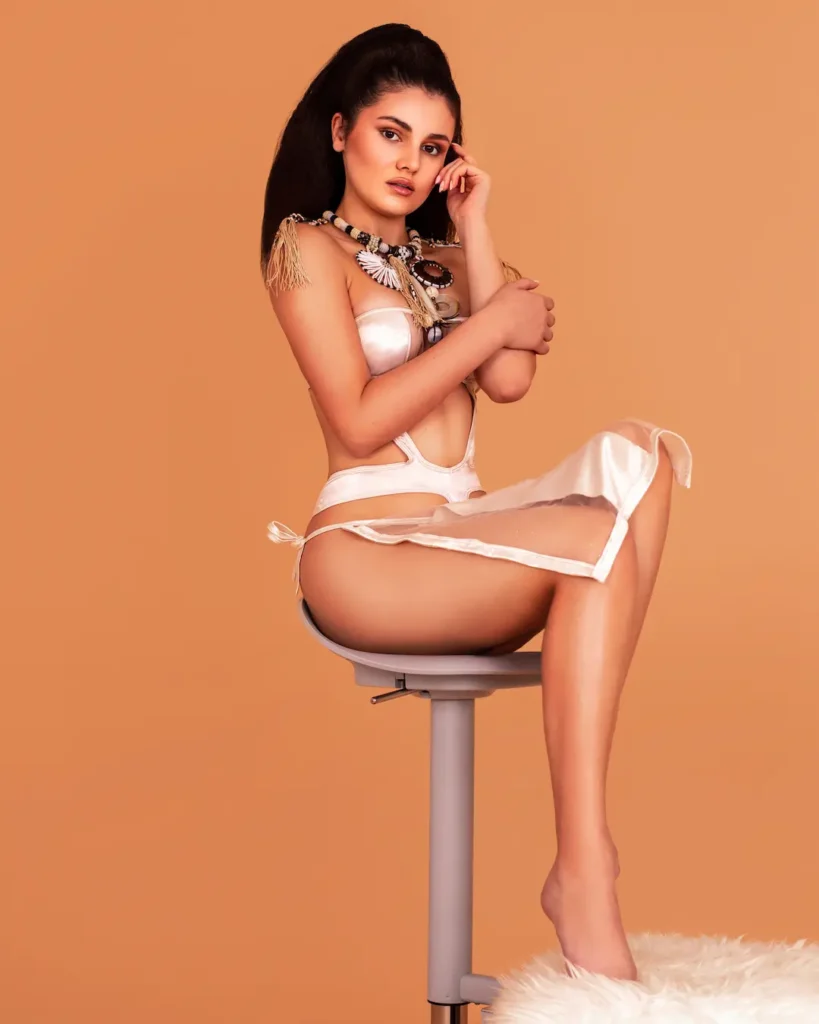
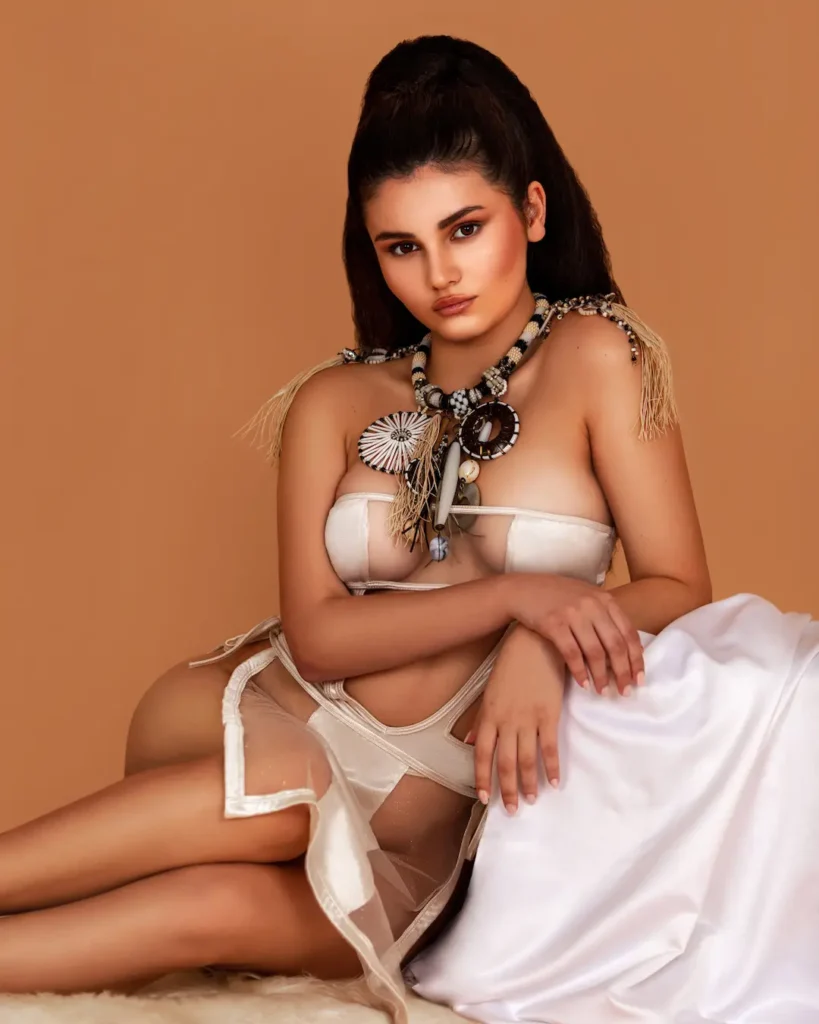
This is the editorial at its most intimate. The jewelry adds detail without overpowering the fabric, and the white rug creates a small island of light within the otherwise tonal composition.
3. Pink Knit, Butterflies and Transformation
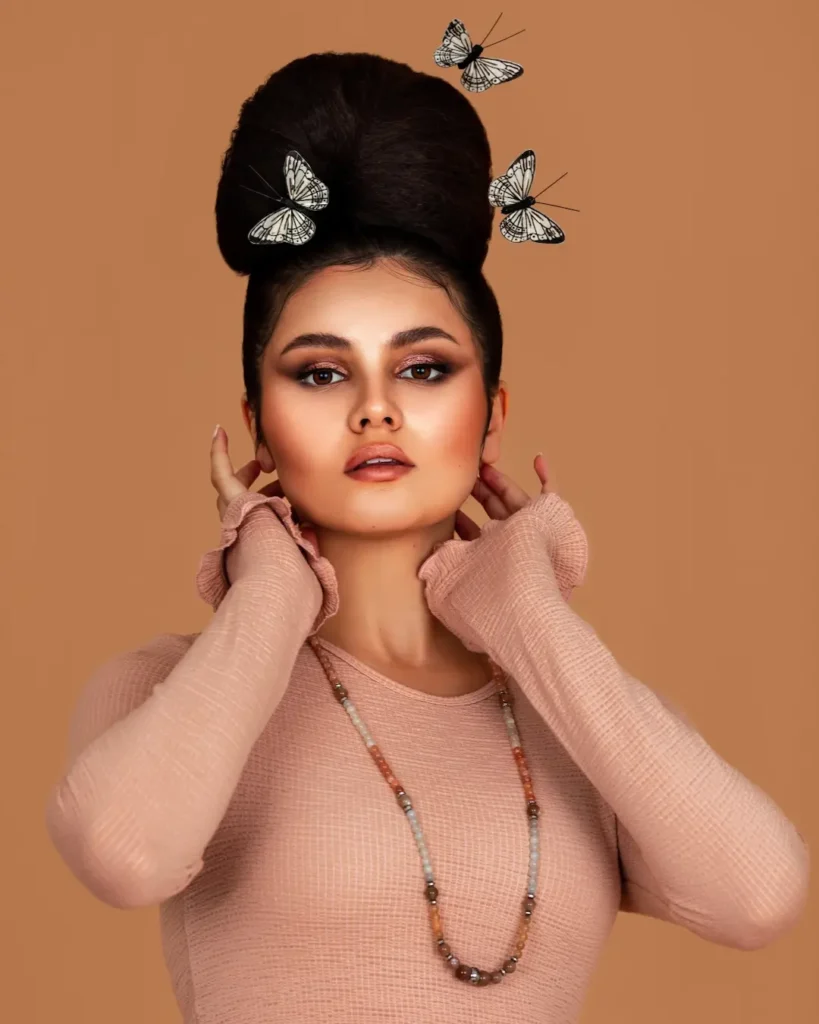
The third look makes the blossoming theme explicit. Butterflies appear around Mariana’s sculpted hair, while the ribbed pink wardrobe introduces a tactile counterpoint to the smooth silk of the previous chapter. Close crops bring the beauty direction forward: graphic eyes, warm skin and carefully placed accessories become part of the narrative.
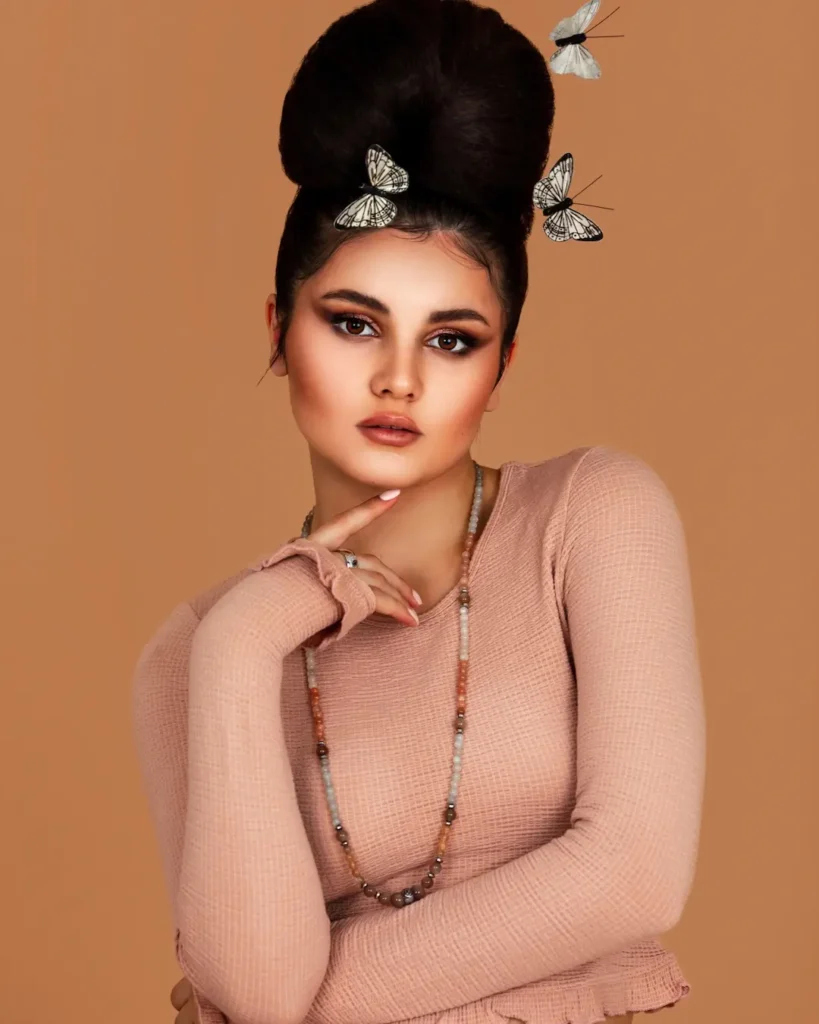
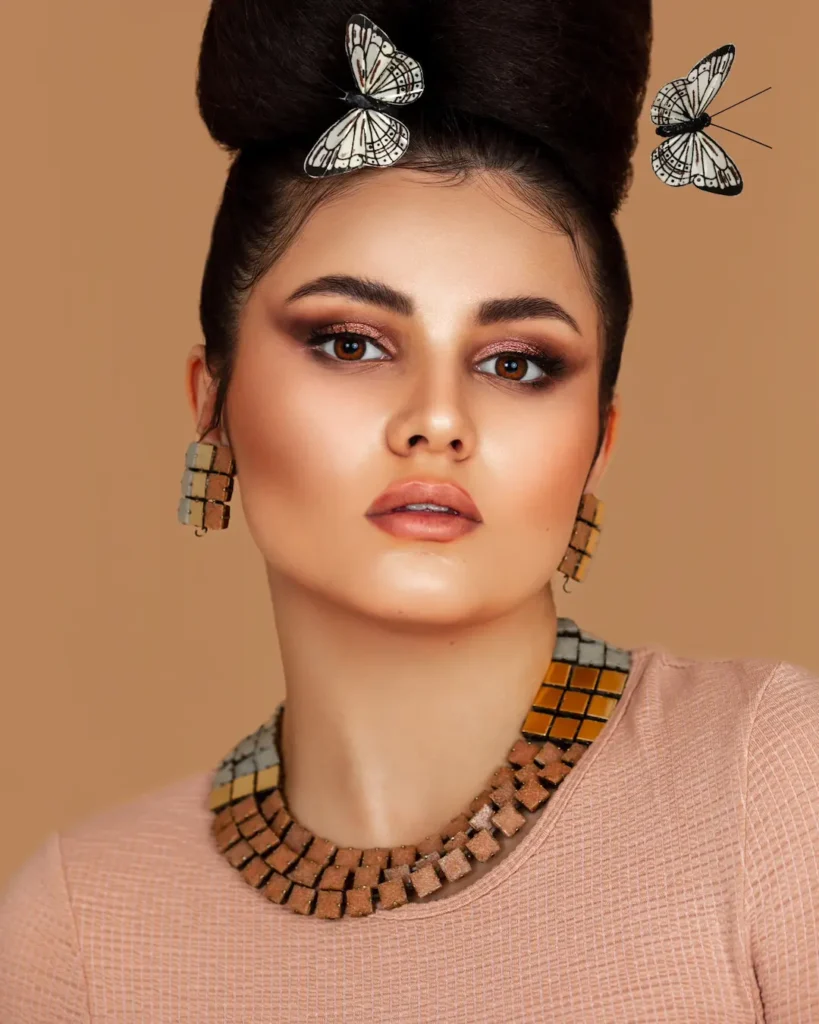
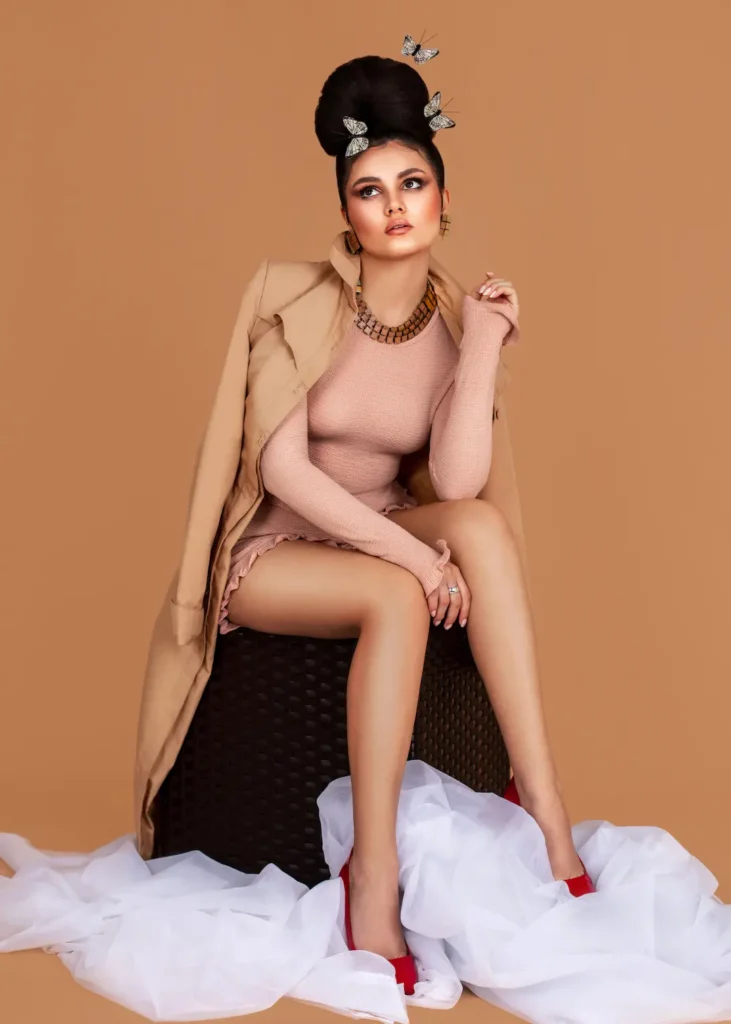
The strongest images do not treat the butterflies as decoration alone. They echo the curves of the hair and guide the eye through the frame, helping a familiar symbol feel integrated rather than applied afterward.
4. White Jumpsuit and Floral Structure
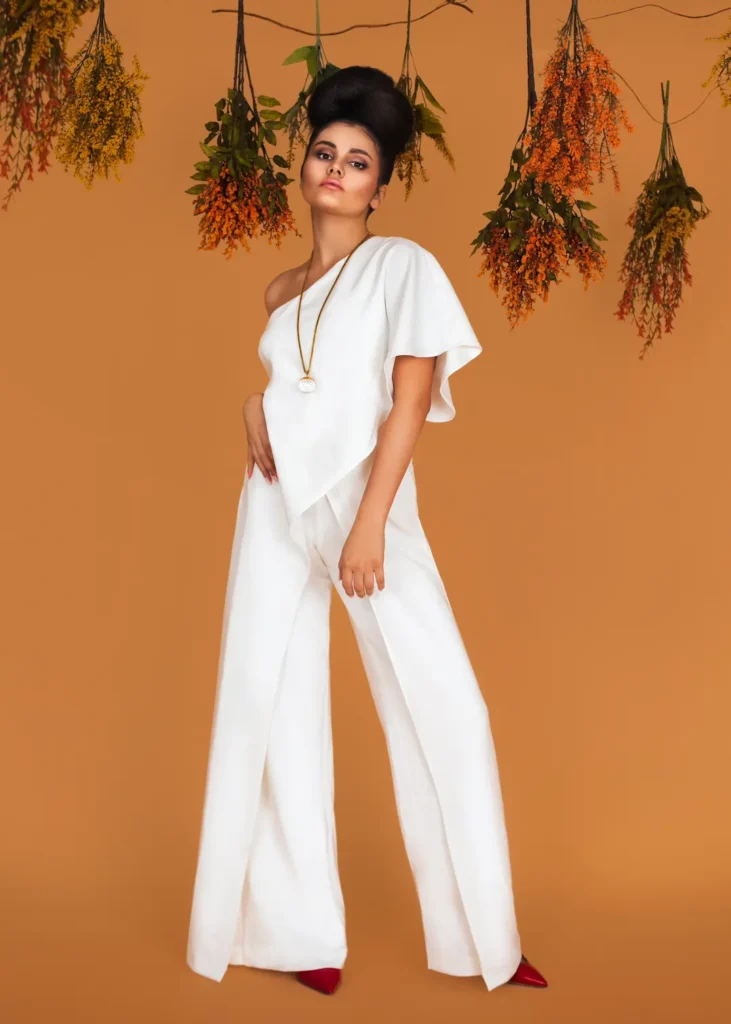
White returns in a more architectural form. The wide-leg jumpsuit replaces transparency with a clean, graphic silhouette, and the suspended flowers extend the frame vertically. Mariana’s upright posture makes this chapter feel composed and assured.
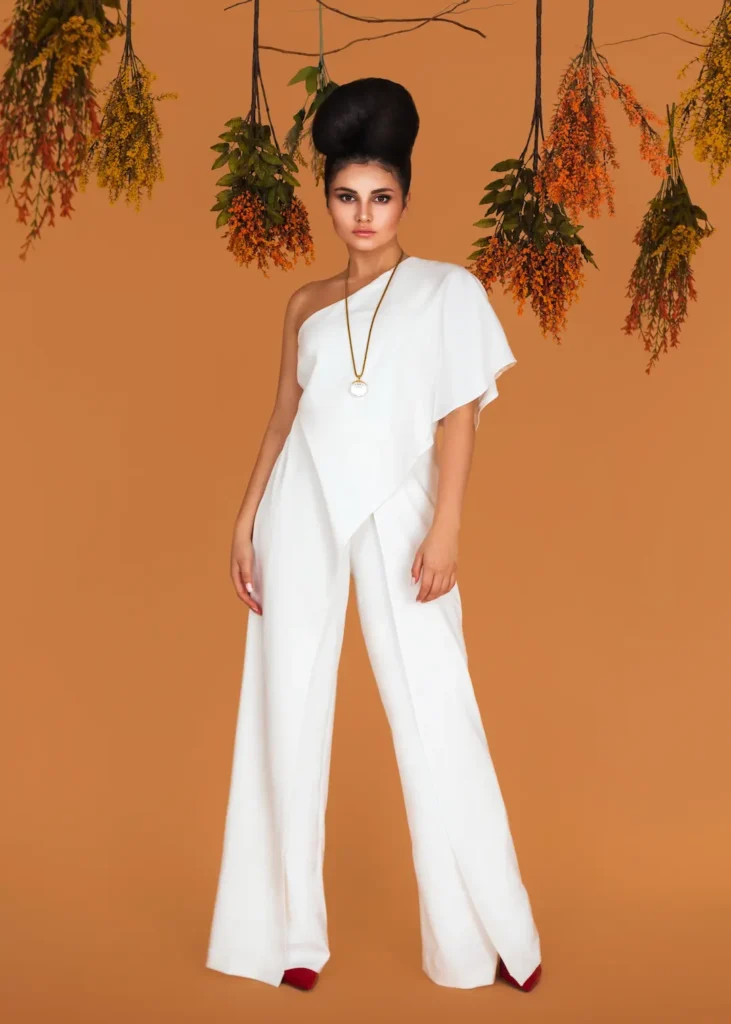
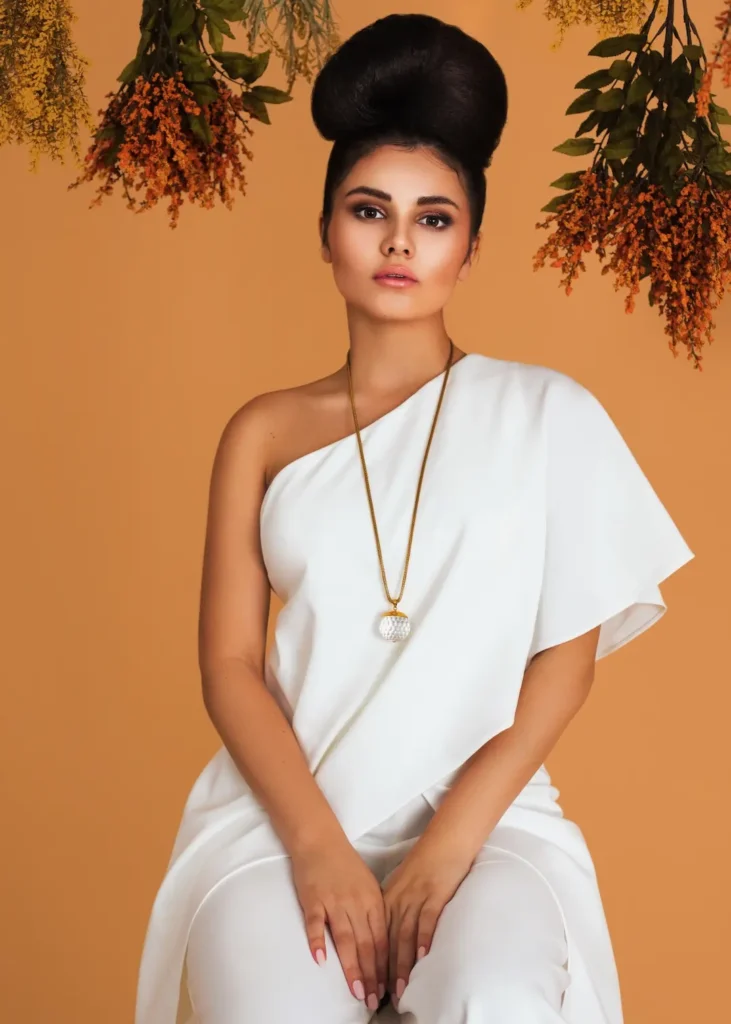
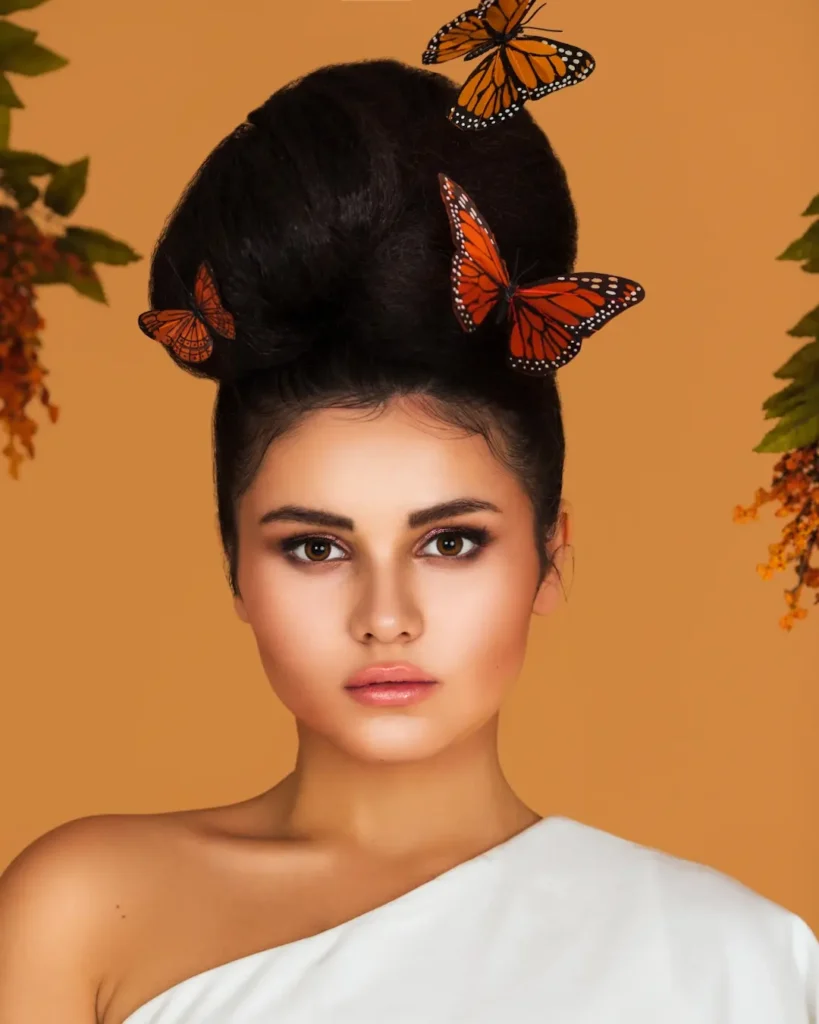
The closer portraits introduce fresh flowers and another butterfly detail. Together, these elements connect the controlled elegance of the jumpsuit to the organic visual language established earlier.
5. Red Leather and Controlled Tension
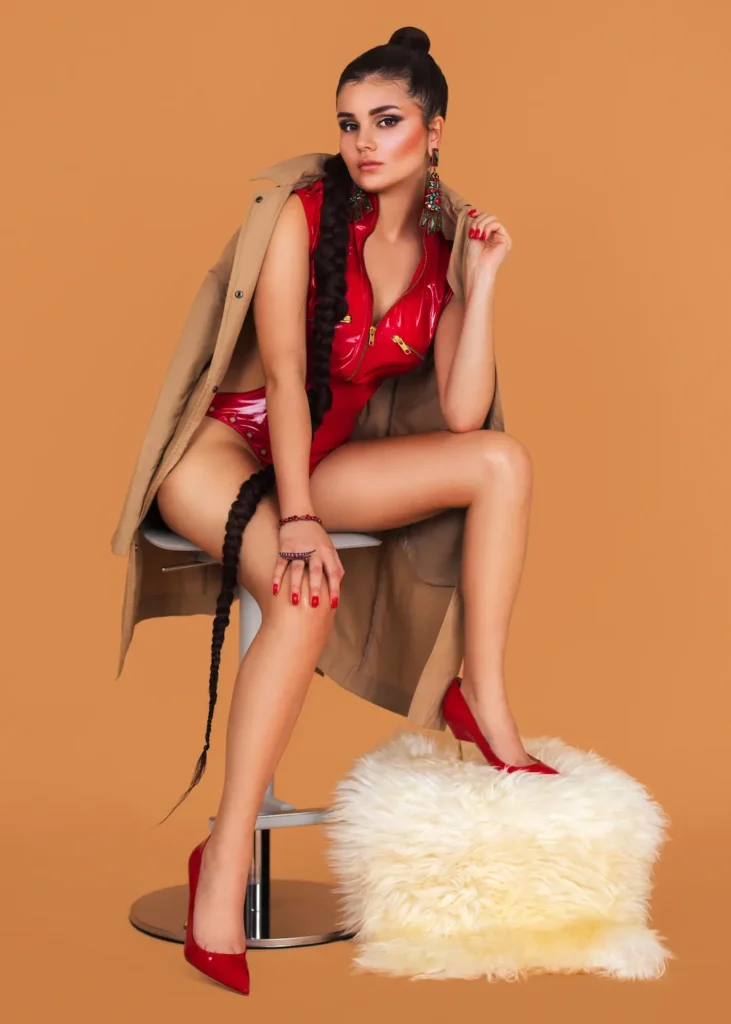
Red marks the editorial’s sharpest shift. The bodysuit, matching heels and long braid create a more assertive silhouette, yet the images remain measured rather than aggressive. A beige coat appears in several frames, linking the saturated wardrobe back to the neutral world of the set.
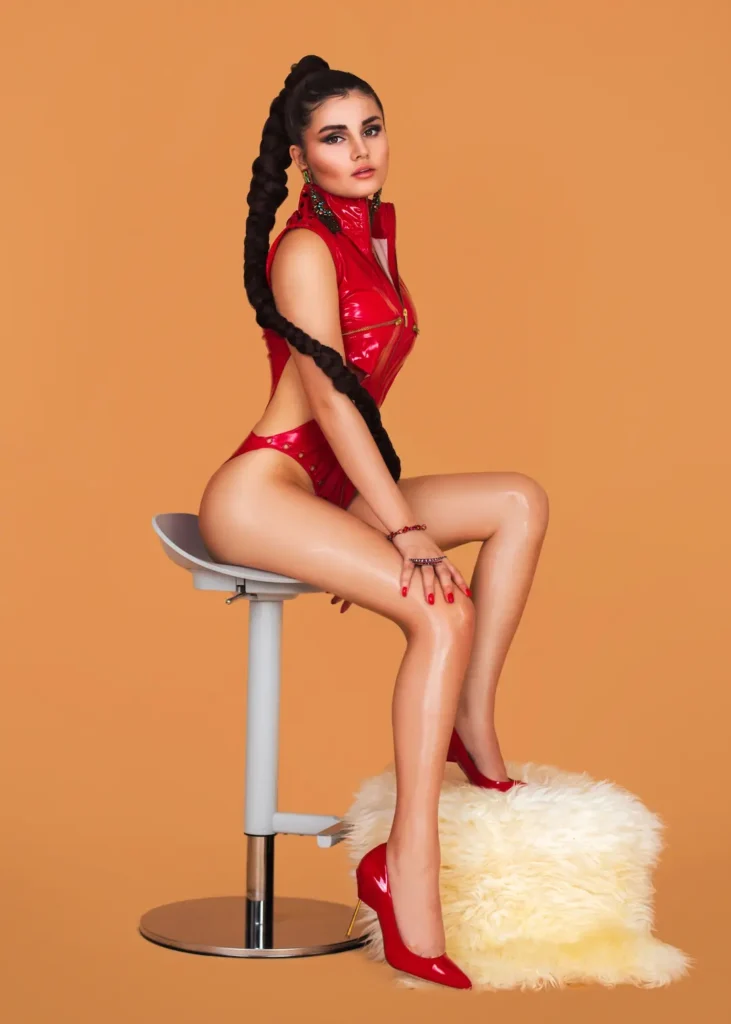
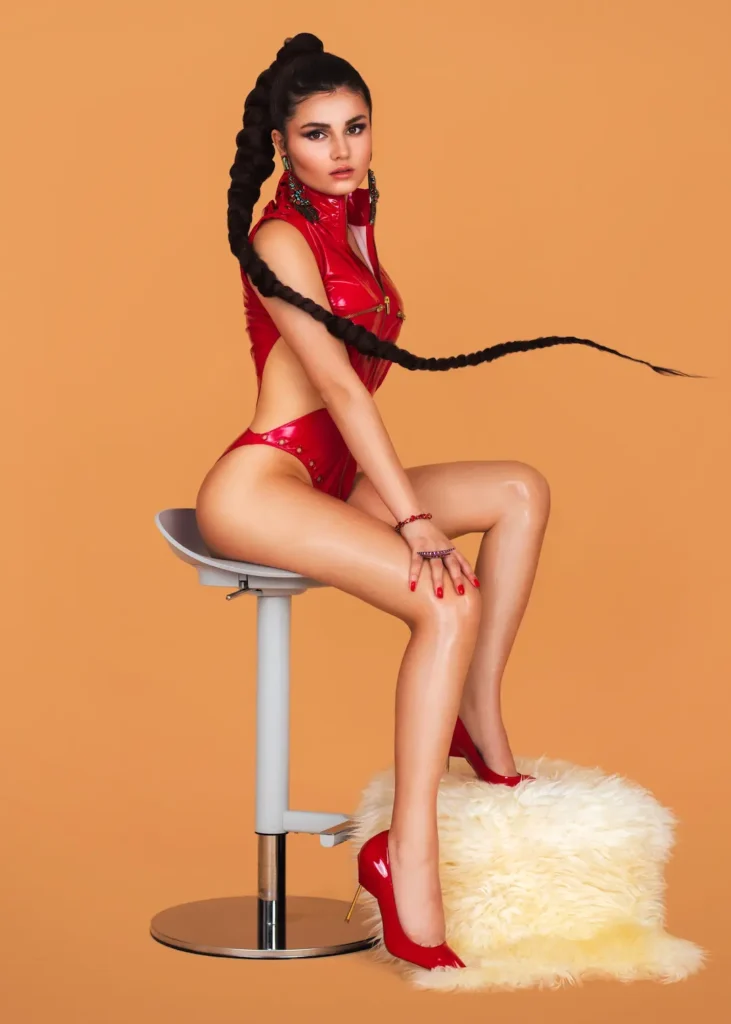
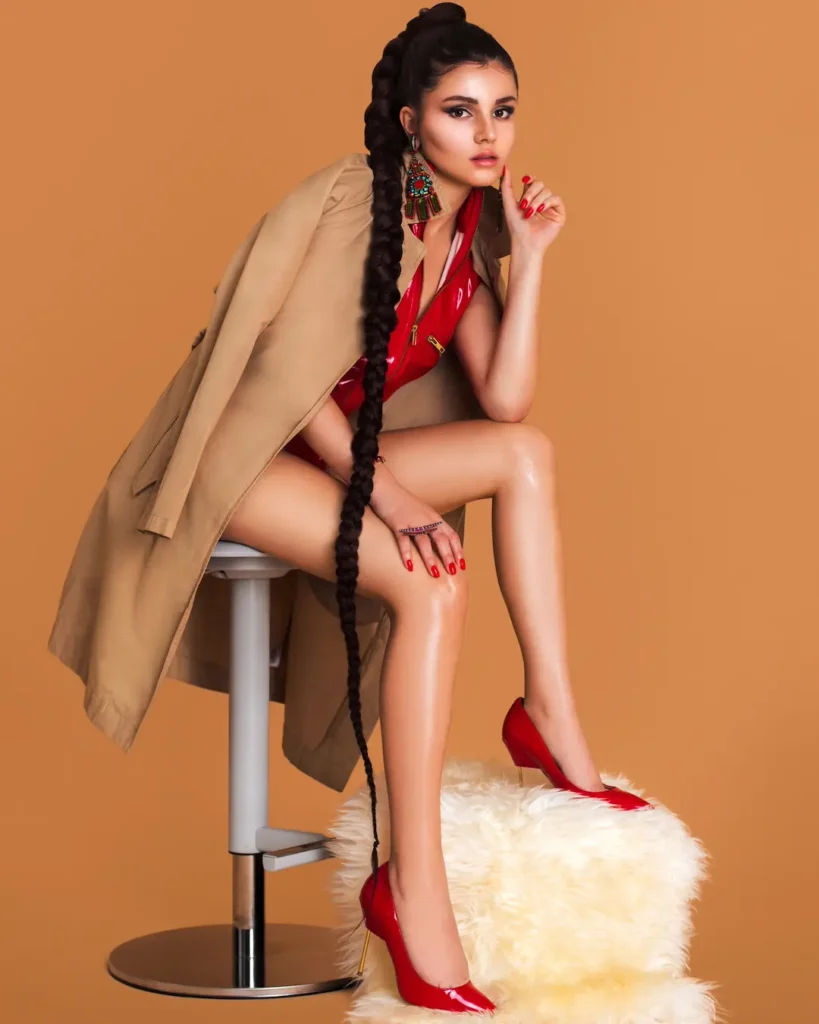
The tension comes from contrast: glossy leather against matte fabric, saturated red against warm brown and a direct gaze against carefully controlled posing. Confidence here is specific and intentional—not reduced to a generic “power pose.”
6. Blue Chiffon and a Vivid Finish
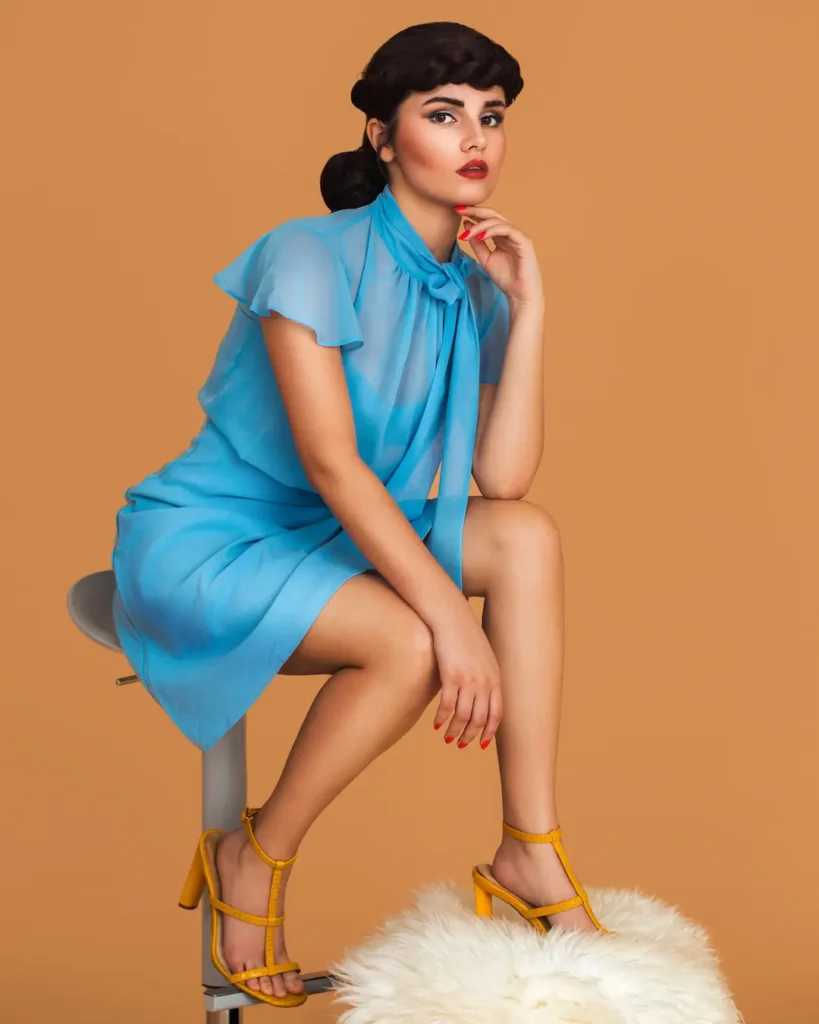
The final chapter releases the visual restraint of the opening. Bright blue chiffon separates immediately from the brown backdrop, while yellow heels create a second color accent. The braided hairstyle keeps the face open and gives the close portraits a sculptural rhythm.
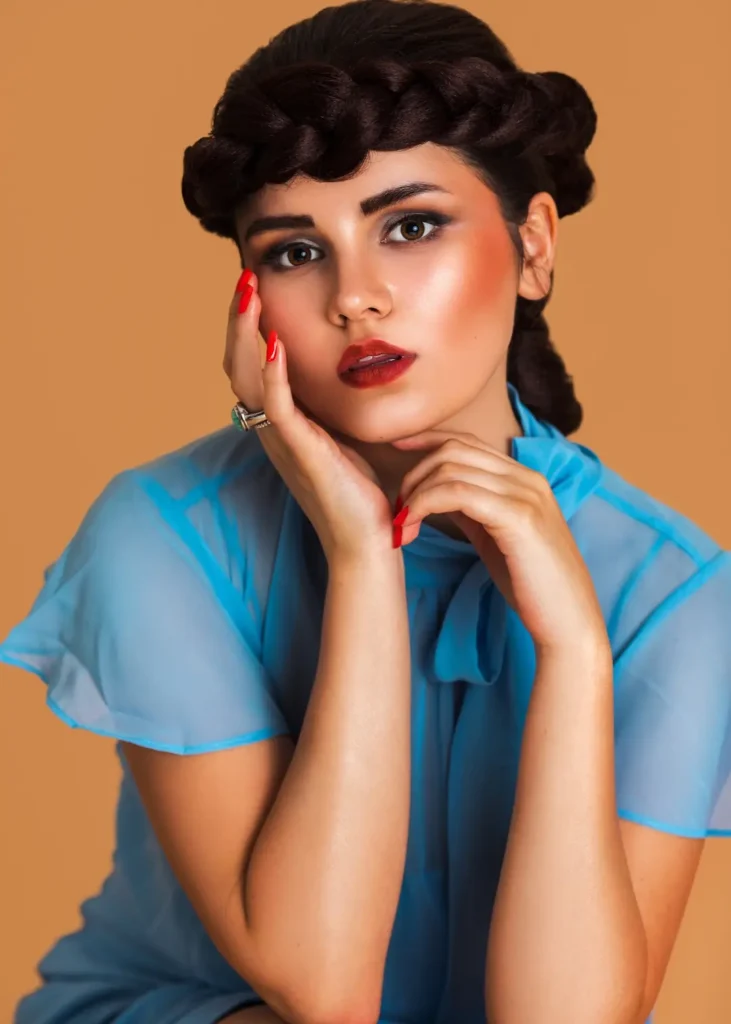
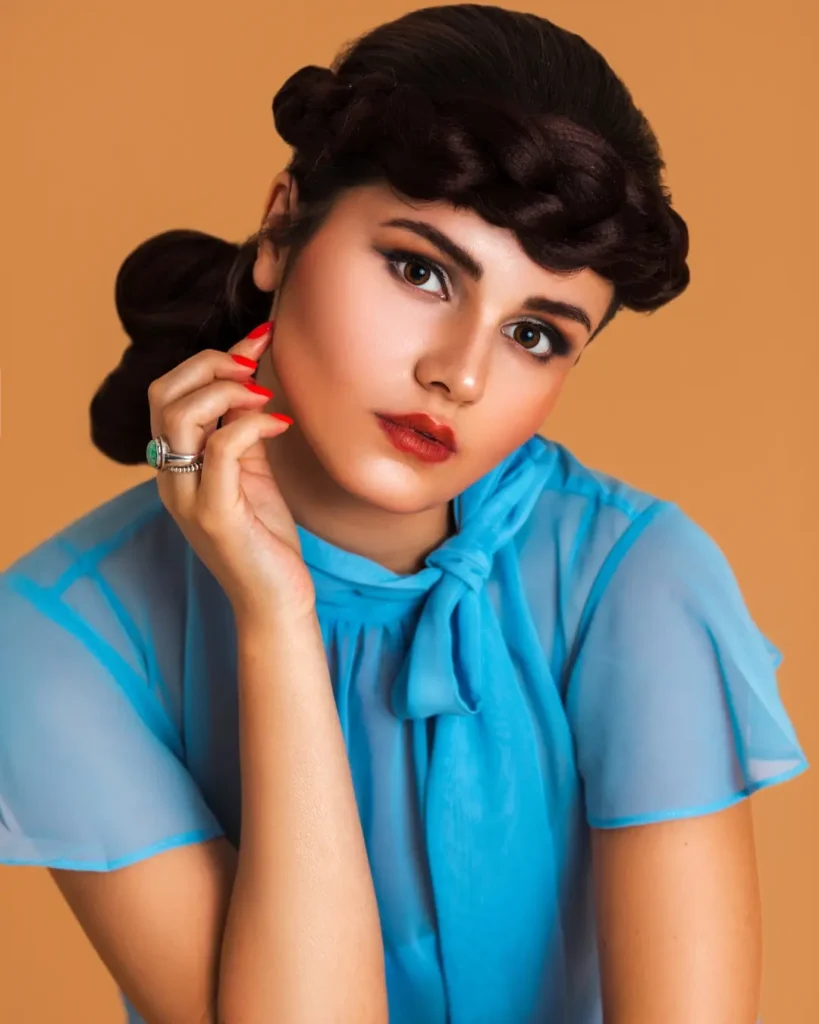
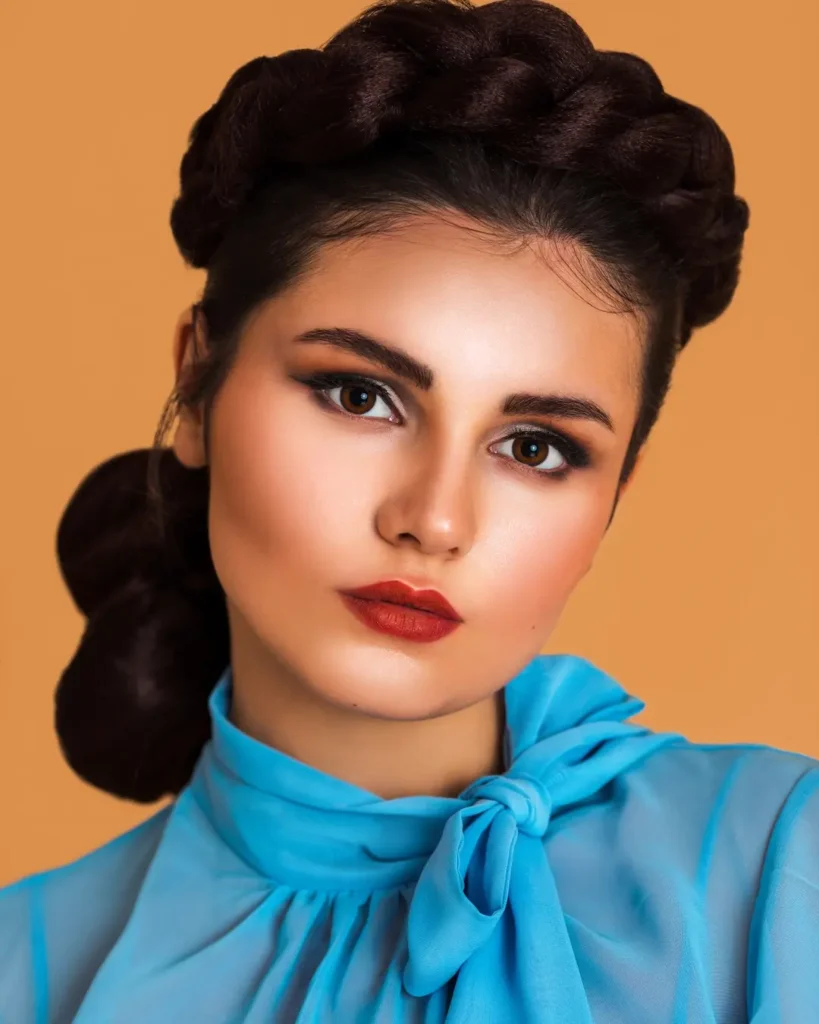
Ending with color gives the sequence a sense of arrival. The set has not changed, but Mariana’s relationship to it has: the body language is open, the palette is decisive and the portraits hold the viewer’s gaze.
How the Editorial Holds Together
A multi-look fashion story becomes coherent when change is planned against a stable visual foundation. The Blossoming uses five recurring devices:
- One warm studio world: the pecan backdrop anchors every wardrobe change.
- A controlled lighting language: skin tone, texture and background remain consistent across the sequence.
- Progressive color: white and beige lead into pink, red and blue rather than competing from the beginning.
- Repeated organic motifs: flowers, butterflies, soft fabric and curved poses reinforce the idea of growth.
- Changing performance: Mariana’s movement and gaze develop with the wardrobe, giving the story emotional progression.
Creative teams planning their own story should begin with that underlying structure, not with a target number of outfits. Our fashion editorial submission guide explains how to edit, sequence, credit and package the finished work for publication.
Representation Without Reducing the Model to a Label
Representation matters, but inclusive imagery is not created by repeating a demographic label in captions. It depends on who is centered, how the person is directed, whether styling respects their individuality and whether the finished story gives them emotional and visual range.
In this series, Mariana is not confined to one expression of femininity. She moves through softness, stillness, glamour, strength and play. That range is more meaningful than language that describes her as “shy,” “innocent” or “sexy” based on a single pose. Models considering how editorial work can complement professional materials may also find our agency-ready modeling portfolio guide useful.
Creative Team and Wardrobe Credits
- Photographer: Phil Halfmann
- Creative Director, Wardrobe Stylist and Hair Stylist: Sophia Lenore
- Makeup Artist: Jessica
- Model: Mariana
Wardrobe and Accessories
- White jumpsuit: Adrianna Papell
- Pink ribbed top and shorts: Dippin’ Daisy’s
- Beige silk and chiffon dress, yellow leather and netting dress, and red leather bodysuit: Monokoque
- Accessories: Gabriele Iazzetta and KONPLOTT
- Shoes: Kurt Geiger
- Hair products: L’Oréal
- Makeup: Charlotte Tilbury
Final Perspective: Comfort in Bloom
The Blossoming fashion editorial succeeds because the theme is expressed through the entire production—not only through flowers. Color, movement, wardrobe, beauty and Mariana’s performance all develop across the sequence. The photographs begin with restraint and finish with clarity, turning six distinct looks into one visual arc.
For another approach to flowers, color and narrative fashion imagery, explore Blooming Narratives. To compare this studio story with a more layered, location-led wardrobe progression, see The Reemerging: Six Inspiring Looks.