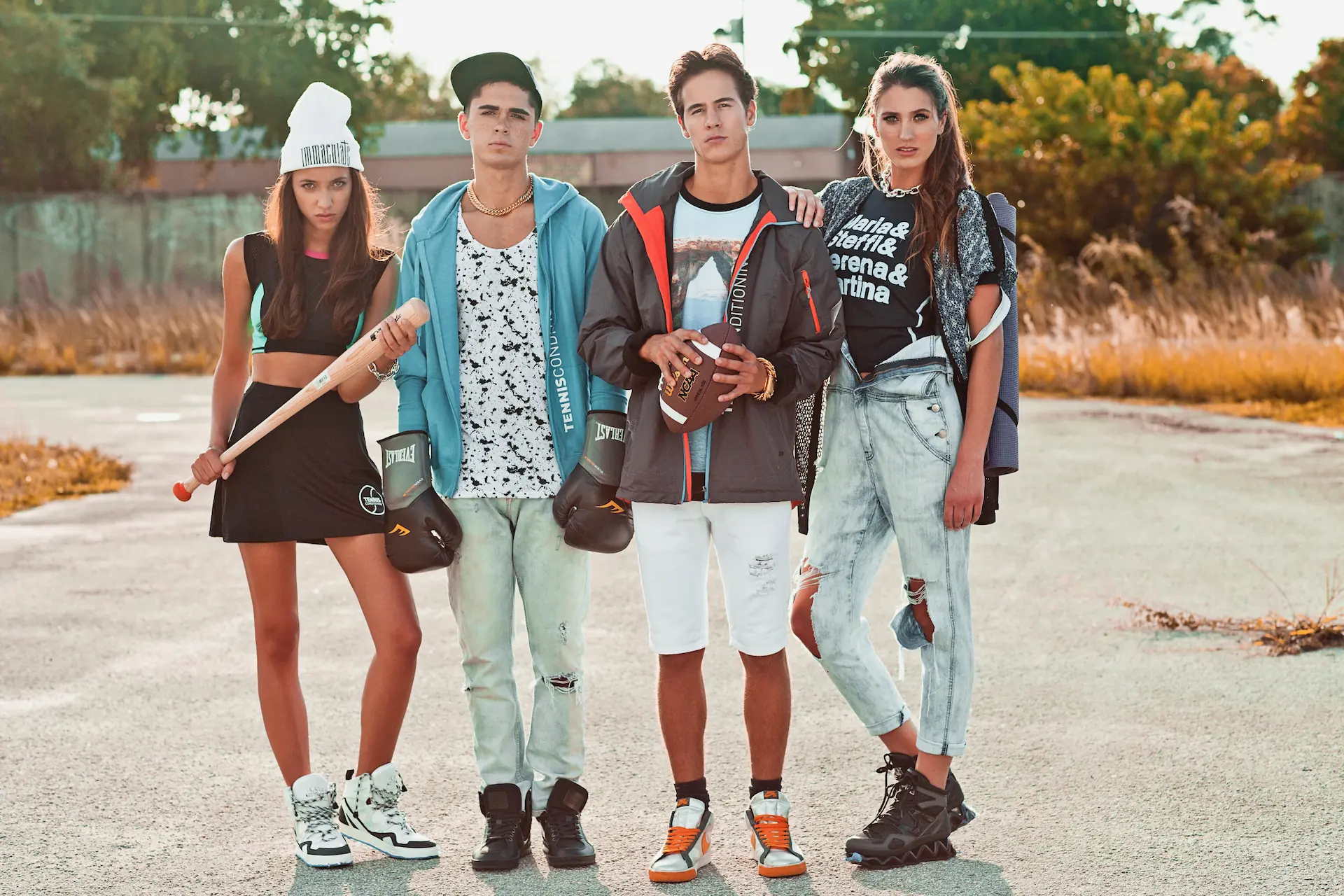
This Miami graffiti fashion editorial turns a weathered outdoor location into a study in contrast. Across four visual chapters, athletic references, distressed denim, graphic layers and expressive group portraits create a streetwear story built on confidence, movement and character.
Photographed in Miami, the series moves between an open paved landscape, a graffiti-covered trailer, concrete steps and a painted interior. The clothes remain wearable, but the setting gives every look a sharper editorial edge. Rather than treating the location as background decoration, the photographs use its broken surfaces, strong color and late-day light as active parts of the composition.
Why the Location Defines This Miami Graffiti Fashion Editorial
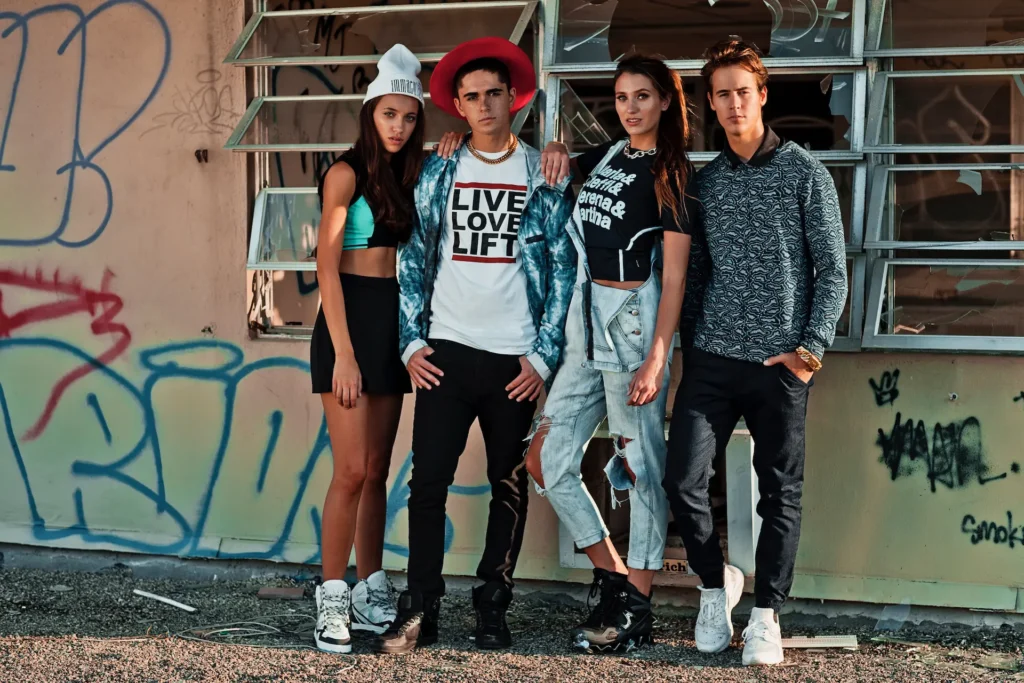
The visual tension begins with a deliberate mismatch: polished styling appears against neglected architecture and painted walls. That contrast makes the wardrobe read more clearly. Pale denim catches the warm light, turquoise and orange accents interrupt the neutral surfaces, and graphic prints echo the marks already present in the environment.
This story is distinct from our Miami park streetwear editorial, which uses lakes, bridges and sports courts to create a softer lifestyle mood. Here, the same city produces a more graphic and confrontational fashion language.
Look 1: Sport-Inspired Streetwear in Motion
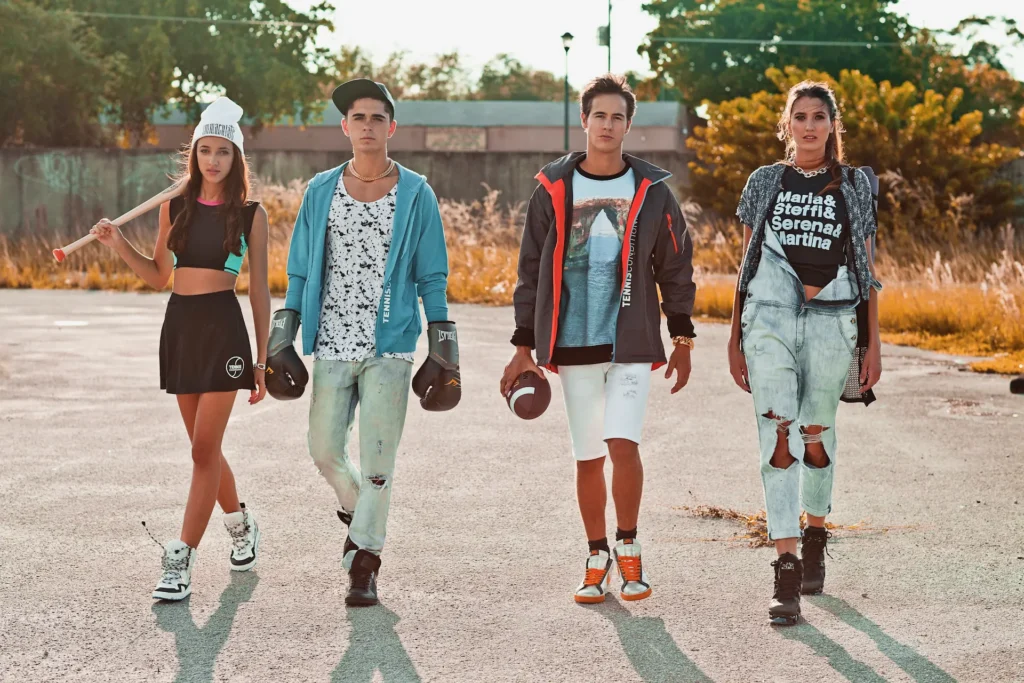
The first chapter introduces the cast in coordinated but non-identical outfits. A tennis skirt, boxing gloves, a football and relaxed denim bring several sporting references into one frame. The styling works because the palette connects the individual pieces: faded blue, black, white and controlled accents of orange and turquoise.
The result is not conventional activewear. Instead, sport becomes a visual vocabulary for readiness and movement. The models’ forward stride gives the group image momentum while maintaining enough spacing for each silhouette to remain legible.
Look 2: Comfort With a Stronger Silhouette
Comfort is visible throughout the shoot, but it never becomes visually passive. Loose denim, shorts, soft jersey and lightweight outerwear allow the cast to move naturally. Structured accessories, deliberate layering and a controlled stance keep the images editorial.
That balance matters in contemporary streetwear photography. Clothing can look accessible without appearing accidental. Here, the silhouettes are relaxed, yet every proportion has a job: cropped tops lengthen the lower body, oversized layers create volume, and fitted pieces prevent the group from becoming visually heavy.
Look 3: Color and Pattern Inside the Graffiti Space
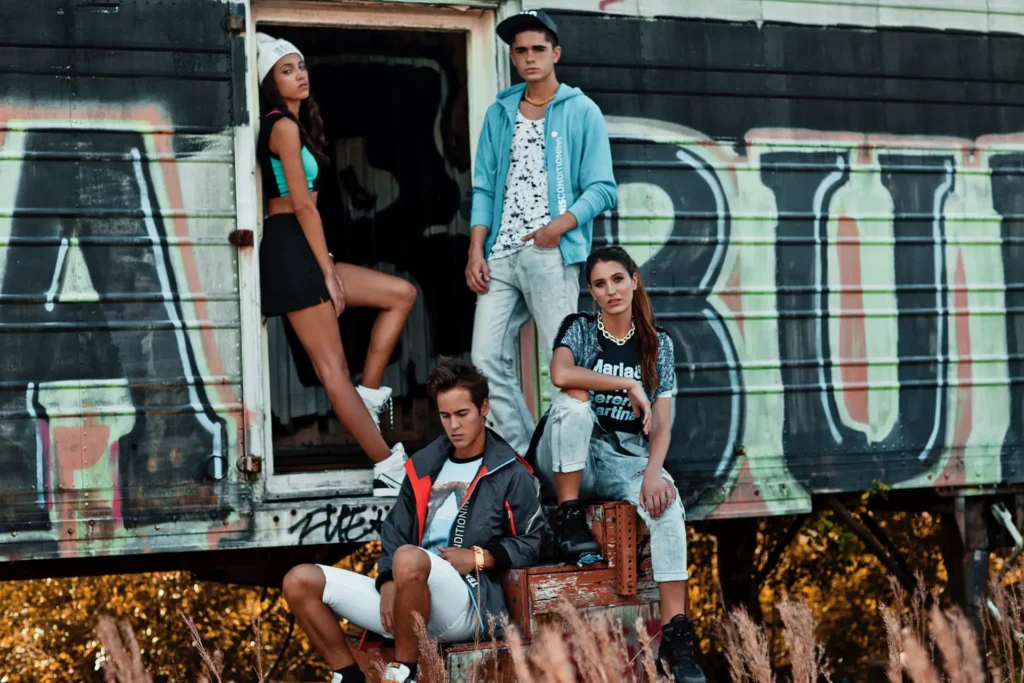
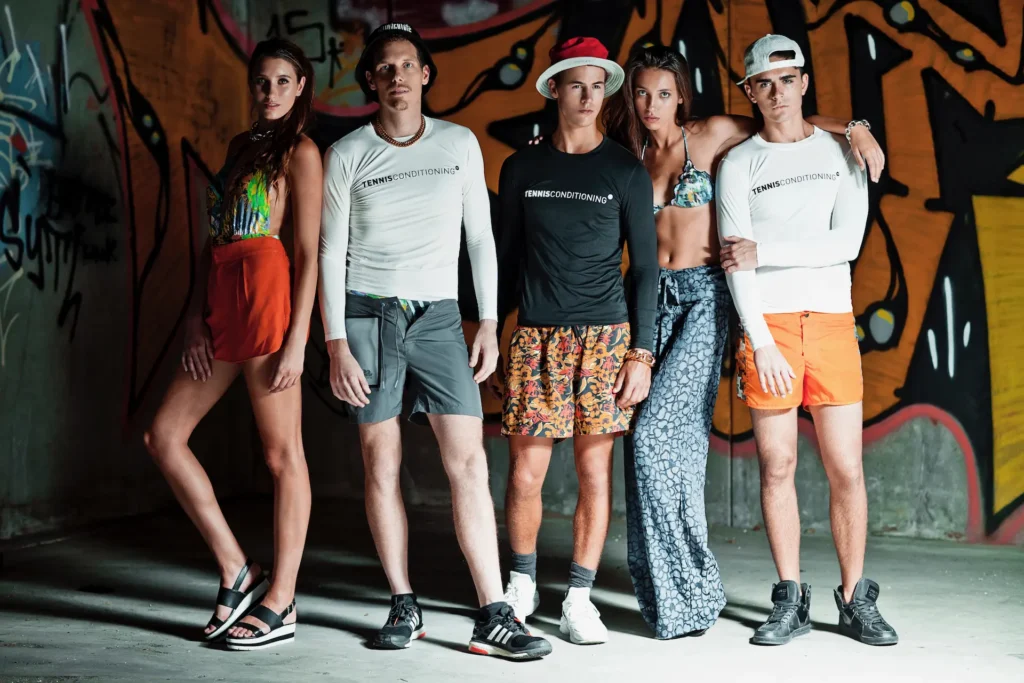
Inside the painted structure, the wardrobe becomes brighter and more graphic. Orange shorts, patterned trousers and swim-inspired pieces meet an orange-and-black mural. Instead of competing with the background, the clothes repeat selected colors from it, creating a controlled relationship between styling and location.
The frontal composition also changes the energy. The cast faces the camera as a unified ensemble, while small differences in stance, eye line and spacing preserve individuality. For models developing their range, this kind of group frame demonstrates why posing is not only about making a dramatic shape; it is also about responding to the other people in the composition. Our agency-ready modeling portfolio guide explains how editorial images can support a book when they show performance rather than styling alone.
Look 4: Layering Against Concrete and Broken Windows
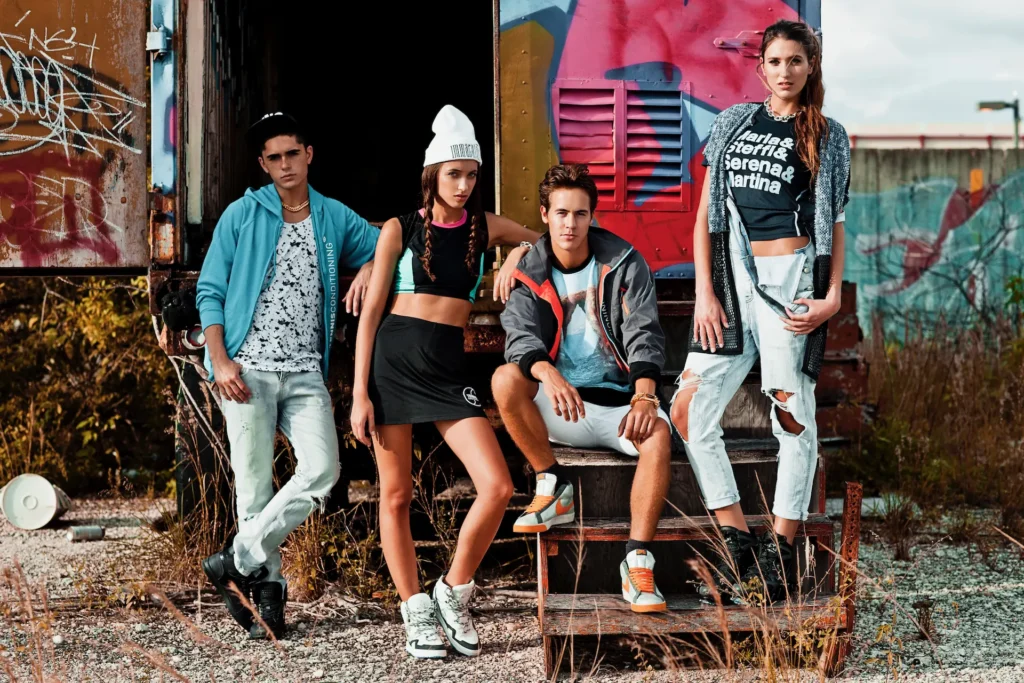
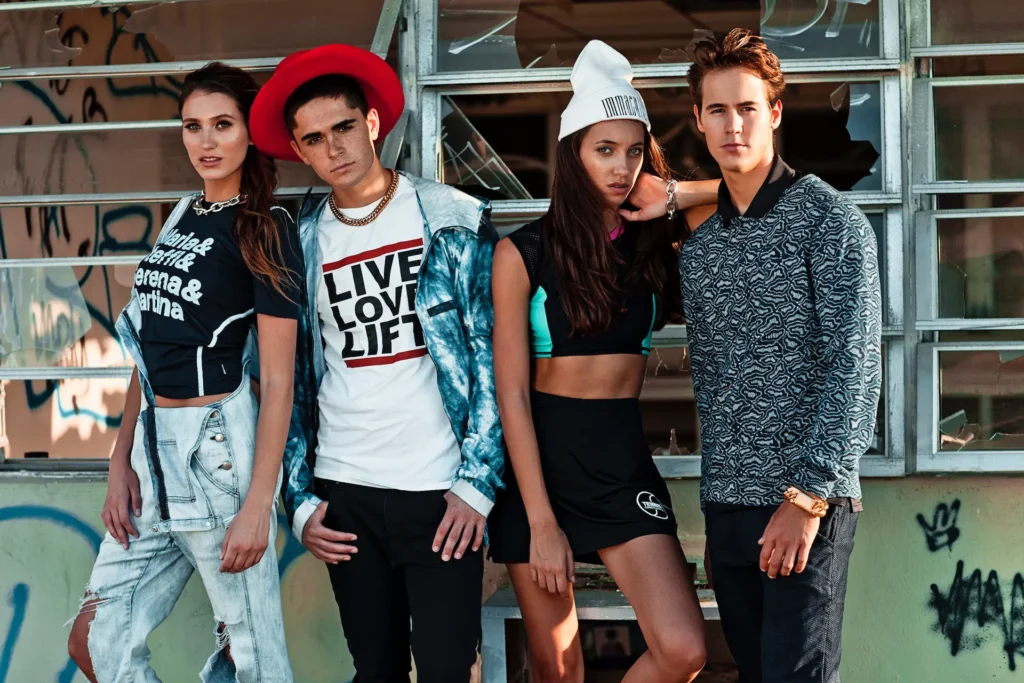
The final chapter returns outdoors and uses concrete steps to build depth. Models occupy different heights, turning a single location into a structured group portrait. Denim, graphic shirts, hats and dark jackets introduce a tougher city influence, while the warm sunlight keeps skin tones and fabric texture visible.
This is where the editorial’s contrast is most direct: finished hair, makeup and styling sit against cracked surfaces, discarded objects and broken windows. The setting is not romanticized. Its roughness creates tension, and the people remain the strongest visual element.
What Makes the Series Cohesive
Four practical choices hold the editorial together:
- A controlled color system: faded denim and dark neutrals recur while brighter accents shift between scenes.
- Repeated athletic cues: equipment and sport-inspired garments create continuity without forcing every look into the same category.
- Consistent group direction: the cast moves between walking, standing and tiered poses while maintaining a shared visual attitude.
- Location-responsive styling: each outfit either echoes or deliberately contrasts the colors and textures behind it.
The series also shows why an urban editorial does not need to rely on exaggerated styling to feel bold. Clear art direction can turn familiar garments into a stronger narrative. For a more experimental interpretation of individuality and expressive styling, see our avant-garde fashion editorial.
From Editorial Production to Publication
A successful fashion story continues beyond the shoot. The final sequence, image order, credits, captions and distribution plan all influence how the work is understood. Creative teams preparing a release can use our 2026 fashion editorial promotion strategy to plan publication, social crops and follow-up content without reducing the project to a single post.
This Miami graffiti fashion editorial ultimately works because it commits to one clear idea: comfort and creative confidence become more visible when polished styling meets an imperfect environment.
Miami Graffiti Fashion Editorial Credits
Photographer: Diana Santisteban
Creative Director: Phil Halfmann
Lead Wardrobe Stylist: Sophia Lenore
Lead Hair & Makeup Artist: Sophia Lenore
Models: Brittney Venice, Guy Magzianov, Karina Zarkaryera and Louis Rizzo