Black fashion designers have shaped how the world dresses, yet fashion history has often treated their influence as a footnote. From Ann Lowe’s couture craftsmanship and Stephen Burrows’ fluid color blocking to the streetwear systems built by Willi Smith, Dapper Dan, Virgil Abloh, Telfar Clemens, Grace Wales Bonner, Thebe Magugu and Kerby Jean-Raymond, Black design is not a trend. It is part of fashion’s foundation.
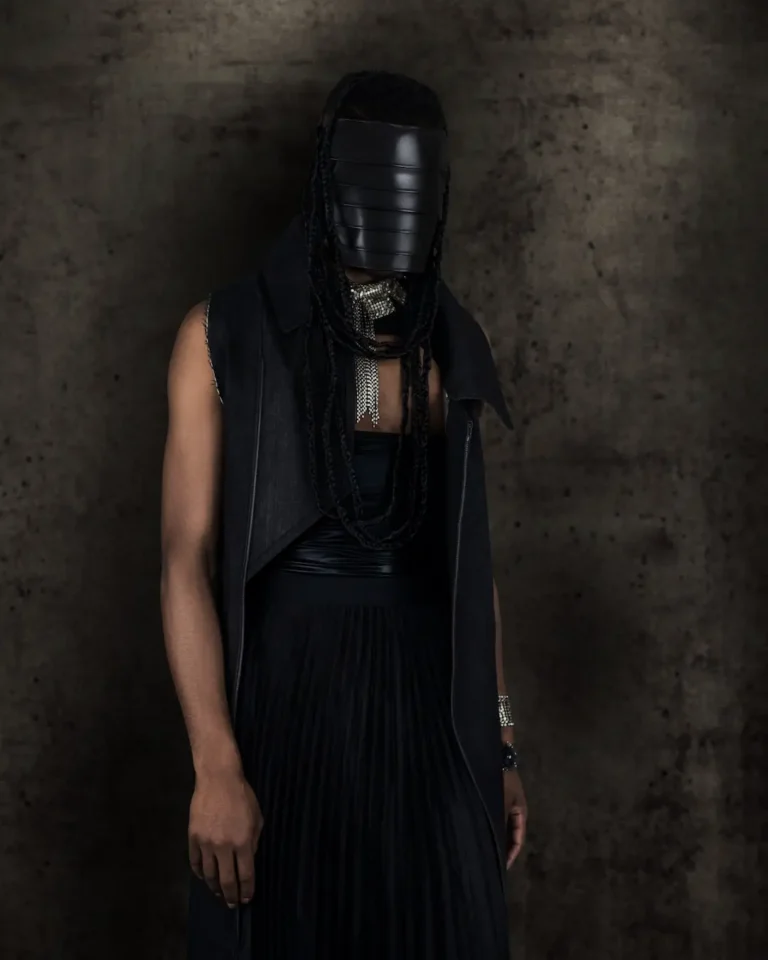
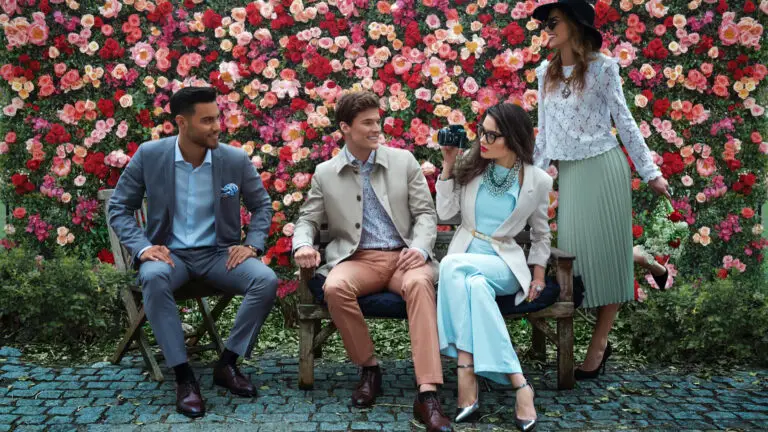
This guide traces that cultural influence and pairs it with Pass the Crown, a five-look fashion editorial photographed by Phil Halfmann. The images explore heritage, visibility and shared identity through clothing by African designers, expressive color and contemporary portraiture.
Why Black Fashion Designers Matter
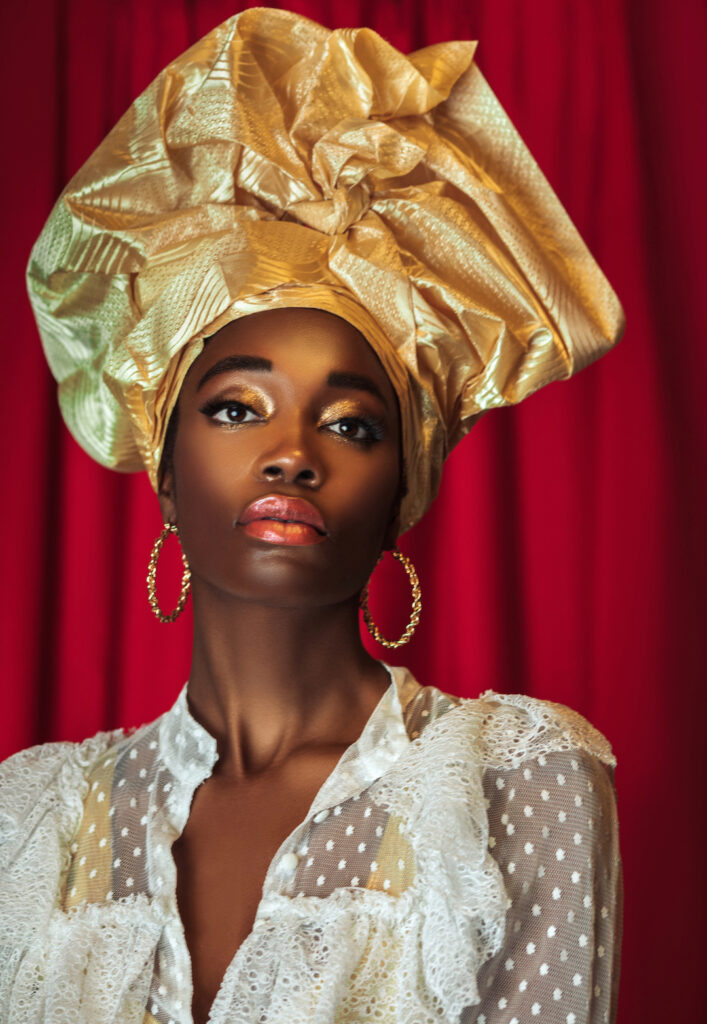
Representation matters at every stage of fashion: who receives investment, who leads creative teams, whose references are credited and whose work enters museums, archives and retail spaces. Clothing can circulate globally while the people and communities behind its visual language remain invisible.
Black designers have repeatedly expanded fashion’s vocabulary through tailoring, sportswear, luxury, streetwear, textile traditions and gender-fluid dressing. Their work also challenges the false divide between “mainstream” fashion and Black culture. The influence is already mainstream; recognition and access have simply not always followed at the same pace.
That context is important when viewing an editorial about identity. Like our Black Beauty Editorial Photography feature, this story treats representation as a creative decision rather than a casting afterthought.
A Brief History of Black Fashion Design
Craftsmanship Before Recognition
Long before contemporary diversity campaigns, Black dressmakers and designers were creating technically accomplished garments for prominent clients. Ann Lowe became known for intricate couture work and designed Jacqueline Bouvier’s wedding dress for her marriage to John F. Kennedy, although her authorship was not consistently foregrounded at the time. Her career illustrates a recurring pattern: exceptional Black craftsmanship could be visible while the creator remained under-credited.
Sportswear, Movement And A New Fashion Language
In the 1970s and 1980s, designers including Stephen Burrows and Willi Smith helped redefine American fashion through movement, accessibility and a freer relationship to the body. Burrows’ color blocking and lettuce-edge construction brought energy to the runway. Smith built WilliWear into a democratic sportswear label informed by art, city life and collaboration.
Luxury, Streetwear And Cultural Authorship
Patrick Kelly used wit, memory and charged imagery to confront stereotypes within Paris fashion. Dapper Dan translated luxury codes through Harlem style and made visible the creativity luxury houses had long overlooked. Decades later, Virgil Abloh’s work across streetwear, art and luxury demonstrated how ideas born in Black communities could reshape global design systems.
Today, designers such as Telfar Clemens, Grace Wales Bonner, Thebe Magugu and Kerby Jean-Raymond continue to build distinct practices rather than one shared “Black aesthetic.” That distinction matters. Black designers are connected by neither a single silhouette nor a single market; their work spans continents, histories and creative positions.
Five Editorial Looks: Pass The Crown
The editorial does not attempt to summarize Black fashion through five outfits. Instead, each look offers a visual entry point into recurring ideas: inheritance, bold color, cultural exchange, community and grace.
Look 1: The Modern Muse
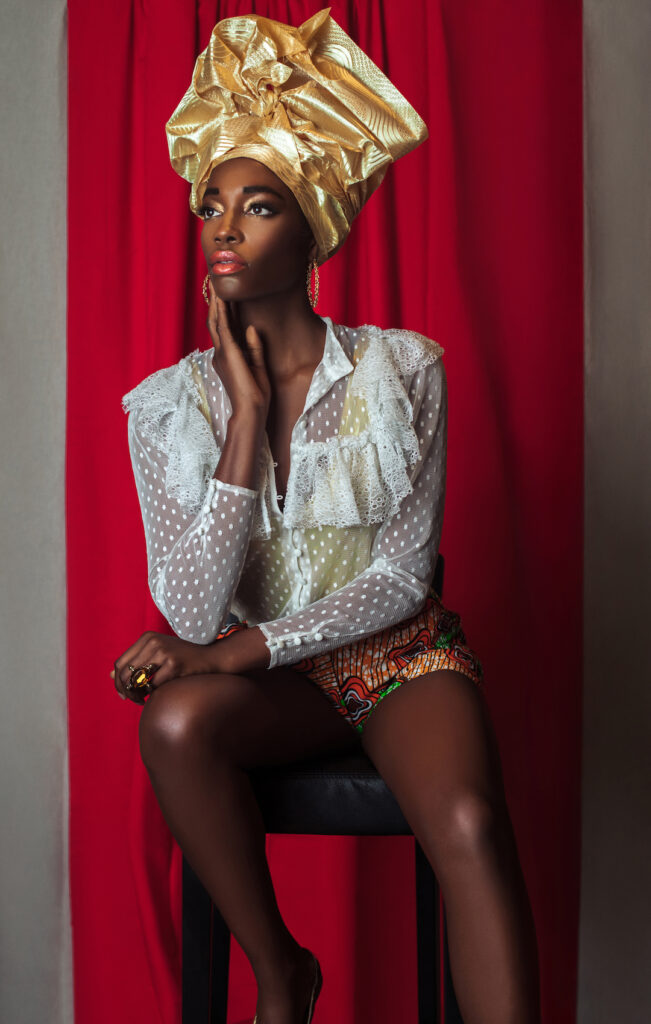
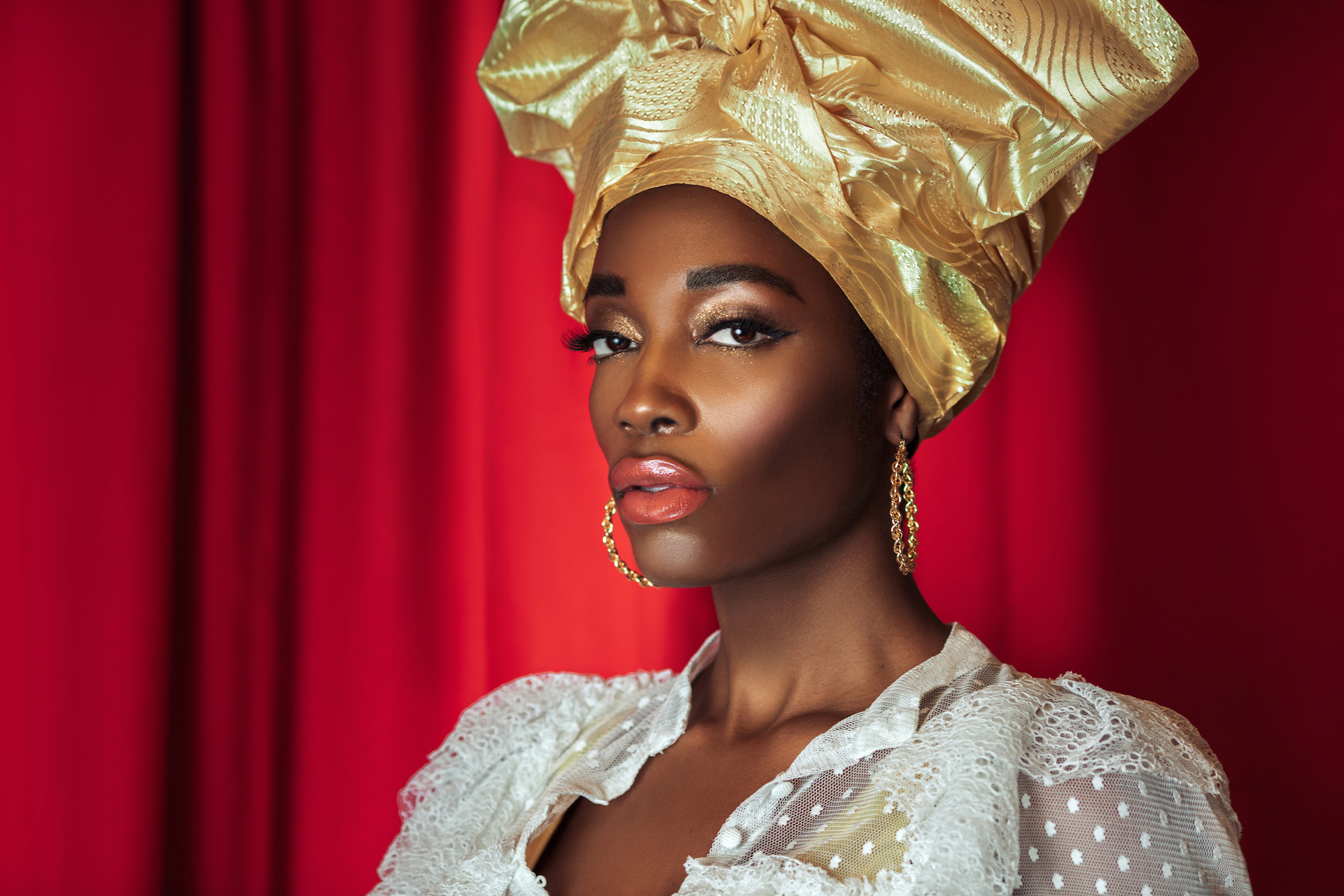
A crisp white blouse meets saturated color and sculptural jewelry. The portrait balances ceremonial references with a contemporary silhouette, allowing pride and ease to coexist. The styling is expressive without requiring the model to perform a stereotype.
Look 2: The Power Of Red
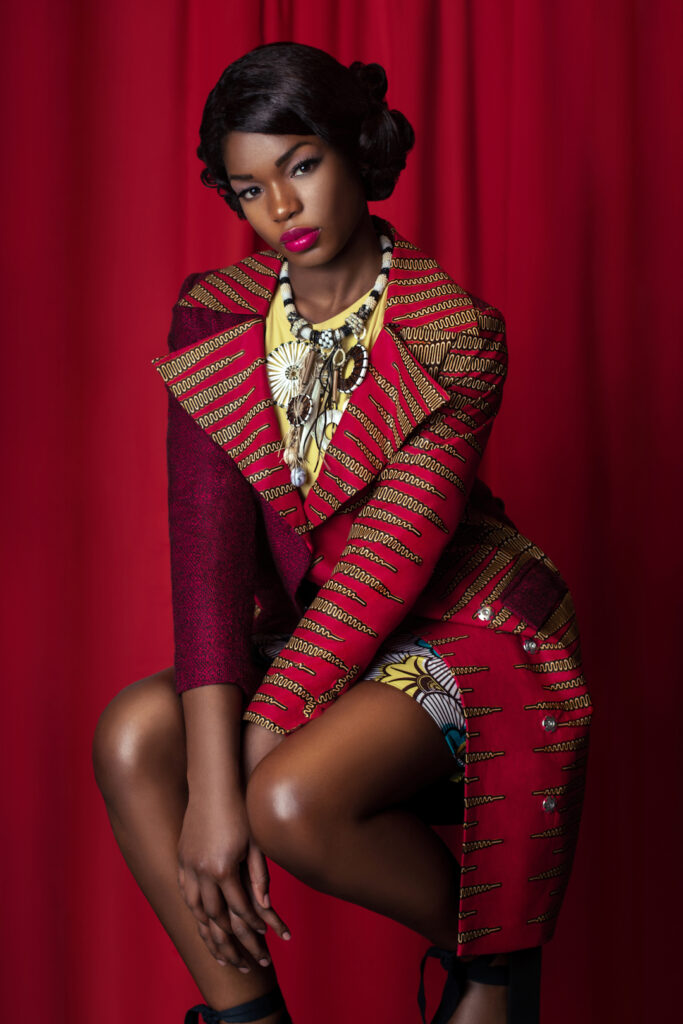
The red coat turns color into a declaration. Layered jewelry and print create visual density, while the direct pose keeps the image controlled. This is not simply “bold fashion”; it is an example of how styling, posture and backdrop work together to communicate authority.
For another study in how color changes editorial meaning, explore Color Gel Fashion Editorial: Color Me Beautiful.
Look 3: A Bridge Between Cultures
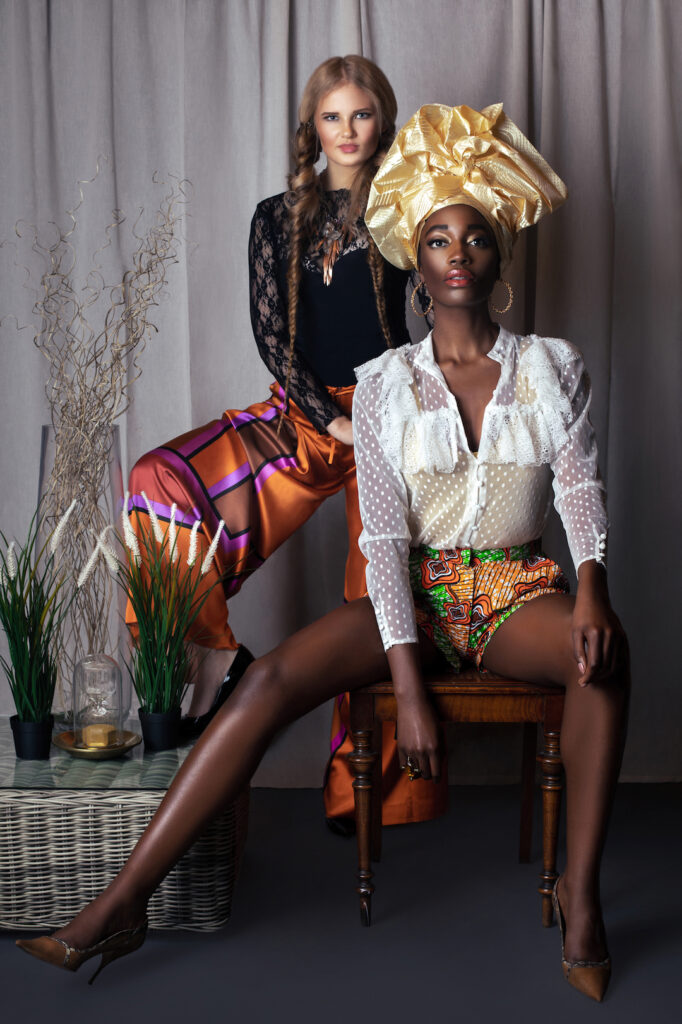
Cultural exchange becomes meaningful when it is built on attribution and respect. Wearing work by Black or African designers should not erase its origin. The strongest collaborations identify the designer, understand the garment’s references and avoid treating cultural details as anonymous decoration.
Look 4: Sisterhood And Collective Presence
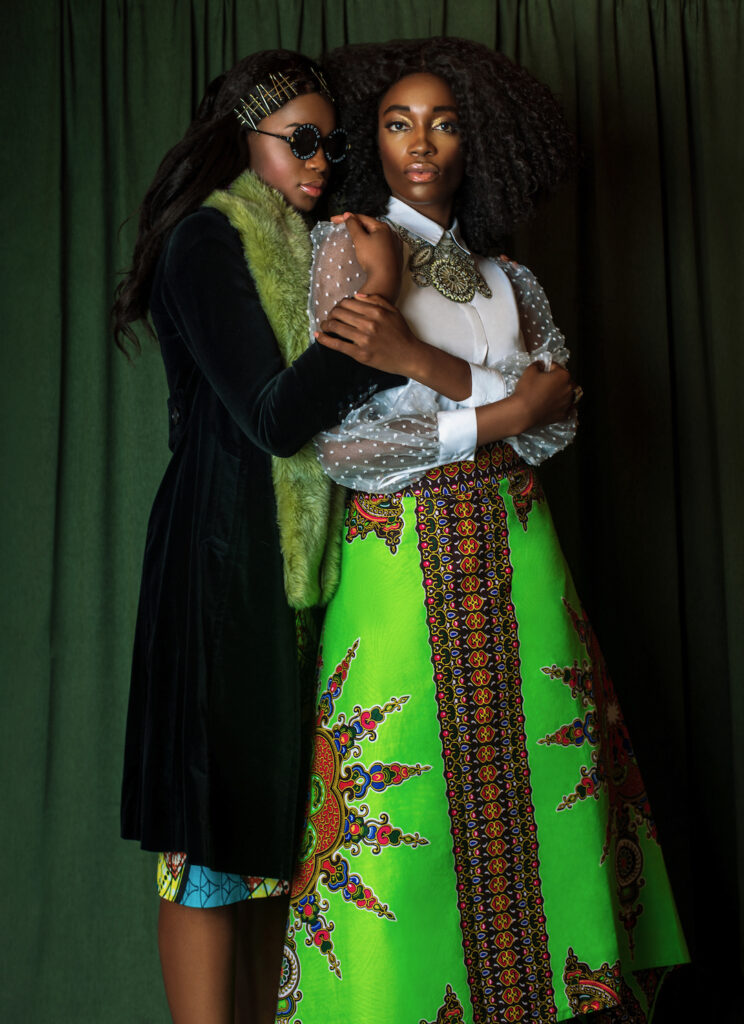
Two women occupy the frame together without competing for it. Earthy color, pattern and contemporary construction create a visual language of solidarity. The image connects naturally with our Inclusive Fashion Visual Storytelling feature, where casting and narrative are treated as one system.
Look 5: The Essence Of Grace
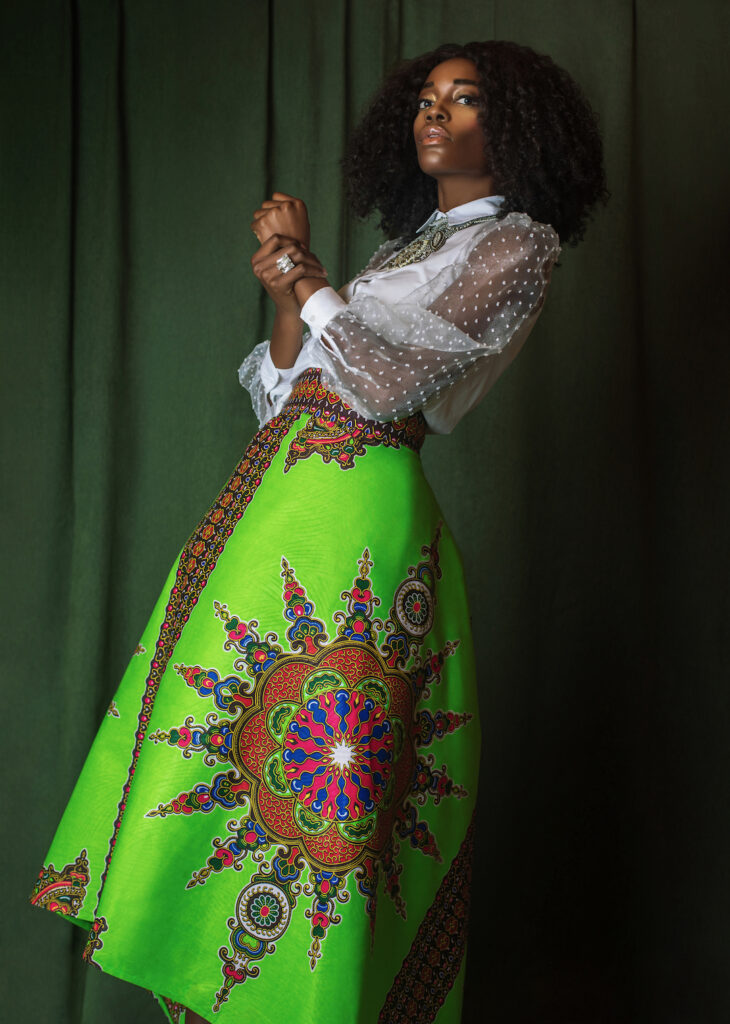
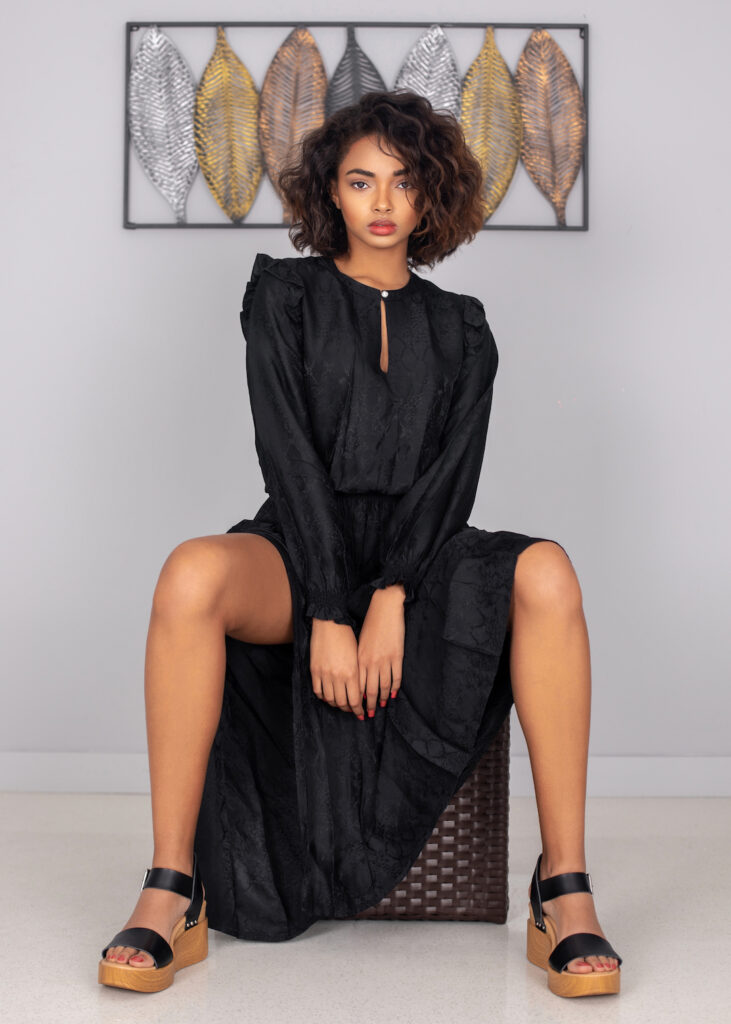
The final look is intentionally restrained. Natural curls frame the face while the white blouse gives the patterned skirt room to speak. Grace here is not passivity; it is the confidence to hold attention without excess.
How To Support Black-Owned Fashion With Intention
Buying a product can help, but meaningful support is broader than a one-time purchase or a social post during Black History Month.
- Credit the designer. Tag the brand and name the creative source when sharing a look.
- Buy beyond symbolic moments. Consistent purchasing creates more value than seasonal visibility.
- Look beyond the biggest names. Independent labels often need discovery, press and wholesale access more than established luxury brands do.
- Read the brand’s own story. Do not assume every Black designer works from the same cultural references or serves the same customer.
- Ask who benefits. Collaborations should include authorship, fair compensation and long-term opportunity—not only borrowed aesthetics.
- Support the ecosystem. Stylists, photographers, models, makeup artists, writers, retailers and educators all influence which designers become visible.
Readers interested in the wider relationship between identity and visual culture can continue with The Melanated Nation: Reclaiming Identity And Pride and Dreadlocks Fashion Editorial: Locks Of Beauty.
Why This Cultural Influence Still Needs Documentation
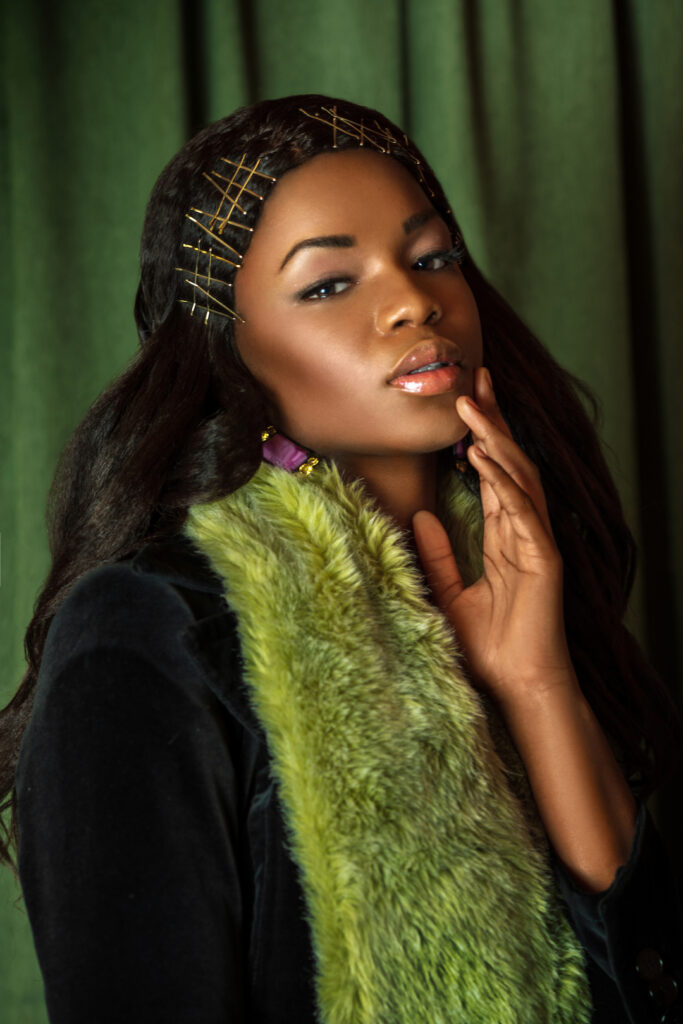
Fashion moves quickly, but archives determine what later generations remember. Museum acquisition, editorial credits, oral histories and careful captions all shape the record. When Black creative work is documented only as “inspiration,” its authorship can disappear. Naming designers, preserving images and recording production credits are practical forms of cultural stewardship.
The Museum at FIT’s exhibitions have helped place designers including Willi Smith and Patrick Kelly within broader fashion history. Such institutional work is valuable, but magazines, photographers and audiences also have a role: we can make attribution part of the everyday editorial standard.
Frequently Asked Questions
Who Are Some Influential Black Fashion Designers?
Influential names include Ann Lowe, Stephen Burrows, Patrick Kelly, Willi Smith, Dapper Dan, Tracy Reese, Virgil Abloh, Telfar Clemens, Grace Wales Bonner, Thebe Magugu and Kerby Jean-Raymond. This is a starting point rather than a complete list.
Is Black Fashion A Single Style?
No. Black designers work across couture, streetwear, sportswear, tailoring, knitwear, accessories and experimental fashion. Treating their work as one aesthetic erases differences in geography, generation, technique and creative intent.
How Can I Find Black-Owned Fashion Brands?
Start with designer interviews, museum programs, independent boutiques, fashion-week schedules and verified brand directories. Confirm ownership on the brand’s own website, then evaluate design, materials, pricing and production as you would with any label.
Why Is Crediting Designers So Important?
Credit connects an image or garment to its creator. It supports discovery, press visibility, search presence and commercial opportunity while reducing the risk that culturally specific ideas become detached from their source.
Further Reading
- Vogue: The Museum At FIT’s Black Fashion Designers Exhibition — an overview of the landmark exhibition and its historical scope.
- Pretty Boy Joy: A Gender-Fluid Fashion Editorial
- Natural Beauty Fashion Editorial: Effortless Grace
Pass The Crown Editorial Credits
Written And Creative Direction: Sophia Lenore
Photography: Phil Halfmann
Lead Hair, Makeup And Wardrobe Styling: Sophia Lenore
Hair And Makeup: Esra Batuman
Wardrobe Styling: Birgit Sommer
Models: Ruth Bambi, Mafoudia and Diana
Jewelry: KONPLOTT
Hair Products: L’Oréal
Wardrobe: JMC Design, Cameroon
Shoes: ACT. and Trippen