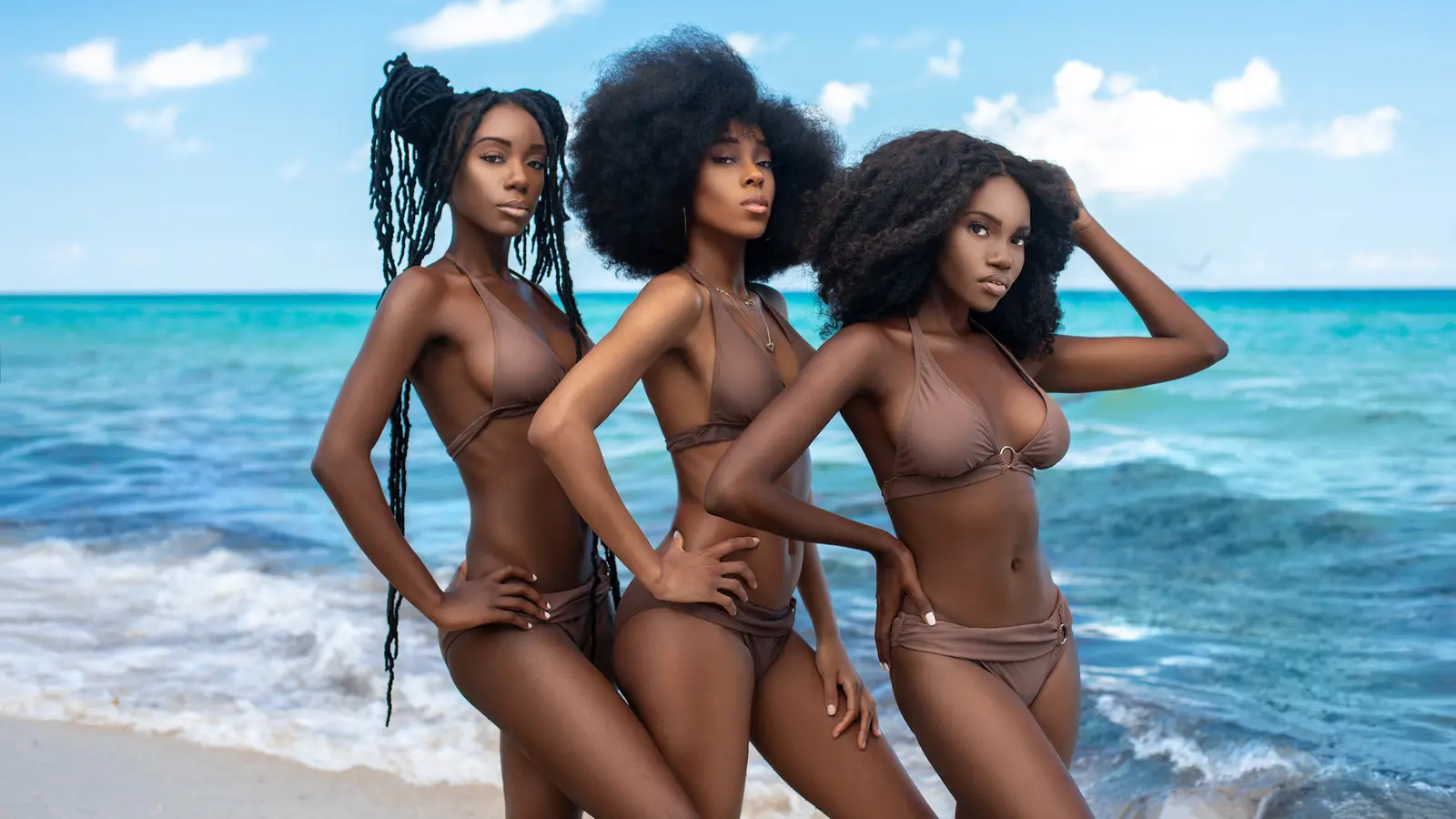
An inclusive beach fashion editorial can do more than place swimwear against a beautiful coastline. When casting, styling, light and movement work together, the shore becomes part of the story. This Miami series brings three Black models, natural hair and a restrained brown palette into one confident visual world.
Photographed by Phil Halfmann with creative direction by Sophia Lenore, the editorial balances polished fashion imagery with the spontaneity of wind, water and changing daylight. The result is elegant without feeling rigid and inclusive without reducing representation to a slogan.
Why the Beach Works as an Editorial Setting
A beach offers texture, depth and movement without requiring an elaborate built set. However, simplicity in the final frame depends on careful preparation. The horizon must stay intentional, the wardrobe must separate from both sand and sea, and the direction must adapt as the sun, wind and tide change.
In this series, the muted swimwear creates cohesion across all three models. Meanwhile, the turquoise water and blue sky provide contrast. Because the color story is limited, hair texture, expression and body language become the strongest visual elements.
This approach connects naturally with the principles explored in inclusive beauty editorial photography: individuality leads the image, while styling and technique support it.
Inclusive Casting as Part of the Visual Concept
Representation is most persuasive when it is embedded in the concept rather than added after the fact. Here, the models are not treated as interchangeable figures in matching swimwear. Each portrait preserves a distinct presence through hairstyle, pose and expression.
The group images establish a shared visual identity. In contrast, the individual portraits let each model control the frame in her own way. That balance matters: cohesion should not erase character. It should give different expressions a common editorial language.
For publications and brands, the lesson is practical. Inclusive casting is not only a choice about who appears in front of the camera. It also affects hair and makeup planning, wardrobe fit, lighting decisions and the atmosphere created on set. Those production choices determine whether the final work feels considered or merely symbolic.
How Natural Light Shapes Darker Skin Tones
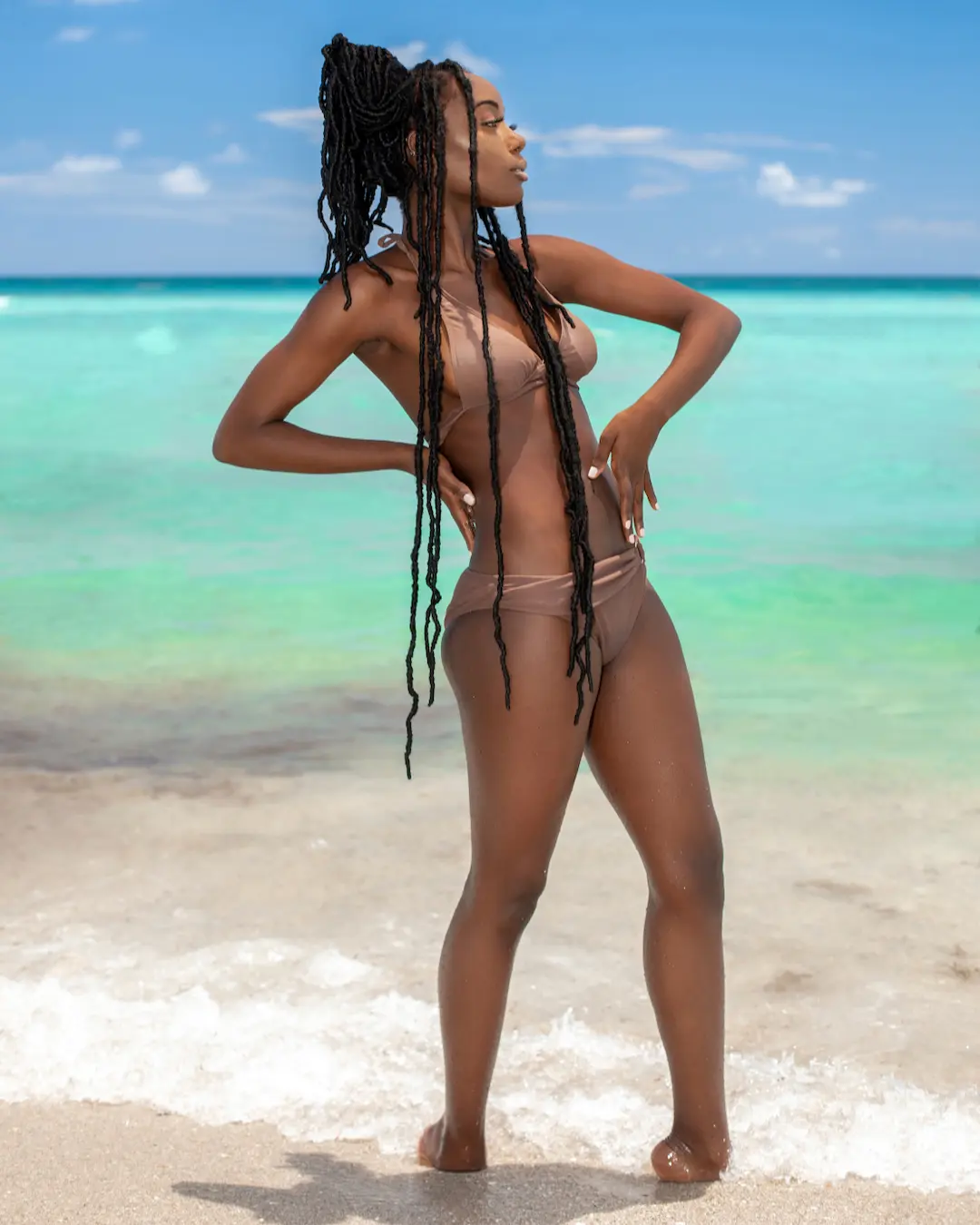
Bright beach light is not automatically flattering light. Midday sun can create deep shadows, reflective highlights and rapid exposure changes as clouds move. Sand and water also act as natural reflectors, which can help open shadows but may produce uneven brightness if the photographer does not monitor the face and skin carefully.
The priority is not to make every skin tone look the same. Instead, exposure, contrast and color should preserve depth, undertone and texture. In this editorial, the warm brown wardrobe supports the models’ skin tones while the cooler background keeps the figures visually separated from the environment.
Post-production should protect that relationship. Heavy-handed brightening can flatten skin, while excessive saturation can make the ocean compete with the subject. A controlled edit keeps the location vivid without allowing it to dominate.
Three Looks, One Cohesive Story
1. Sculptural Calm
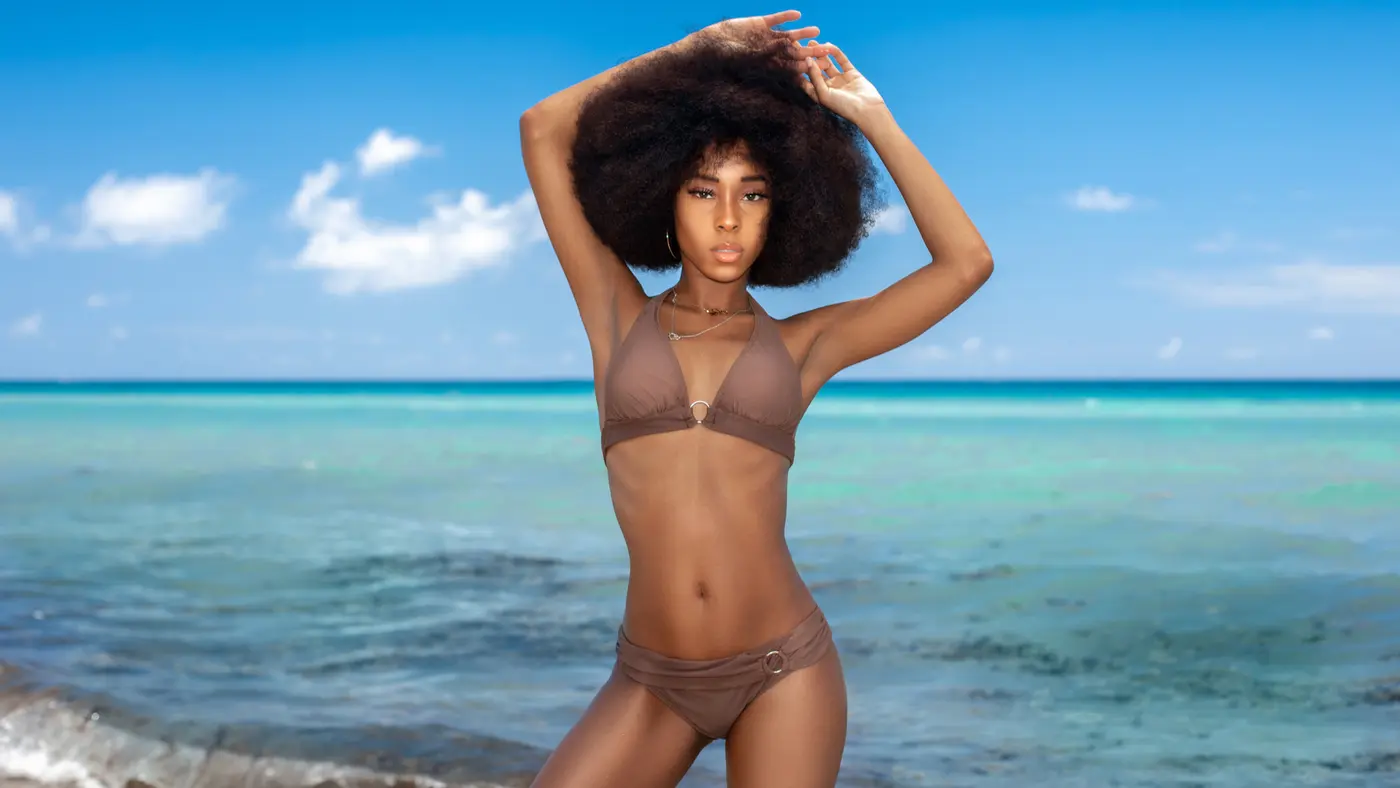
The first look uses a wide stance and raised arms to build a sculptural silhouette. The pose feels deliberate, yet the ocean keeps the image open. The Afro becomes a central design element, creating volume against the clean horizon.
2. Intimate Confidence
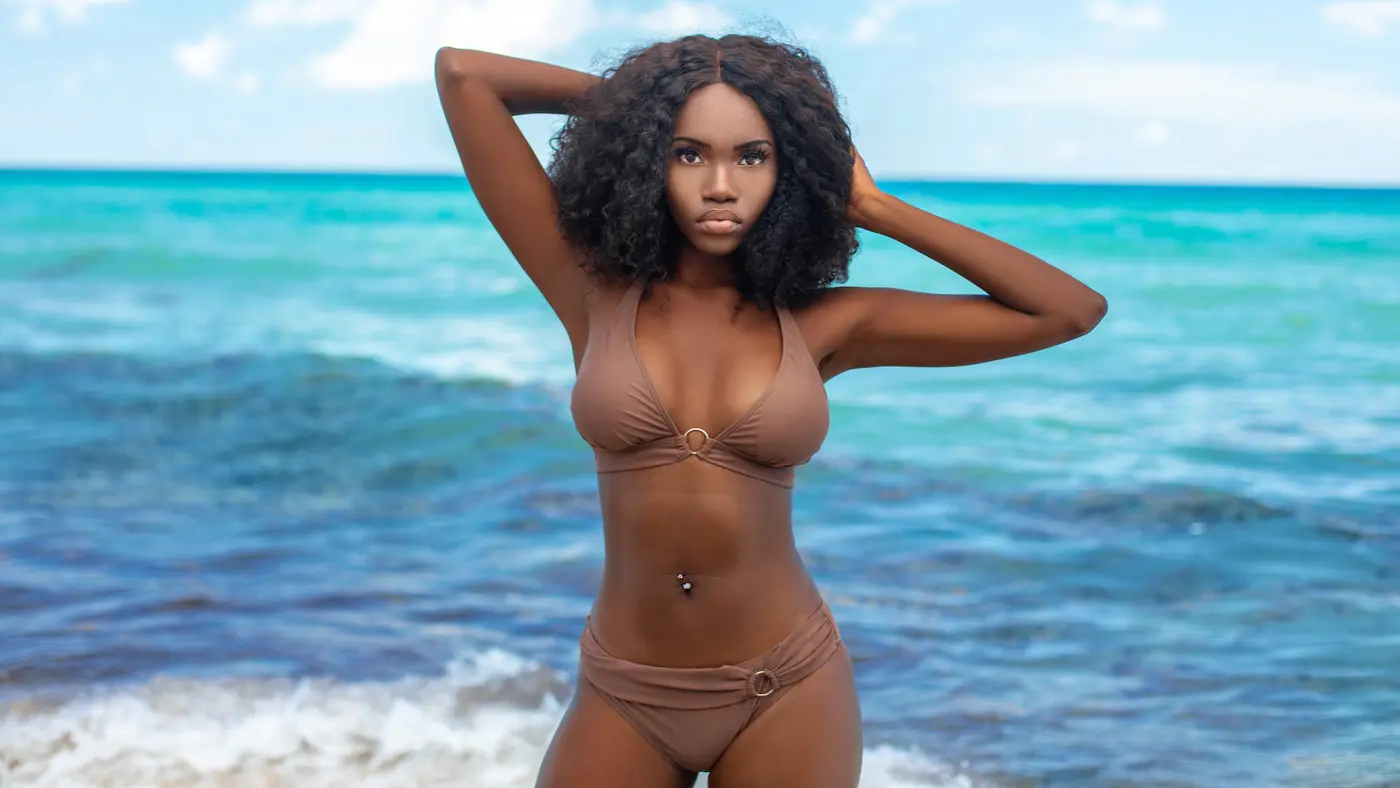
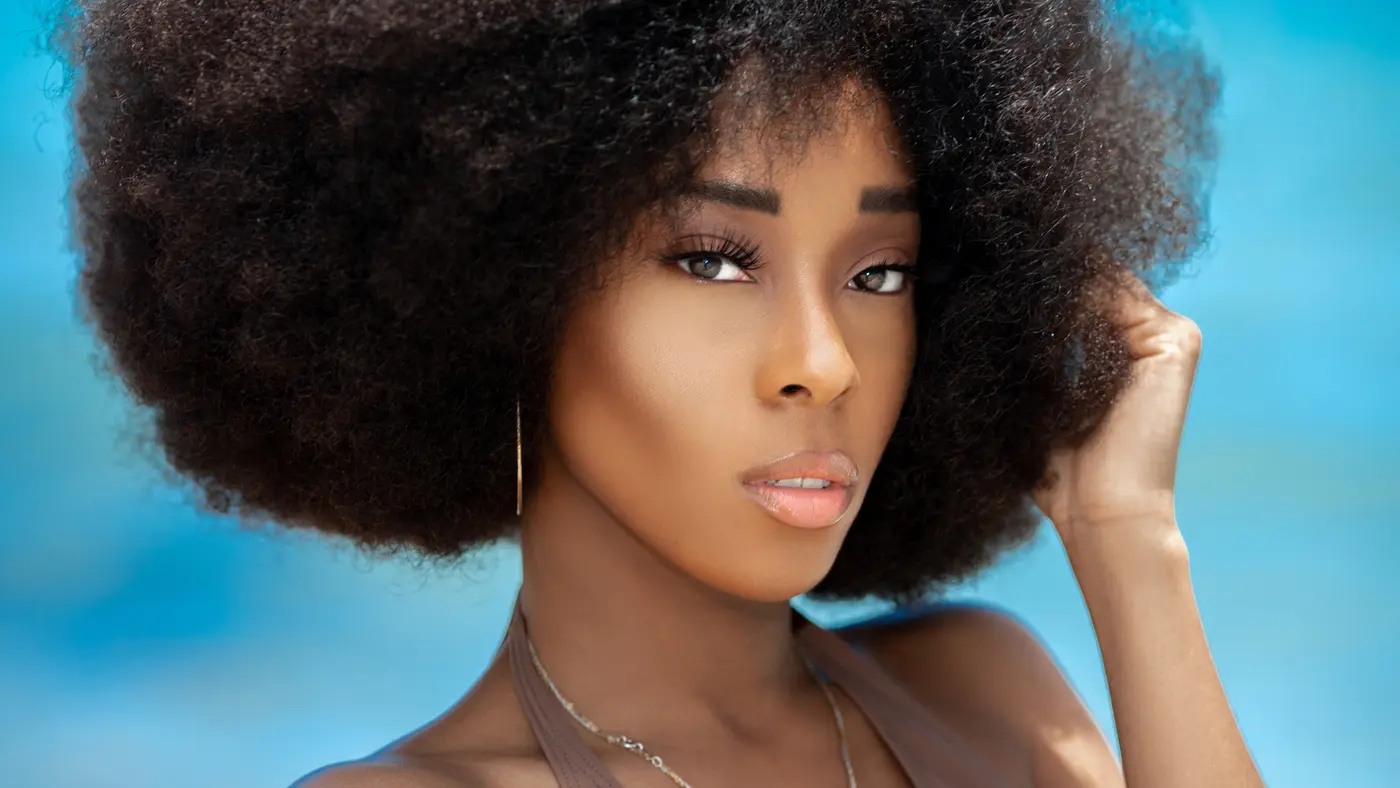
The second portrait moves closer. Direct eye contact, a compact pose and softer movement make the image feel more intimate. Although the beach remains visible, it becomes atmosphere rather than subject.
3. Movement and Strength
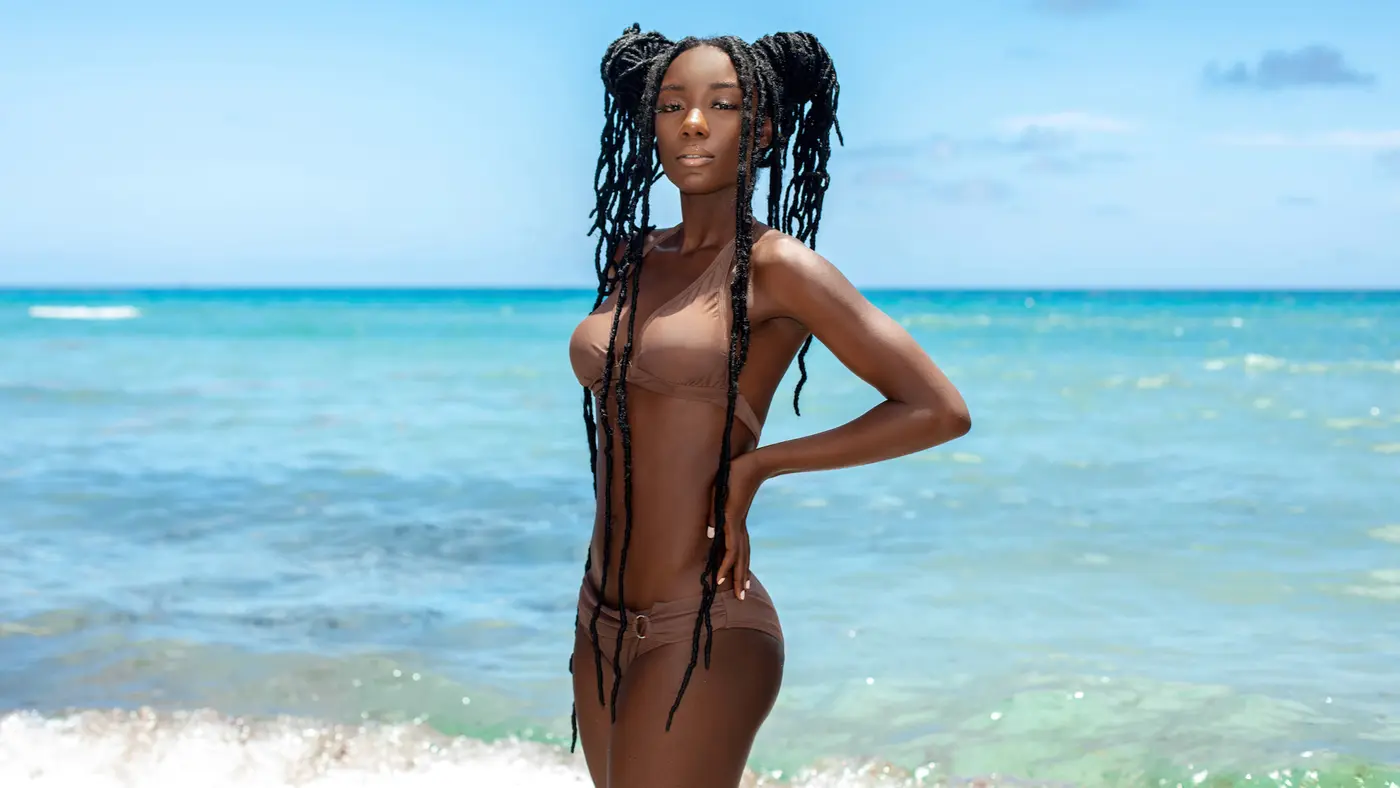
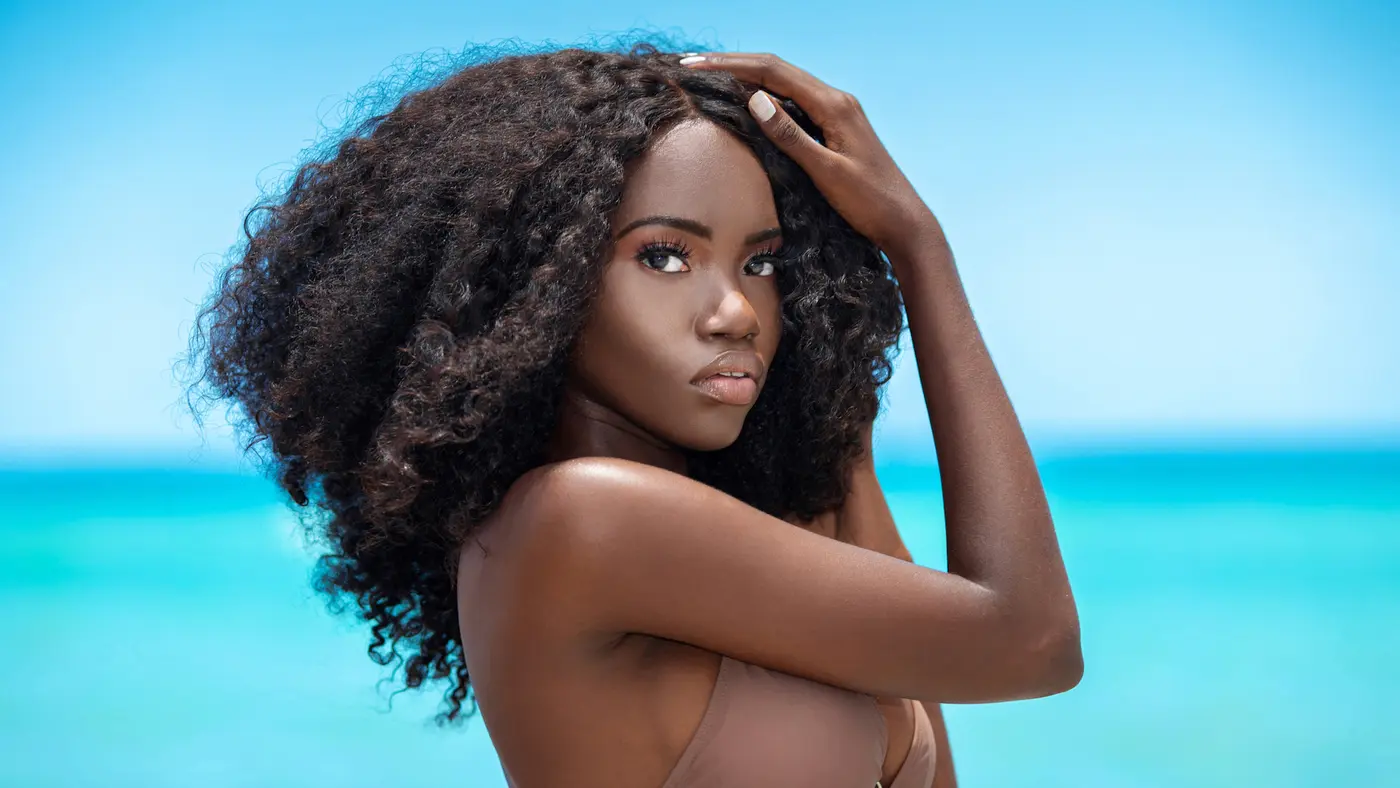
The third look emphasizes line and movement. Long locs respond naturally to the wind, while the grounded pose keeps the portrait controlled. This contrast—movement around a stable figure—gives the frame its energy.
Together, the three looks demonstrate why a cohesive editorial does not require identical posing. The consistency comes from the palette, location, lighting approach and creative direction. The variation comes from the models themselves.
What a Beach Fashion Production Requires
Outdoor fashion photography replaces studio predictability with environmental variables. Therefore, a professional plan should address more than the shot list. The team needs a weather window, sun-position plan, changing area, hydration, equipment protection and a clear decision about what happens if conditions become unsafe or visually unsuitable.
- Location: confirm access, parking, permits and restrictions before the shoot.
- Timing: plan around sun direction, tide and the desired background—not only the call time.
- Wardrobe: test fit, movement and transparency in strong daylight.
- Hair and makeup: prepare for humidity, wind, saltwater and limited touch-up space.
- Equipment: protect cameras, lenses and lighting tools from sand and spray.
- Coverage: capture wide, vertical, horizontal, group and close portrait options so the editorial works across print and digital layouts.
Readers who want a deeper look at sequencing, shot planning and team coordination can continue with our guide to building a multi-look fashion editorial. The setting is different, but the need for visual continuity is the same.
How to Build a Useful Image Set
A successful editorial is not one hero frame repeated with small variations. It needs a visual rhythm. Start with an establishing image, move into individual portraits, alternate wide and close compositions, and finish with a frame that feels conclusive. This gives editors more control over page pacing and provides social teams with distinct crops and formats.
For models, variety should demonstrate range without creating a disconnected portfolio. Expression, energy and framing can change while the styling remains consistent. Our updated guide to an agency-ready modeling portfolio explains how image selection should support a clear professional purpose.
What Determines the Production Budget?
There is no responsible universal price for a beach editorial. The budget depends on the number of models and looks, team size, location access, permits, wardrobe sourcing, hair and makeup, transportation, insurance, equipment, retouching and usage rights. Weather contingencies may also add cost because outdoor productions sometimes need a hold date.
A smaller editorial can still feel elevated when the concept is focused. Conversely, a larger budget does not guarantee a stronger result if the casting, palette and intended image use remain unclear. Scope should be built from the story and deliverables—not from an arbitrary image count.
Why This Inclusive Beach Fashion Editorial Still Works
The enduring strength of the series lies in its clarity. Three models, one restrained palette and one natural location create a recognizable world. At the same time, each subject retains her own visual identity. That combination makes the photographs polished, memorable and human.
The beach is not simply a backdrop here. It supplies contrast, motion and scale. More importantly, it creates space for Black beauty, natural hair and individual confidence to lead an elegant fashion story without explanation or compromise.
Editorial Credits
Photographer: Phil Halfmann
Creative Director: Sophia Lenore
Lead Wardrobe Stylist: Sophia Lenore
Lead Hair & Makeup: Sophia Lenore
Hair & Makeup: Joanne Charles and Athaliyah Yisrael
Models: Gaelle Augustin, Ann-neika Jean Charles and Claudine Augustama
Makeup Sponsor: YourTrueShade