Introduction — Lunge and Twist Warm-Up
The Lunge and Twist is a gentle, full-body dynamic stretch that helps awaken the legs and core while preparing you for movement.
Inclusive and adaptable, the Lunge and Twist supports better hip mobility and trunk rotation as it gently raises muscle temperature and prepares tissues for activity.
Whether you’re new to movement or returning as an experienced athlete, this stretch welcomes you to move mindfully and confidently.
Why The Lunge And Twist Helps
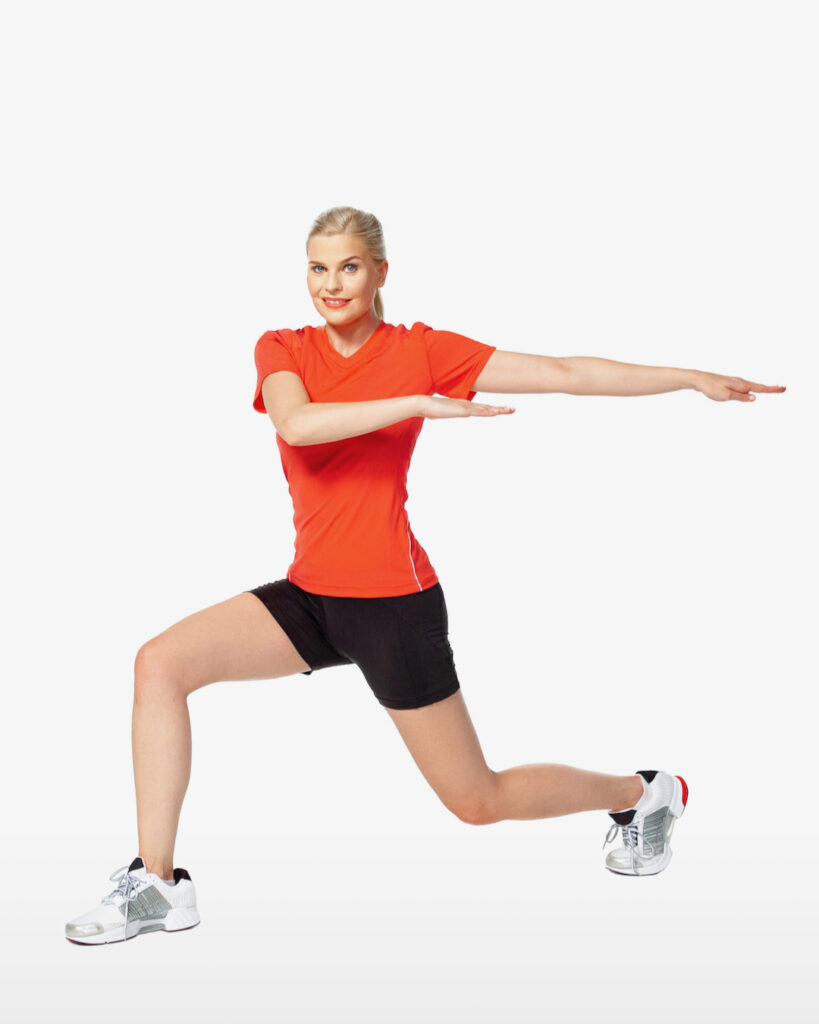
The Lunge and Twist combines lunge mechanics with a mindful trunk rotation. As a result, it not only increases flexibility but also improves dynamic stability and balance.
Moreover, because the movement is dynamic rather than static, it helps reduce injury risk by warming muscles before a workout or a game. In addition, this exercise encourages coordination between upper and lower body—so you feel stronger and more connected in whatever comes next.
Lunge And Twist: Step-By-Step
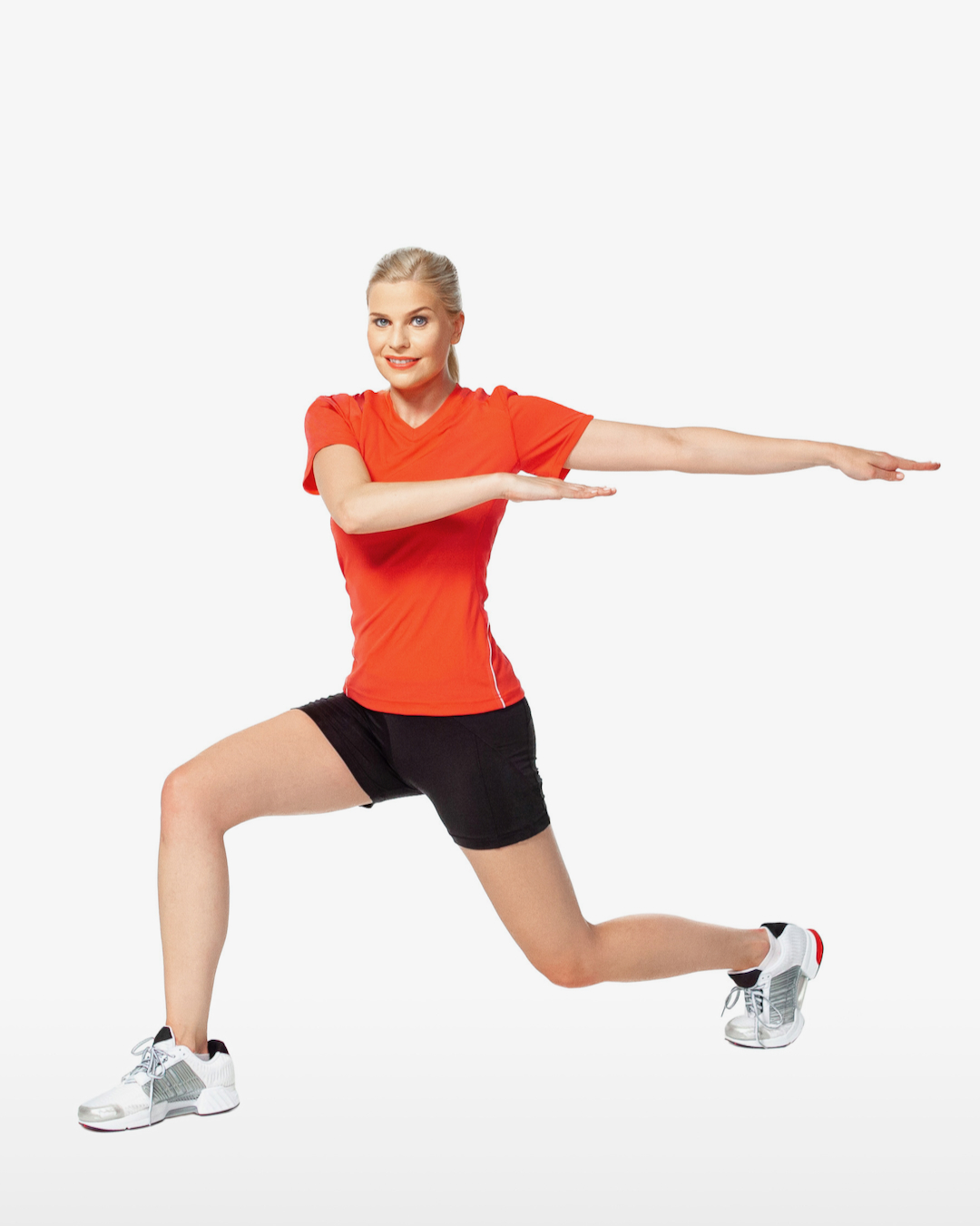
- Take a large, comfortable step forward with your leading leg.
- Lower your trailing knee toward the ground slowly and with control until both knees are close to 90°.
- Gently rotate your torso across the hips — moving from right to left — focusing on rotating the spine rather than just swinging the arms.
- Keep your weight primarily on the forward heel so your front leg stays engaged and supported.
- Rise with calm control and step into the next lunge or return to stand to repeat on the other side.
Tip: If you’d like more challenge, narrow your stance slightly to increase the dynamic stability requirement. Conversely, widen your base or hold a support to make it easier.
Lunge and Twist Muscles Worked
The Lunge and Twist targets multiple muscle groups at once: glutes, quadriceps, hamstrings, hip flexors, and the obliques.
In addition, it lightly engages the lower back, calves, and deep core stabilizers. Consequently, it’s an efficient warm-up for many activities that rely on hip mobility and rotational strength.
Variations of the Lunge and Twist (including resistance bands)
There are many welcoming variations so you can adapt the Lunge and Twist to your needs. For example, try bodyweight, reverse, or walking variations.
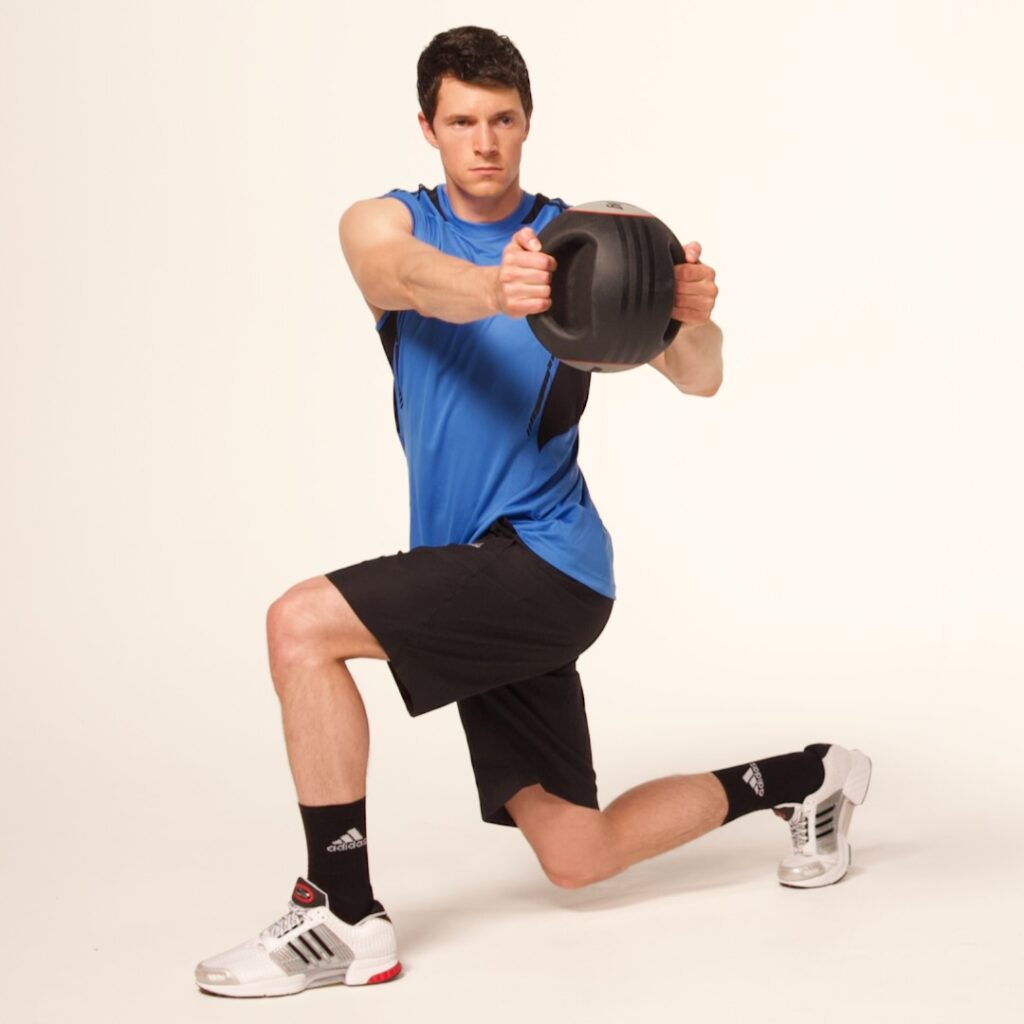
Additionally, use light resistance bands around the hips or hold a small medicine ball for added trunk resistance. Bands and small weights increase proprioceptive feedback and core demand, while supports and regressions keep the move accessible.
- Bodyweight Lunge and Twist (basic)
- Narrow Base Lunge and Twist
- Reverse Lunge and Twist
- Walking Lunge and Twist
- Resistance Band Lunge and Twist
- Medicine ball or light dumbbell Lunge and Twist
- Assisted Lunge and Twist using a chair or wall
Progressions: Beginner To Advanced Athletes
Progress safely and kindly by modifying one thing at a time:
Beginner
Shallow lunges, small rotation range, support for balance, and focus on breathing and control.
Intermediate
Full 90° depth, increased rotation, reverse and walking variations, and light resistance bands or medicine ball.
Advanced / Professional Athlete
Narrow base, heavier medicine ball or single-arm band resistance, single-leg holds, tempo changes, and multi-directional lunges for sport-specific strength.
Lunge and Twist Summary
Step forward into lunge → lower with control → rotate torso (Lunge and Twist) → keep weight on front heel → rise and repeat. Use 8–12 reps per side, or include this as part of a 6–8 exercise dynamic warm-up to ready legs, hips, and core.
More Dynamic Stretches
Choose 6–8 dynamic stretches that warm the major muscle groups of the legs, hip and core and you’re ready to go! For more ideas see: