Forward Reverse Lunge: A Welcoming Warm-Up For Stronger Movement
The Forward Reverse Lunge is a gentle, dynamic movement that helps prepare the body for sport and everyday activity while encouraging balance and controlled strength.
Right away, this pattern mirrors many athletic and everyday actions — stepping forward, then stepping back — so it warms the major leg muscles and readies your nervous system for play or practice.
Furthermore, when performed mindfully, it can improve mobility, reduce injury risk, and build confidence in movement.
Why The Forward Reverse Lunge Matters
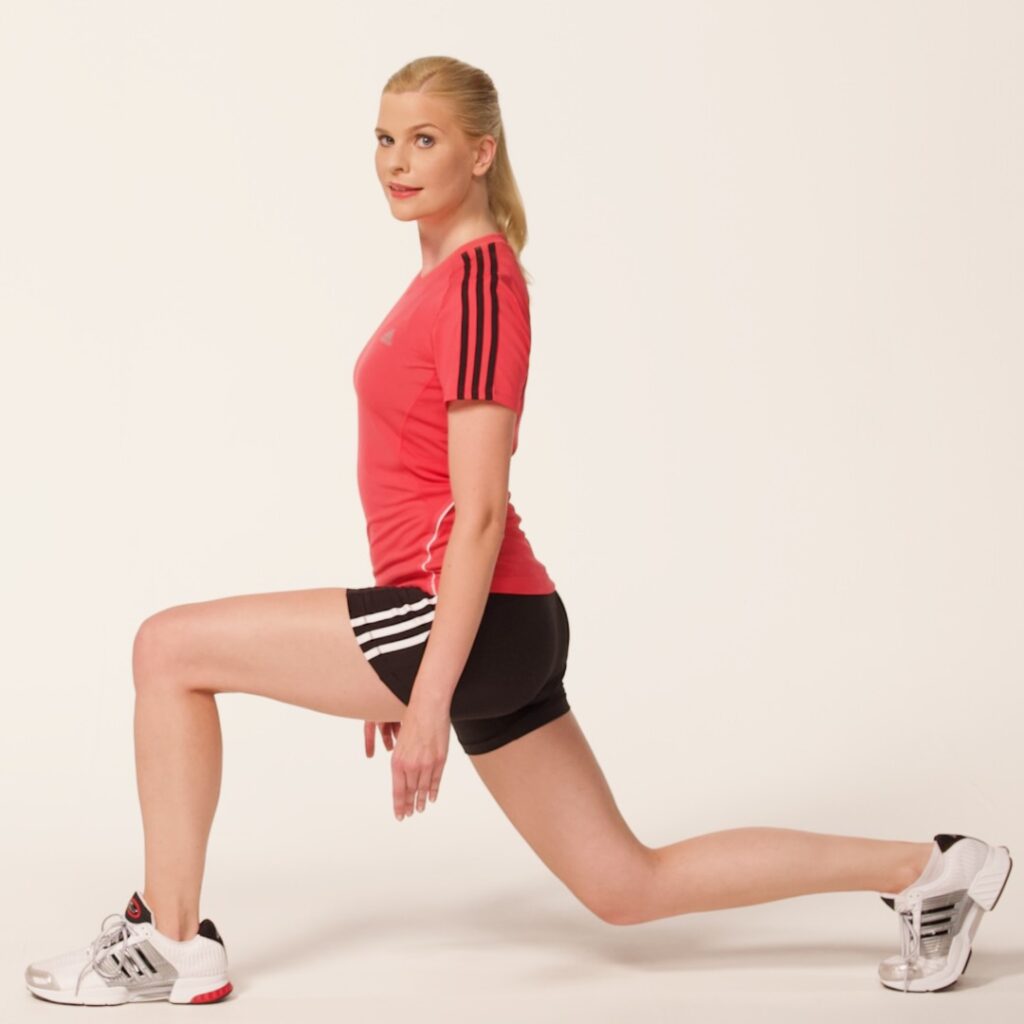
First, the Forward Reverse Lunge promotes dynamic stability because it requires controlled shifting of the center of mass. Moreover, by raising muscle temperature and asking muscles to lengthen and shorten under control, it supports flexibility and readiness for explosive activity.
In addition, many athletes and everyday movers find it kinder to the knee joint when variations such as the reverse lunge are emphasized.
Forward Reverse Lunge — Step-By-Step
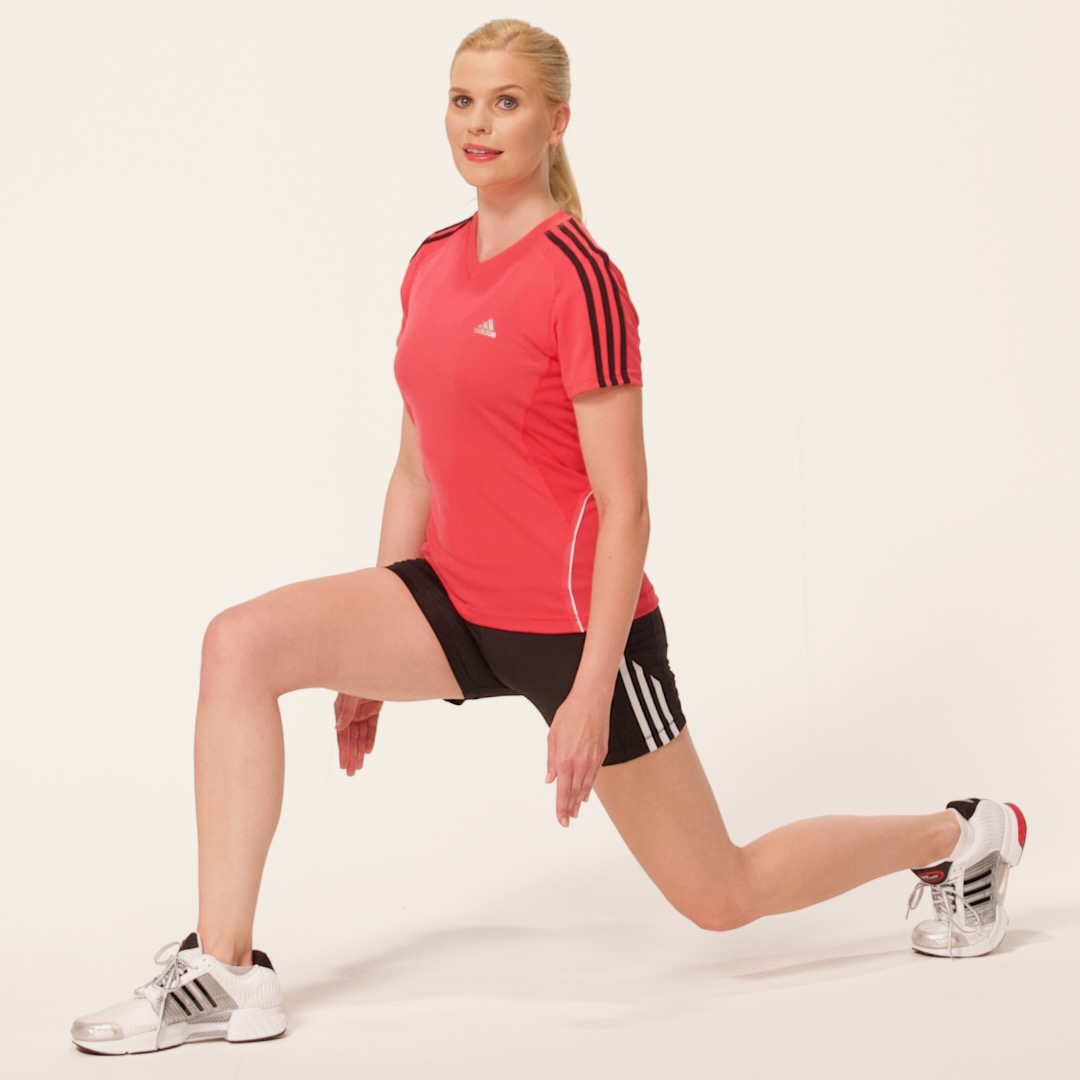
- Stand tall with feet hip-width and weight evenly distributed.
- Step forward with your left foot into a forward lunge so the left knee reaches about 90°. Keep the front knee aligned over the ankle — not well past the toes.
- Push lightly through the front heel and return the left foot to neutral; then, without moving the right foot, step the left foot back into a reverse lunge where the right knee reaches about 90°.
- Flow back to the centre, then repeat; switch sides after your set.
- Start with controlled tempo; later, gently increase speed if safe and comfortable.
Reverse Lunge vs Forward Lunge — What’s The Difference?
Both the Forward Reverse Lunge and the individual forward lunge and reverse lunge patterns strengthen the lower body and support balance, however they load the joints and muscles in slightly different ways.
A forward lunge requires you to step out in front of your body. Because your momentum is moving forward, it often places a little more stress on the front knee and quadriceps. For some people, this can feel more intense, but it is also effective for developing front-leg strength and coordination in sport-specific movement.
In contrast, a reverse lunge requires you to step backward instead. This usually keeps the front shin more vertical and places greater emphasis on the glutes and hamstrings. As a result, many people experience it as more joint-friendly and easier to control, especially during the early stages of a lunge progression.
When combined into a flowing dynamic lunge pattern, the Forward Reverse Lunge offers the benefits of both directions. Therefore, it helps create balanced strength, improved stability, and smoother transitions for real-life and athletic movement.
Furthermore, when adding resistance band lunges, the difference between a forward and reverse lunge becomes even more valuable, as each direction can be used to target different muscle groups and movement goals.
In short, the forward lunge builds drive and power, while the reverse lunge improves control and joint stability. Together, they form one of the most complete and inclusive lunge patterns you can practice.
Forward Reverse Lunge — Muscles Worked
Primarily, the movement engages the glutes, quadriceps, and hamstrings. It also recruits calves, hip adductors, and the core for balance and posture.
Variations Of The Forward Reverse Lunge (including resistance band options)
There are many ways to vary the Forward Reverse Lunge: bodyweight, walking lunge, weighted, curtsey, rotational, and especially resistance band lunges. Bands can be used under the front foot or anchored behind to change the emphasis and reinforce alignment.
Progressions: Beginner → Intermediate → Advanced
Beginners start with bodyweight and slow reps; intermediates add light weights or bands; advanced movers add heavier loads, walking patterns, or explosive variations. Gradual progression maintains safety and maximizes gains.
Programming Tips
For warm-ups, include 6–10 dynamic Forward Reverse Lunge reps per leg as part of a 6–8 movement routine. For strength, use 3–4 sets of 6–12 reps per leg.
Pair with other dynamic stretches: 21 Dynamic Stretching Warm Up Exercises and for cool down consider 22 Static Stretching Exercises for Tennis Cool Down.